A parliament nobody watches
Here is a trivia question for the next long car ride: which international organisation has more member states than the United Nations? Not the WHO. Not the IOC. It is FIFA, with 211 national associations against the UN's 193. Each one gets a vote at the annual Congress — Andorra the same as Argentina, Tuvalu the same as Brazil. On paper, that is a more generous democracy than the UN Security Council, where five permanent members can veto the wishes of everyone else.
So why does the actual news about football's governance so rarely sound like news about a parliament, and so often sound like news about a president's calendar?
The strongman's favourite stadium
This week's wider conversation is full of men who prefer handshakes to institutions. A diesel deal between Washington and Moscow has Europe asking who, exactly, was consulted. A partial ceasefire gets announced before either side in the actual war seems to have agreed to it. NATO, meanwhile, spends its energy building the boring, necessary architecture — joint planning, shared deterrence — precisely because architecture outlasts moods.
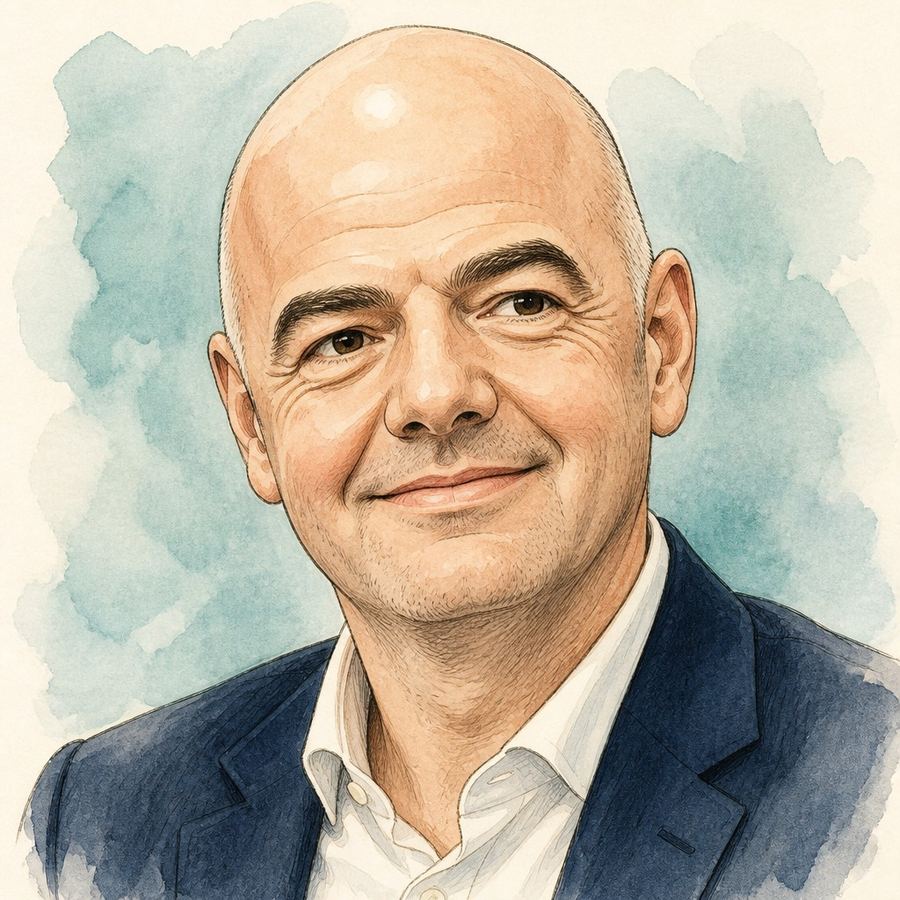
Football has its own version of this contrast. Since returning to the world stage, the American president has shown up at FIFA events with some regularity, and FIFA's own president has shown a documented fondness for standing beside whoever currently holds the largest microphone. The 2034 World Cup went to Saudi Arabia in an uncontested vote. None of this required anyone to break a rule. It only required 211 member federations to notice they had a vote and mostly decline to use it as more than a formality.
Is that corruption? Not in any legal sense anyone has proven. Is it democracy, in the sense the word is supposed to mean — a body of equals actually deliberating, actually dividing on real questions, actually checking its own president? That is the harder question, and the uncomfortable answer is: a congress that never says no is not practising democracy, it is decorating an autocracy with ballots.
What the members owe each other
Compare this to Hungary's parliament, which this week quietly scrapped a batch of its own government's anti-LGBTQ measures. Say what you like about how long that took — the point is that a legislature used its actual power to reverse its own executive. That is democracy doing its unglamorous job: not applauding the leader, correcting him. FIFA's Congress has that exact tool. It elects the president; it can also, in theory, hold him to account. It rarely bothers.
Contrast it again with the Nobel committee's choice this year of a judge, Navi Pillay, honoured for decades spent insisting that international law should bind the powerful as well as the weak. Her career is a rebuke, gentle but firm, to every institution that mistakes proximity to power for wisdom. FIFA's member federations might ask themselves which model they are closer to: the quiet judge, or the eager photo line.
The golden rule of the scoreboard
We have praised international football elsewhere in this paper as a genuine rehearsal for peace — mixed squads, shared rules, rivalries that stay on the pitch. That remains true, and it remains worth defending. But a rehearsal is only useful if the institution running it believes in its own script. A governing body that teaches 211 nations to play by identical rules should not itself be run as if one office outranks all the others.
The fix is not exotic. It is the same fix democracies always need: members who show up, read the agenda, ask the awkward question, and occasionally vote no. Andorra's vote weighs the same as Argentina's only if Andorra uses it. The same goes for Hungary's parliament, for NATO's smaller members, for any assembly that mistakes unanimity for health. A democracy that never divides on a real question has usually stopped being one — it has just kept the furniture.