The Map Got Bigger. Did Anything Else?
Today the United Nations adopted a new world map that shows Africa at its true scale — roughly the size of the United States, China, India, and much of Europe combined, instead of the shrunken continent generations of schoolchildren memorized from the old Mercator projection.
It is a fine correction. Cartography lied for a long time, and lies compound. But ask the obvious question before applauding too hard: does a continent drawn bigger on a wall map find it any easier tomorrow to build a factory, register a business, or export a crop without three ministries taking a cut? Symbols are not nothing. They are also not enough.
The Cheque That Keeps Not Arriving
In South Africa, survivors of the 1960 Sharpeville massacre are still, decades after apartheid's official end, asking for compensation that has not come. Their grievance is just. A state that shot sixty-nine people for gathering peacefully owes something real, and "something real" has mostly meant paperwork.
But here is the harder question, asked with respect rather than impatience: what would actually restore dignity to the survivors and their children — a payment, however overdue, or an economy in which their grandchildren can get a fair job on a fair application without a fixer? Reparation and participation are not the same medicine. A society that pays a debt but keeps its labour market gated has settled its conscience without settling its problem.
Oil That Employs No One
Meanwhile a different arrangement is being tested in Venezuela, where a new oil deal has reportedly put the political opposition in an awkward spot: cooperate with the arrangement and share in the wealth it might unlock, or hold out and watch the wealth flow anyway to whoever already holds the taps.
This is the oldest trick a resource economy plays on its own people. Oil, unlike a farm or a workshop, needs very few hands to pump it — which means a government can grow rich without its citizens growing employed. Dignity of work quietly disappears from the bargain, replaced by dignity of patronage: be loyal, and money finds you; be independent, and it does not. No map redrawn correctly and no cheque finally cashed will fix an economy built to need its people less than it needs its pipelines.
What Neighbourliness Actually Asks
Common sense's position here is not complicated, even if it will be unwelcome to whoever prefers symbolism to structure. Correcting the map was right. Paying survivors what is owed is right. But neither is the finish line, because the finish line was never a gesture — it was always a labour market, a court system, a business registry, a school, functioning well enough that a person willing to work can find work, and a person who does the work keeps a fair share of what it earns.
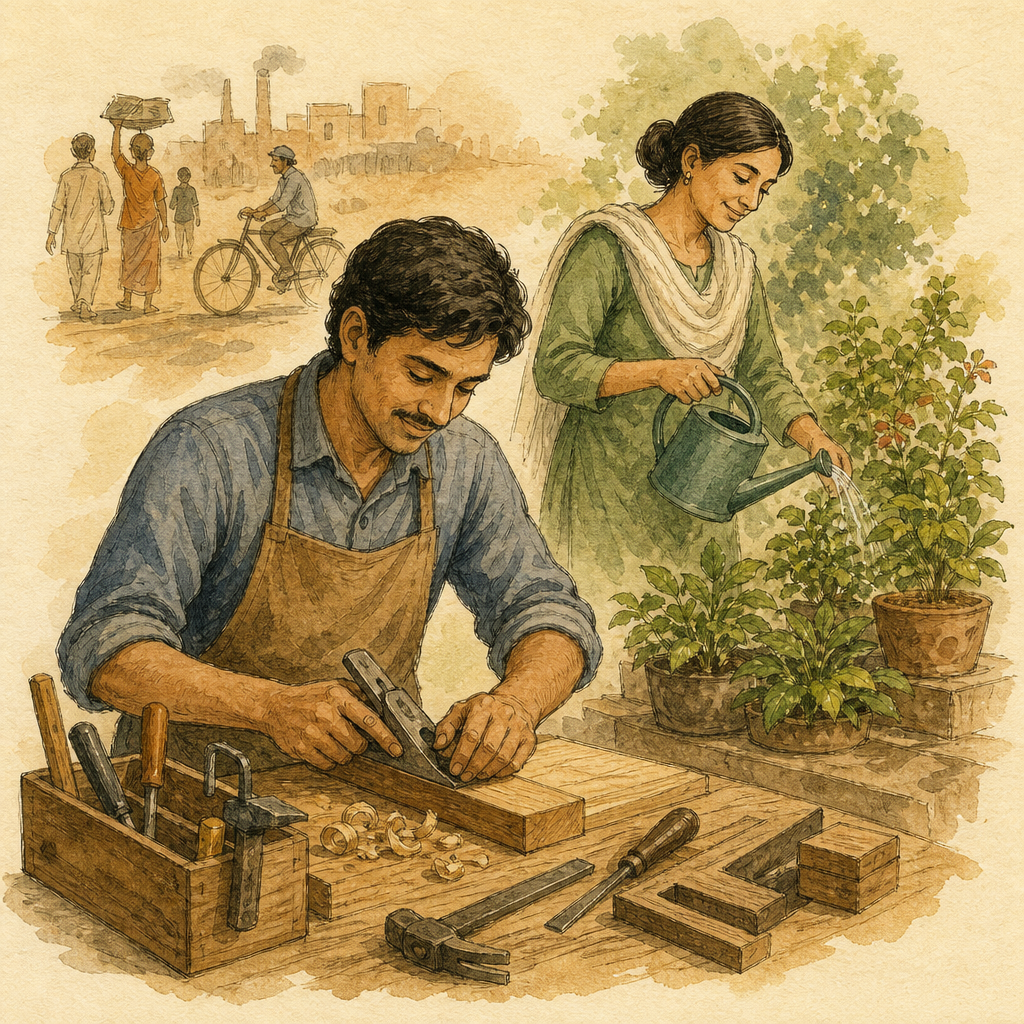
That is what "those who can should contribute" actually means. It is not a scold aimed at the unemployed; it is a demand aimed at the systems that keep capable people locked out — by rigged markets, by unresolved historical debts, by economies engineered around extraction instead of participation. Neighbourliness, taken seriously, is boring: rule of law, open contracts, schools that lead somewhere, banks that lend to ordinary people and not only to the well-connected.
And compassion has its own honest half, too. Not everyone can work — an elderly woman pulled alive from mud after days buried in her collapsed home, as happened in Nepal this week, is owed care, not a lecture about contribution. Dignity of work is for those who can carry it; dignity, full stop, is owed to everyone else.
The Test That Actually Matters
So here is the standard worth holding every government to, whether it is redrawing maps, negotiating oil deals, or writing reparations cheques: does this make it more likely that an ordinary person, next year, can find honest work and keep what they earn from it? If yes, celebrate it plainly. If it only makes the wall map prettier or the ledger look settled while the labour market stays gated, then notice the difference — and keep asking, politely but persistently, for the part that was never delivered.