Gods, Crowns, and Ballots
Start with a sentence worth reading twice. Defectors from North Korea describe Kim Jong Un's daughter, tipped as his heir, as someone who will be seen "like gods reigning over humans." Not like a president. Not like a prime minister. Like a god.
It is worth pausing on that word. A god does not stand for election. A god does not lose a coalition vote. A god is simply obeyed, and the obedience is inherited, passed down a bloodline the way a crown or a nose might be.
Compare that, today, to the ordinary untidiness happening elsewhere. Israel's new parliament was sworn in this week with rival leaders scrambling to assemble a government — a spectacle of horse-trading, grudges, and arithmetic that looks nothing like divinity and everything like politics. In Indonesia, the vice president has offered his resignation as questions mount over whether he was even eligible to hold the office in the first place. In Washington, the House is voting on whether to impeach a defence secretary. None of this is elegant. All of it is accountable.
Two Ways to Handle Failure
Here is a second contrast worth sitting with. In the Democratic Republic of Congo, a military court has sentenced 66 soldiers to death for the crime of "cowardice." That is one answer to failure: terror dressed as discipline, a tribunal that exists to frighten rather than to judge.
The other answer is the dull, bureaucratic churn of impeachment hearings and eligibility reviews — institutions asking, out loud, in public, whether someone deserves to keep their job. It is slower. It is less dramatic. It does not make for a stirring newsreel. But a soldier executed for losing a battle cannot appeal; a politician questioned by parliament can. That difference is not a technicality. It is the whole of what representation means.
Where Does India Sit?
Which brings us, gently, to the world's largest exercise in representation. India holds elections involving numbers that no other country on Earth can match — hundreds of millions of voters, a continent's worth of languages, a federal structure in which state governments regularly embarrass the party that rules in Delhi. That messiness is not a flaw to apologise for. It is the proof of life in a democracy: the sign that power can actually change hands without anyone needing to be a god.
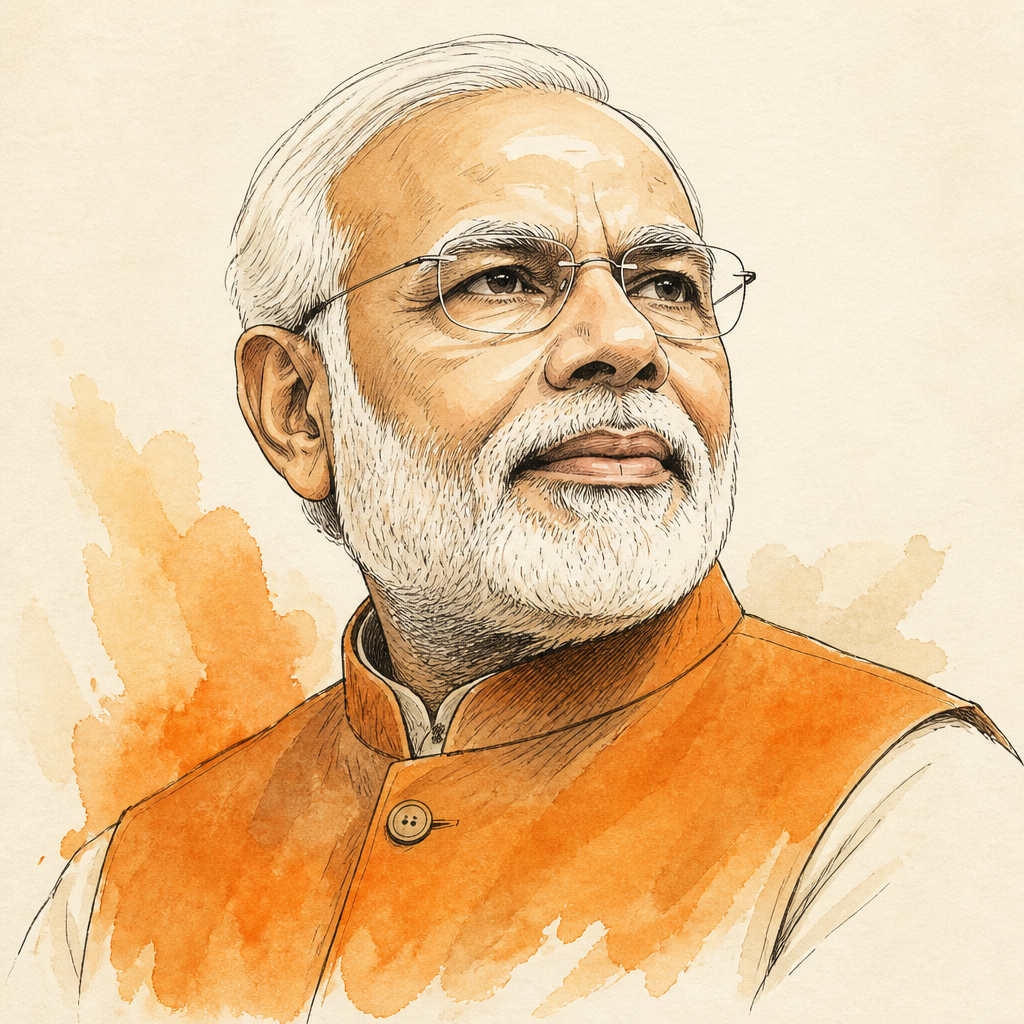
And yet it is fair, even necessary, to ask a harder question of India's current leadership, as of any leadership riding high on genuine popularity. When one figure's face becomes the brand of every scheme, every stadium, every vaccine certificate; when loyalty to the party blurs into loyalty to the man — is that still representation, or is it the early rehearsal of something closer to reverence? Popularity earned at the ballot box is not the same thing as a system that would survive the leader's absence intact. North Korea's defectors did not wake up one day worshipping a family; it was built, slowly, image by image, until the word "god" felt natural rather than absurd.
India's answer so far has been reassuring rather than perfect: courts that still rule against the government, opposition parties that still win state elections, a press that is noisier than its critics abroad sometimes admit. These are not decorations. They are the load-bearing walls.
The Honest Test
So here is the standpoint, plainly stated. A democracy should never be measured only by how loved its leader is on the day of the vote, but by whether the architecture around that leader — courts, opposition, federal states, a free press — could survive the leader's departure without a succession crisis, a coronation, or a tribunal. North Korea fails that test by design. Congo's generals failed it this week in a courtroom built for fear. India, imperfectly, argumentatively, inconveniently, keeps passing it — which is precisely why its messiness deserves more respect than envy of anyone's throne.
The reader's assignment, as ever, is simple: when a leader's face starts appearing on things that used to belong to the state rather than the party, ask who put it there, and whether anyone could still take it down.