Two hundred years for a final answer
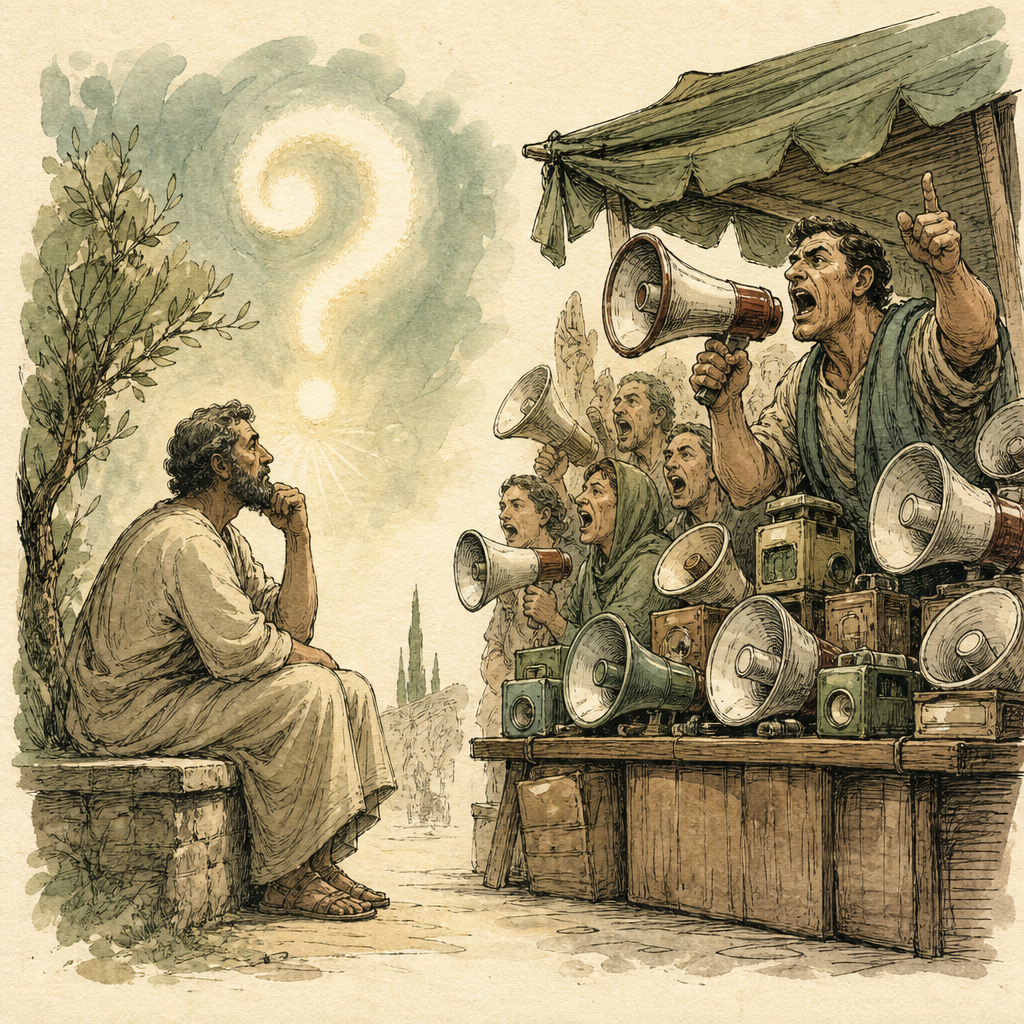
This week a Kenyan court sentenced a doomsday sect leader to two hundred years in prison for the murder of 191 people, most of them children, who died waiting for a salvation he had promised with total confidence. He did not hedge. He did not say "probably" or "the evidence suggests." He said he knew. That is usually the first warning sign worth noticing, long before the mass graves: someone selling the end of all doubt.
Most stalls selling certainty do not end this way. But the impulse behind the stall is the same one, just diluted — a leader, a market, a party, an algorithm, offering you the comfort of not having to think further. Common sense's whole job, this week as any other, is to ask one more question before paying.
The president who was not untouchable
In Paraguay, a sitting president was impeached and arrested. Whatever one thinks of the specifics, notice the shape of the event: an office that looked, from the outside, like a settled fact — a man holding power, therefore presumably entitled to keep it — turned out to be a question after all. Institutions did what institutions exist to do: they refused to accept "he is in charge" as a final answer and asked, instead, "on what basis, and for how long, and according to whose rules?"
That is not chaos. That is the opposite of chaos. A system that can still ask the question is a system that has not yet surrendered to a strongman's certainty about himself.
The market that corrected itself
Trillions were wiped from AI-related stocks this autumn, and then — as these essays go to print — the same stocks are climbing again. Somewhere between the crash and the rally sat a great many confident predictions, delivered with the flat authority of a prophet rather than the modest hedging of an analyst. Markets, unlike cults, have a mechanism built in for punishing overconfidence: the next trading day. It is an imperfect mechanism, often cruel to ordinary savers who believed the first certainty rather than the second. But it beats a system with no correction at all.
The party that assumed it would always be "the party"
In South Africa, voters are delivering a hard verdict on a governing party that has, for three decades, been treated by many — including, one suspects, by itself — as simply the natural government, the historical answer, not a contestant like any other. An election is democracy's way of asking a governing party the one question incumbency would rather it never face: do you still deserve this, today, on the evidence, or only on the memory of yesterday?
An inconclusive election, of the kind reported this week from elsewhere, can look like failure to outsiders hungry for a clean headline. It is often the healthier outcome. A result too tidy to need negotiation is a result that stopped asking questions too early.
The discipline of one more question
None of this is an argument for permanent doubt as a lifestyle. A society that can never decide anything, that drowns every choice in one more committee and one more review, invites its own kind of backlash — the tired citizen who finally says, "just give me someone who sounds sure." That citizen is not wrong to want clarity. He is only wrong about where to buy it.
The wise middle is this: decide, act, commit — but hold the decision loosely enough that new evidence can still move it. Vote for a party, but let it be voted out. Trust a forecast, but keep a seatbelt on. Believe a leader's promise, but keep the courts, the press, and the ballot box open enough to check it later.
The prophet in Kenya offered his followers an answer so complete it required nothing further of them — not even their own judgment. That is the actual crime behind the legal one: not merely the deaths, but the demand that no one ask again. Common sense's quiet reply, this week and every week, is simply to keep asking.