Two feasts, two decisions
Somewhere in Liberia this week, families are laying out cassava leaf beside roast chicken, saying grace, and calling it Thanksgiving. The holiday arrived with freed American slaves who settled the country in the 19th century, carrying a table-tradition from the place that had enslaved them. It should have died at the dock. Instead it grew local roots, picked up new foods, and became something nobody in Massachusetts would fully recognise — and something nobody in Liberia would give up.
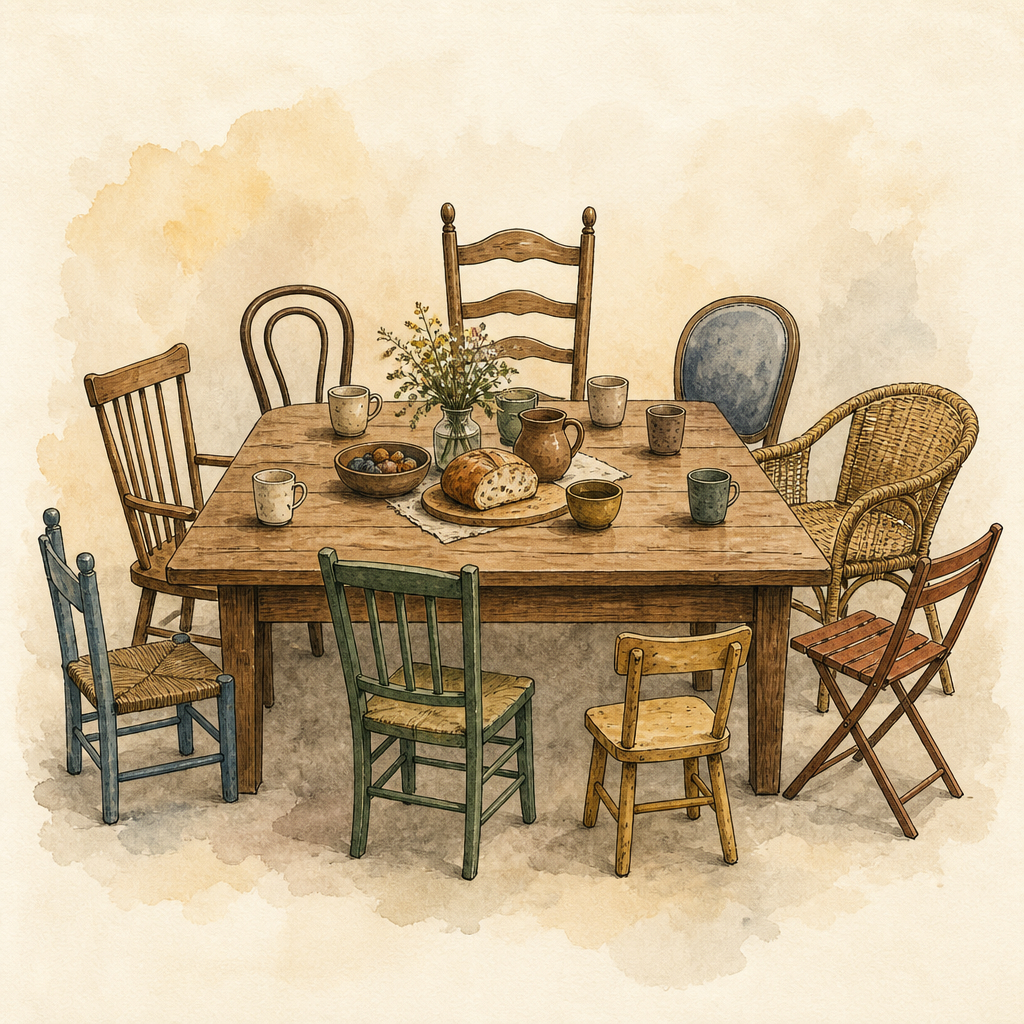
That is what a shared table actually looks like. Not a museum copy of someone else's custom, but a custom that a people chooses to keep, bend, and make theirs. Nobody asked the Liberians for a passport before they pulled up a chair to a foreign feast. They were simply let in, and they stayed, and they changed the recipe.
The chair that was never offered
Now put that beside another story from this week's news: a Sri Lankan asylum seeker, sent by the United Kingdom to Eswatini, took his own life after arriving in a country he had no connection to, as part of a process meant to make him someone else's problem. He was not invited into a tradition. He was removed from one — the one where a government answers, in its own courts, for the claims made on its own soil.
It is worth sitting with the plain arithmetic of that decision. A man asks a democracy to hear his case. The democracy, instead of hearing it, buys a seat on a plane to a third country with no stake in his story, and calls that solved. When he dies there, both governments can gesture at the other and say: not quite ours. That is not policy. That is a shrug with a flight number attached.
Whose table, whose rules
None of this requires pretending that borders are imaginary or that every claim is valid. A country is allowed, even obliged, to ask who may stay and under what rules — the same instinct, done honestly, that pushes serious democracies to insist on shared law and a shared language of public life rather than quiet parallel societies that answer to no common table at all. Denmark's long argument with its own housing enclaves is really the same question asked at home: not who may enter, but who agrees to sit down and follow the same rules once inside.
But asking who may stay is a different act from making someone disappear administratively so that no court, no journalist, no voter ever has to look at the file. One is governance. The other is laundering responsibility through distance. A government that cannot defend its asylum decision in its own courtroom has already told you what it thinks of that decision.
The test is simple
Here is a test any reader can run without a law degree: does the policy survive being described plainly? "We heard his claim and found it wanting, under our own law, with his own right of appeal" survives description. "We put him on a plane to a country he'd never seen so the paperwork would land somewhere else" does not survive description — which is exactly why it tends to be described in the passive voice, in press releases, rather than out loud.
The Liberian table and the Eswatini flight are not really two separate stories about distant places. They are the same question, answered twice, in opposite directions: when a stranger arrives at your door, do you make room, or do you make arrangements for them to become invisible somewhere else?
A shared table does not require everyone to eat the same dish. It requires a host willing to be found, and a guest treated as a person whose case will actually be heard — by someone who has to sign their name to the answer.