The stone you are meant to trip over
A Stolperstein is not subtle. It is a small brass cobblestone, set flush into a German pavement outside the last home of someone deported and murdered, engraved with a name, a birth year, a date of death. You are meant to trip on it — not with your foot, with your attention. That is the whole design: memory as an inconvenience you cannot avoid on your way to buy bread.
This week a German town decided it had had enough inconvenience. It banned the stones. The reasons offered are procedural, the kind that always sound reasonable in isolation — safety, uniformity, whatever committee language does the job. But ask the Socratic question anyway: what, exactly, did the town vote to make disappear? Not history. History doesn't need a cobblestone to have happened. What disappears is the daily, unglamorous friction of being reminded — the tiny tax a community pays each morning so that memory stays a habit rather than a museum exhibit visited once a year.
Meanwhile, the big stages
Compare the scale of that story to everything sharing the front page with it. In Washington, a state visit is summarized, not unfairly, as "pageantry and pandas" — a warm welcome for Xi Jinping whose concrete yield remains, politely, unclear. In the Gulf, Washington rejects Tehran's offer to reopen the Strait of Hormuz on its own seven-day timetable, two capitals arm-wrestling over a waterway the rest of the world merely depends on. In Paris, the Pope tells a crowd of young people that a "paradise of machines" could quietly undermine what makes us human — a warning that a life optimized for convenience can forget how to notice.
Notice the shape these stories share. Power today likes spectacle — the summit, the panda, the ultimatum delivered to cameras. It does not much like the boring discipline of a cobblestone that has to be dusted, argued over, defended in a town council meeting nobody outside that town will ever hear about. Spectacle is loud and forgettable. A Stolperstein is quiet and impossible to unsee, if you let it stay where it is.
Where does that leave Europe?
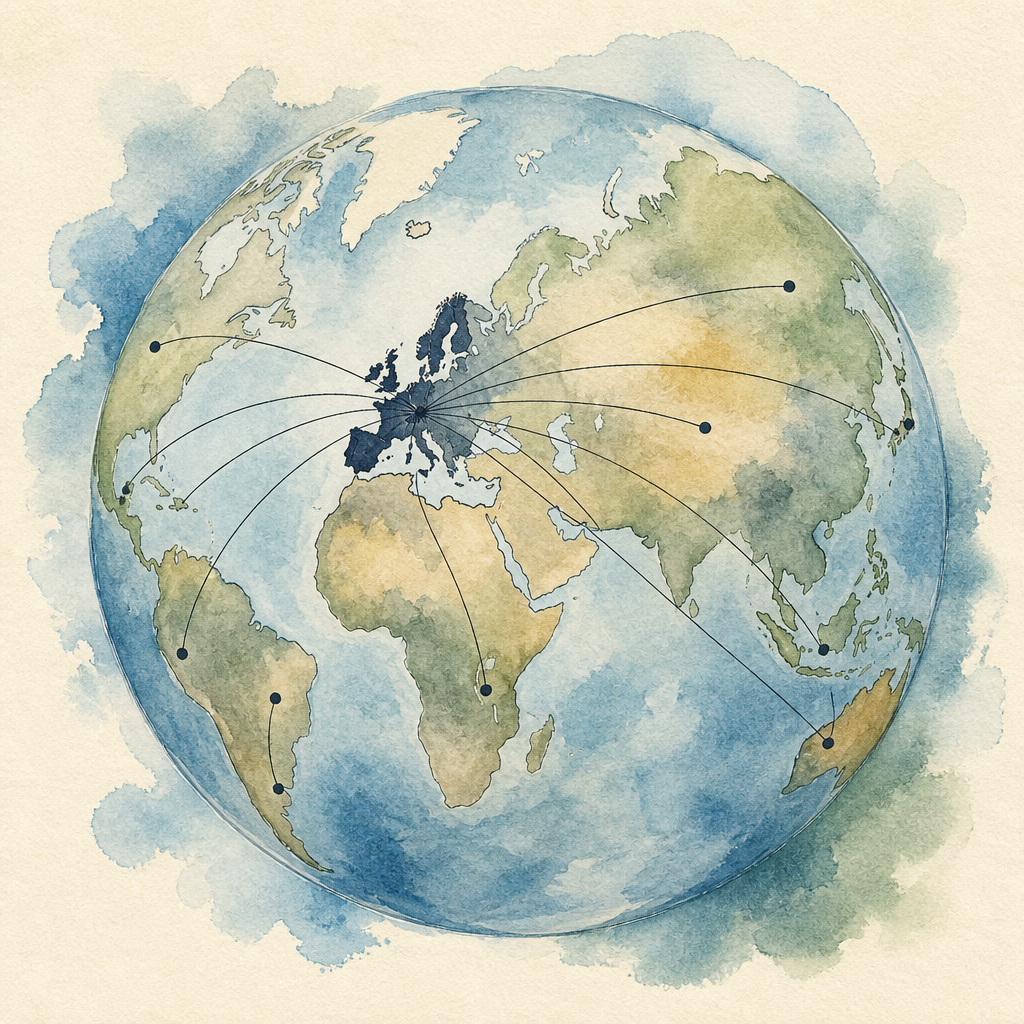
Here is the honest answer to a fashionable question — does Europe have a voice on the world stage, next to men who arrive with state visits and strait ultimatums? Not if it tries to out-swagger them. The European Union will never win a pageantry contest with a superpower parade or a panda. That is not humility; it is arithmetic.
But Europe has something rarer than swagger: it is the one part of the world built, deliberately and legally, on the discipline of remembering its own worst chapter and refusing to let it become merely decorative. That discipline — not military bluster, not diplomatic theatre — is the actual credential Europe carries into rooms where it argues for human rights, for the rule of law, for democracies that don't need a strongman at the microphone. A continent that cannot keep its own small memorial stones in the ground has a weaker claim to lecture anyone else about memory, law, or dignity.
So the standpoint here is not romantic, it is practical: European cooperation among liberal democracies is worth defending precisely because it is unglamorous — the shared courts, the shared rules, the shared insistence (as Denmark has tried, awkwardly but seriously, with its integration reforms) that civic law applies evenly and that no enclave, ideology, or committee gets to opt out quietly. That same seriousness is what one small Irish football team gestures toward when it puts on black armbands before a match — sport still able to say, briefly, that some things matter more than the scoreline.
A continent that guards its stumbling stones is training itself for exactly the muscle it will need against the next authoritarian habit, wherever it starts small. The question worth asking this Sunday isn't whether Europe can match a panda. It's whether it can keep noticing the things smaller than a panda — before a quiet committee vote decides, on our behalf, that we'd rather not.