A Word Chosen Carefully
Pedro Sánchez did not call his fellow EU leaders cruel, or cold, or wrong. He called them selfish. It is a domestic word, a household word — the kind you use about a sibling who eats the last of the bread and leaves the dishes. That precision matters. Sánchez was not accusing Europe of malice. He was accusing it of convenience: the habit of praising solidarity in speeches while leaving the actual weight of it on whichever country happens to have the coastline.
Ceuta this week is not an abstraction. Tens of thousands crossed from Morocco in a matter of days; dozens have died, with the toll still being counted as reports converge somewhere between the high fifties and near seventy. Behind every number is a family that decided the risk of the crossing was smaller than the risk of staying. The European Union, to its credit, has called an urgent meeting. The question worth asking before the meeting starts is simple: urgent for whom?
The Hero Problem
There is a particular irony in watching a leader once celebrated as a champion of migrants now facing his sharpest test on exactly that ground. It is easy to be generous when generosity is cheap — when the crossings are modest, the cameras are elsewhere, and moral credit costs little. Ceuta asks a harder question: is solidarity a policy, or was it a mood?
The same test applies, quietly, to every capital now weighing in from a safe distance. It is simple to issue a statement of concern about a border you do not have to patrol. The golden rule, unfashionable as it sounds in a policy memo, is still the right instrument here: do not ask of Spain, or Italy, or Greece, what you would refuse to carry yourself if the sea happened to touch your own shore instead.
Solidarity Is Not the Same as Infinity
Here the essay must resist an easy temptation — to simply demand that Europe "do more," as if capacity were unlimited and only will were missing. It is not that simple, and pretending otherwise does no one any favours, least of all the people crossing. A union that promises boundless absorption and then quietly fails to deliver it is crueller than one that is honest about its limits from the start.
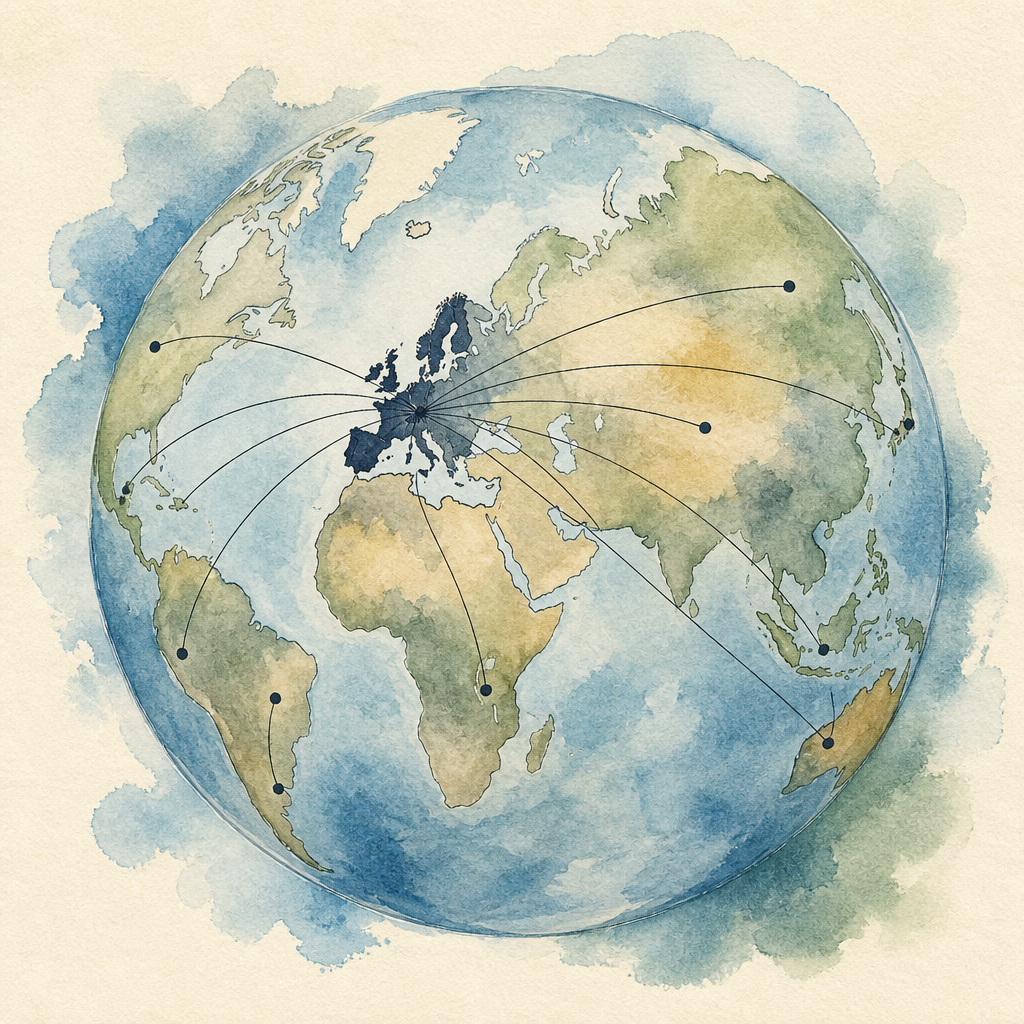
The wiser standard is this: solidarity within what can actually be sustained, distributed by agreement rather than by geography. That is the whole unfulfilled promise of European cooperation — not that every member state absorbs identical numbers, but that no member state is left alone with a crisis that belongs, by treaty and by conscience, to all twenty-seven. The EU was built precisely to convert accidents of geography into shared responsibility. Ceuta is the moment that idea is either proven or exposed as decoration.
A Union Worth the Name
Elsewhere today the world offers a reminder that suffering does not wait its turn: strikes on Kyiv, an Ebola outbreak spreading faster than any before it, Lebanese families returning to see what invasion left behind. Europe cannot fix all of it, and should not pretend to. But a union that wants a voice in Kyiv, in Beirut, in Kinshasa — a union that wants to be heard when it speaks of human rights and shared burden — has to first demonstrate that its own members will share a burden with each other, in daylight, without waiting to be shamed into a meeting.
That is the standpoint worth taking plainly: Sánchez is right to name selfishness when he sees it, and the EU is right to convene urgently — but the test of this union was never the meeting. It is whether the mechanism that follows actually redistributes weight, or merely redistributes words. A club of liberal democracies that cannot agree on how to share a fence has little standing to lecture the rest of the world on how to share anything larger.