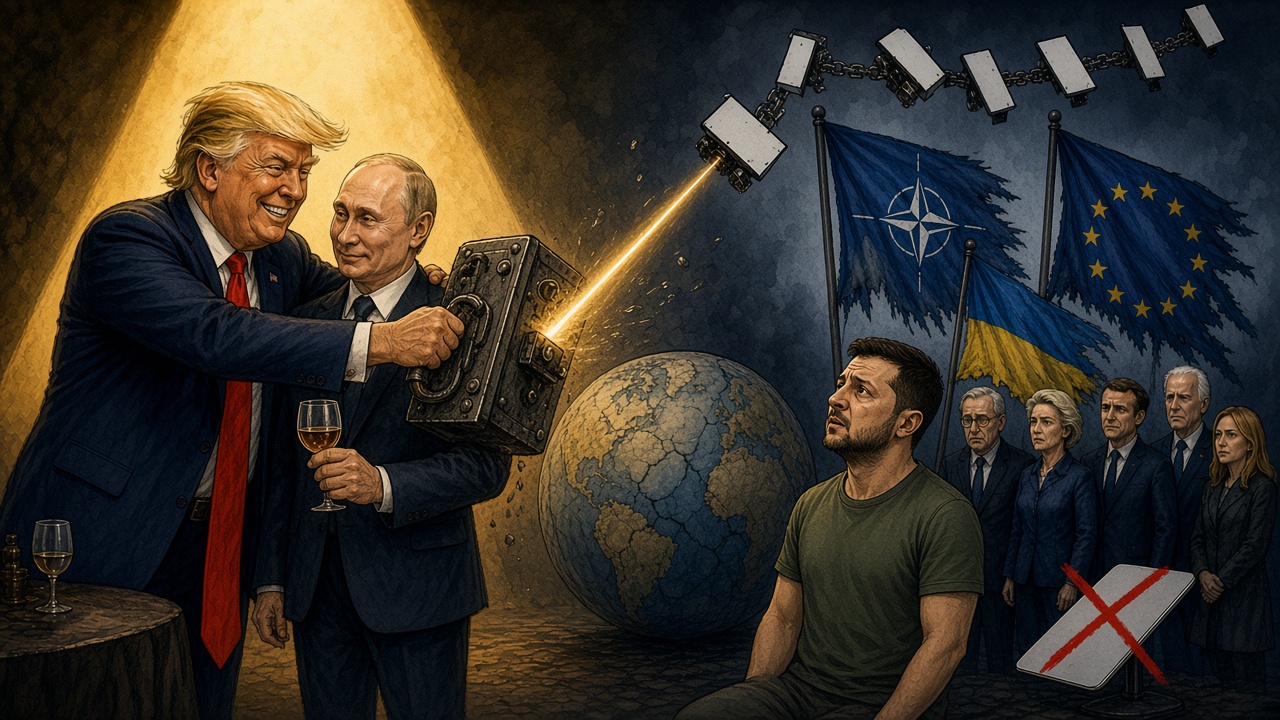
A pipeline on trial, a deal on the table
In Germany this week, a Ukrainian man sits in a courtroom accused of blowing up the Nord Stream pipelines — the very pipes that once carried Russian gas into Europe's furnaces. Whatever the court decides about his guilt, the symbolism is hard to miss. One ally is putting a Ukrainian on trial for destroying Russian energy infrastructure. Another ally, meanwhile, is reportedly exploring a diesel deal with Russia to calm its own fuel prices at home.
Both things can be legally separate. They are not morally separate. If the free world's quiet consensus has been that funding Russia's war machine through energy purchases is a mistake to be unwound, then buying Russian diesel through a side door is not a clever market move. It is the same mistake, wearing a discount sticker.
The pump as a campaign promise
American inflation numbers came in higher than expected this week, and nothing moves a voter's mood faster than the price on a gas station sign. It is tempting, in an election cycle, to reach for whatever lowers that number fastest — even oil that traces, however indirectly, back to Moscow.
Here is the question worth asking slowly, not shouting: who is actually paying for that cheaper diesel? Not the driver, who enjoys the lower number. Not the president, who enjoys the applause. The bill is paid by the Ukrainian soldier in the trench, by the engineer rebuilding a bombed substation in Kyiv, by every ally who believed that sanctions meant something more than a suggestion with exceptions for a bad polling month.
Mr. Zelenskyy, in an interview this week, described a war that depends on steady Western nerve as much as on Western weapons. Even Starlink — a private company's satellites — has become part of that nerve, with its owner noting that any limits on Ukraine's access are, by his account, Washington's call, not his. Layer upon layer, the war effort rests on decisions made far from any battlefield, in boardrooms and budget offices where "what helps us at home right now" quietly competes with "what we promised to defend."
What the gauge doesn't show
A fuel gauge tells you how much is in the tank. It does not tell you where it came from, or what it cost someone else to put there. That is precisely why a sanctions regime depends on habits of mind, not just laws: a willingness to ask the inconvenient question before the convenient purchase.
This is not an argument against trade, or against Americans wanting affordable diesel — reciprocity cuts both ways, and nobody should romanticize hardship as virtue. It is an argument against the specific betrayal of saying one thing in sanctions committees and doing another in supply contracts, while an ally's soldiers are still dying for the principle those sanctions were meant to enforce.
The Nobel Peace Prize this week went to a judge, Navi Pillay, honored for a career spent insisting that international law should mean something even when it is inconvenient for the powerful. That is the whole argument in one sentence. Law, and the promises built on it, are easy to keep when they cost nothing. Their only real test is whether they survive contact with a cheaper option.
A simple test for allies
So here is a modest, unglamorous standard, offered without shouting: before any democracy buys its way out of an inflation headline using Russian energy, ask whether it would be comfortable explaining the purchase to the Ukrainian soldier currently defending the border that purchase helps fund on the other side. If the answer makes anyone flinch, that is not a technicality. That is the betrayal, named plainly, and it is the kind voters can still refuse with their own choices — at the ballot box, and at the pump.