A Prize for Patience
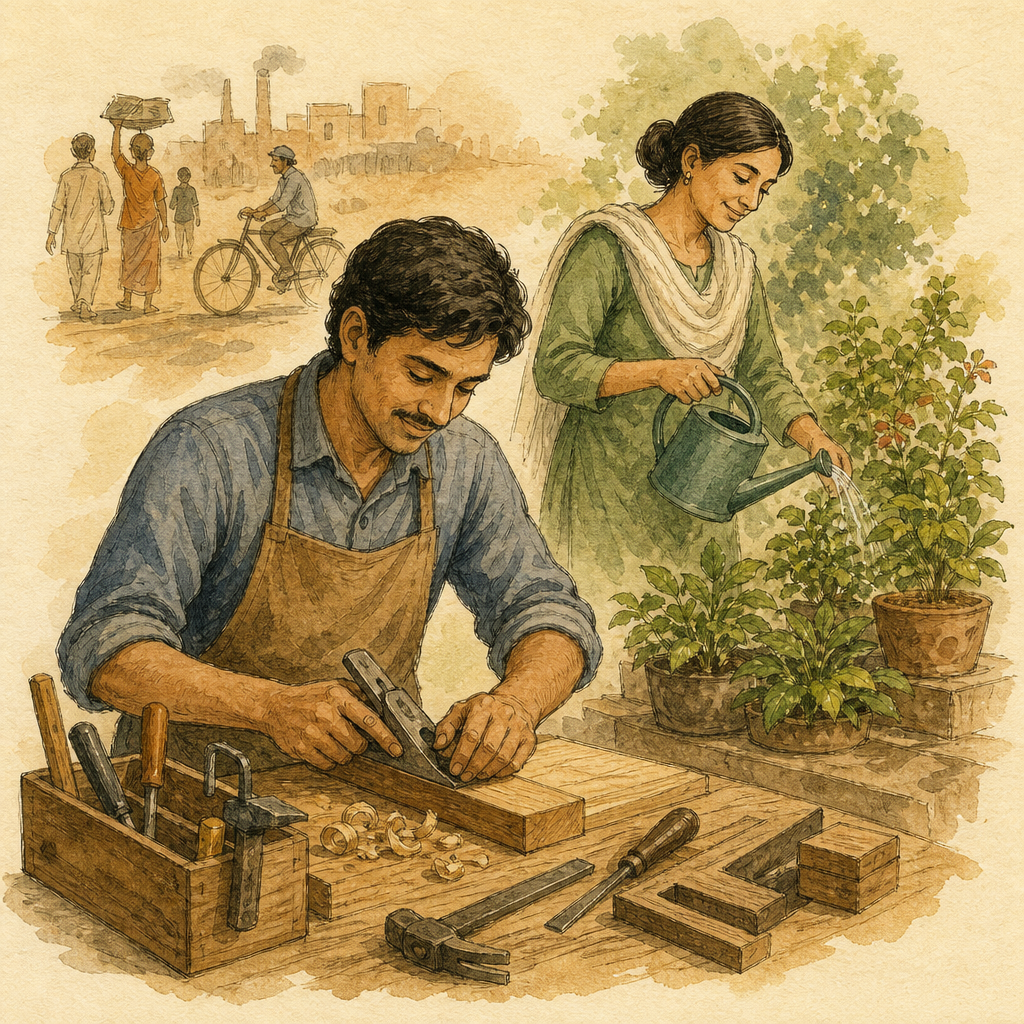
This week the Nobel committee gave its peace prize to Navi Pillay, a South African judge who spent decades doing the kind of work that rarely trends: drafting, arguing, sitting through hearings, building international law brick by brick. Nobody calls that work glamorous. It is closer to bricklaying than to heroism. And yet it is exactly the kind of labour a free society depends on — slow, procedural, deniable of applause, and indispensable.
Contrast that with Delhi this week, where hundreds of young protesters were detained, some of them organisers from a group whose leaders Indian officials have taken to calling "cockroaches." Set aside, for a moment, whether you agree with their politics. Ask instead what kind of work they were doing in the street. Showing up to question an election chief, showing up to question a government — that is also labour. Unpaid, risky, often thankless. It is the maintenance work of a democracy, the civic equivalent of checking the wiring before the house catches fire.
Whose Work Counts
Our editorial line has always held that those who can contribute should contribute — not as an ideal of busyness for its own sake, but because responsibility is a form of neighbourliness. You show up for the people around you by doing your share. That applies to the baker and the judge. It also applies to the citizen who stands in a square with a sign.
So it is worth noticing the specific insult chosen in Delhi. Not "criminal," not "agitator" — cockroach. Vermin. The word does a particular kind of work itself: it tells a watching public that these people are not fellow labourers in the same civic project, but pests to be cleared out. That is an old trick, and a tell. Dictatorships rarely announce themselves with a decree. They announce themselves with vocabulary — the moment a government stops treating dissenters as citizens doing hard, lawful work and starts treating them as an infestation.
The Other Kind of Shortcut
Meanwhile, a different kind of avoidance was on display in Washington. Facing fuel prices ahead of midterms, the United States struck a deal to bring in Russian diesel — easing, rather than tightening, the economic pressure on a country that, the same week, sent glide bombs into Zaporizhzhia and killed at least fifteen people. President Zelensky called the deal a gift to Putin. He is not wrong that it reads that way.
This, too, is a story about work — the harder, duller work of holding a sanctions regime together versus the easier work of a headline announcement that pump prices might ease before an election. Sanctions are maintenance labour, like Pillay's tribunals: unglamorous, slow, easy to resent, hard to sustain. A shortcut around them might lower a number at the pump this month. It also tells an aggressor state that the bill for aggression can still be renegotiated when it is politically convenient for the other side.
A Standpoint, Not Just a Wink
Here is the stance worth taking, plainly. Civic labour — protest, oversight, patient legal work, the unglamorous grind of accountability — deserves the same respect we give any honest day's work. Calling it vermin is not commentary; it is preparation for cruelty. And governments that trade hard-won leverage for short-term comfort are not managing fuel prices. They are quietly declaring that the work of resolve was optional after all.
None of this asks everyone to march. Not every citizen can risk the street, and compassion for those who cannot is not optional either. But those who can still do the plain work of noticing, of saying so out loud, of refusing to let "cockroach" pass as a normal word for a neighbour with a placard — that work is available to almost everyone, almost everywhere. Showing up to notice is still, blessedly, legal in most places. For now.