A Sunday Without Trumpets
Somewhere in eastern Germany, ballots are being printed for a vote that will not open with fireworks. No crown will be lowered onto anyone's head. A party once treated as fringe, the AfD, stands close to power in a state election — and the commentary already sounds like a coronation or a funeral, depending on who is writing.
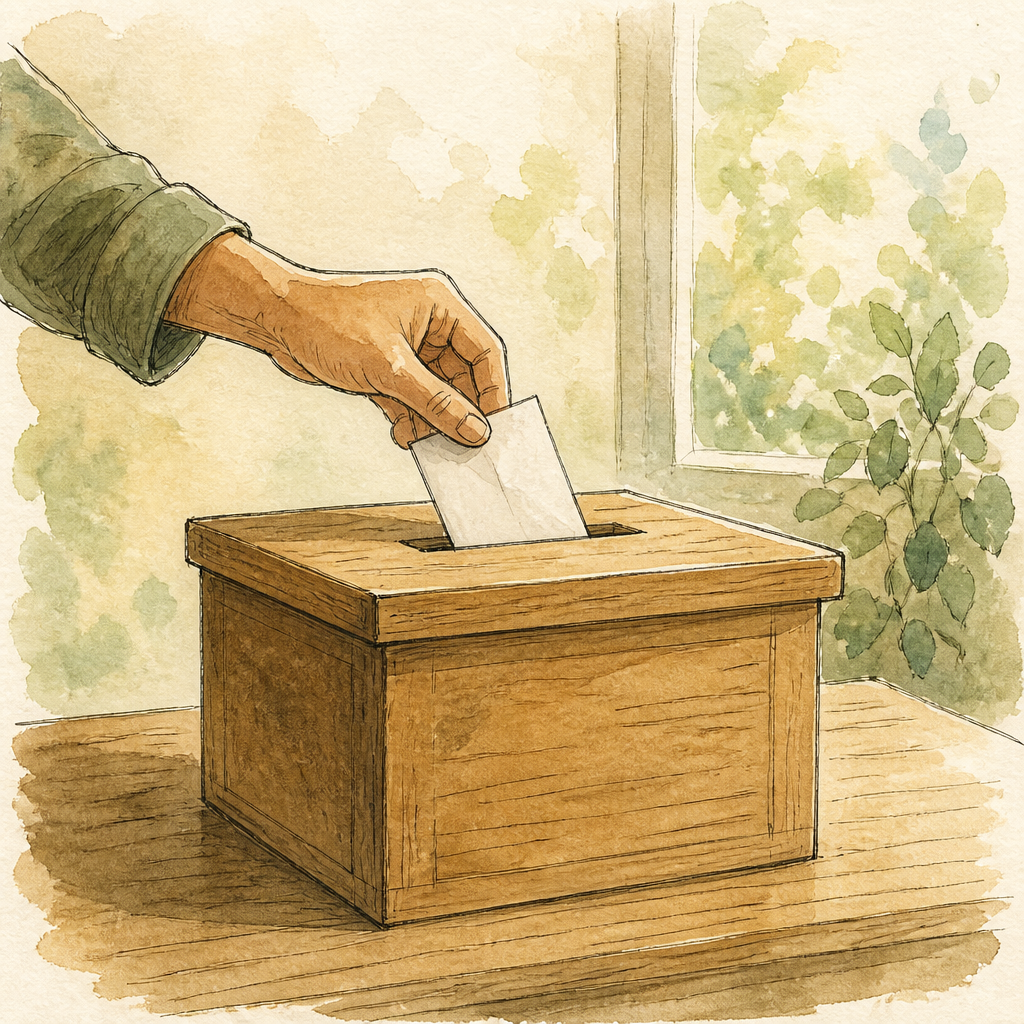
Both reactions miss the point. An election is neither a crowning nor a burial. It is a count. That is the whole, unglamorous genius of it: heads, not crowns.
The Habit, Not the Spectacle
Democracy's real work happens in the unphotogenic middle — the coalition math the next morning, the courts that still function whoever wins, the opposition papers still printing, the civil service still answering the phone. If a party many find alarming wins a regional vote, the test is not whether panic is loud enough. The test is whether the machinery built for exactly this moment — federal constitution, judicial review, a free press, coalition partners who can say no — still turns.
That is a dull sentence to defend on a Saturday. But dullness is the point. Spectacle is what strongmen sell; habit is what citizens keep.
A Map Learns Proportion
Curiously, the same week the United Nations agreed to adopt a new world map that finally shows Africa at something closer to its true size — for a continent long shrunk on classroom walls by an old projection — offers an odd companion lesson. Getting proportion right is a discipline, not a feeling. Mercator's map was not malicious; it was merely convenient for sailors, and inconvenient for everyone else's sense of scale ever since.
Politics has its own Mercator problem. A single alarming headline can look continent-sized on a phone screen while the actual machinery of checks — courts, federalism, a free vote next cycle — sits quietly at true scale underneath, doing its unglamorous work. Fear inflates. Complacency shrinks. Neither is measurement.
Where the Habit Fails
Contrast this with places where the count itself becomes the crown. In the Philippines, a vice president now faces an arrest order over threats against the president — a courtroom drama that looks less like justice and more like a rival being removed from the board. In Guinea-Bissau, opponents say a new constitution is being written to entrench rather than to serve. In each case, the machinery meant to count heads is being repurposed to protect one head in particular.
Spain, to its credit, offered the opposite instinct this week: its prime minister declined to blame Morocco for a border breach at Ceuta without evidence — a small, almost boring act of restraint, refusing to let a crisis become a spectacle before the facts arrived. That, too, is democratic habit: waiting for the count before declaring the winner.
The Argument, Plainly
So here is the standpoint, plainly stated. Watching a possible AfD win in eastern Germany with alarm is reasonable; treating it as apocalypse is not. The wise response is neither to shrug — parties that flirt with authoritarian language deserve scrutiny long before election day — nor to declare democracy finished because one region tilts. The wise response is to trust, and simultaneously guard, the boring architecture: courts that still rule against governments, journalists who still ask the second question, neighbors who still vote next time.
That architecture was not built for calm weather. It was built for exactly this: an uncomfortable result that the system must still process fairly, without either panic or normalization.
A Small Test for Readers
Ask yourself, quietly, this weekend: when you hear a result you dislike, do you reach first for the ballot count or for the loudest voice shouting about it? Democracy does not need your outrage to survive. It needs your attention to keep counting — on the boring Tuesday after the dramatic Sunday, and the one after that.
Crowns demand applause. Ballots only ask to be counted correctly. Given Europe's current appetite for sabotage, spectacle, and strongman nostalgia, correct counting may be the most radical habit left.