Two rooms, same Friday
Picture two rooms open today. In one, envoys shuttle between Abu Dhabi and the Kremlin, arranging who gets to decide the shape of a war that is not theirs to end alone. Zelensky welcomes the news that Europe has been invited back to its own table — which tells you, gently, that it had somehow been left off it. In the other room, nothing photogenic happens at all. A clerk checks a transcript. A credential turns out not to hold up. A vice president in Jakarta resigns.
Guess which room gets the cover photo.
The seduction of the summit
Summits are irresistible because they flatter the idea that history is made by a handful of serious men in a serious room, deciding serious things, while the rest of us wait for the communiqué. It is a comforting story if you are one of the men in the room. It is a slightly worrying story for everyone else, because it is also the oldest story authoritarianism knows how to tell: that legitimacy lives in a face, not a procedure.
Democracy's less cinematic claim is the opposite one: legitimacy lives in the procedure, and the face is replaceable. That claim is almost never thrilling. It is, however, almost always true, and worth noticing on a day when the thrilling version is competing hard for your attention.
The dullest headline is the healthiest one
Consider Indonesia. A vice president did not fall because a crowd stormed a palace or a rival staged a coup. He fell because his academic credentials were questioned, publicly, and the questioning worked. That is not drama. That is a country's immune system doing exactly the unglamorous job it was built for — checking the paperwork of power.
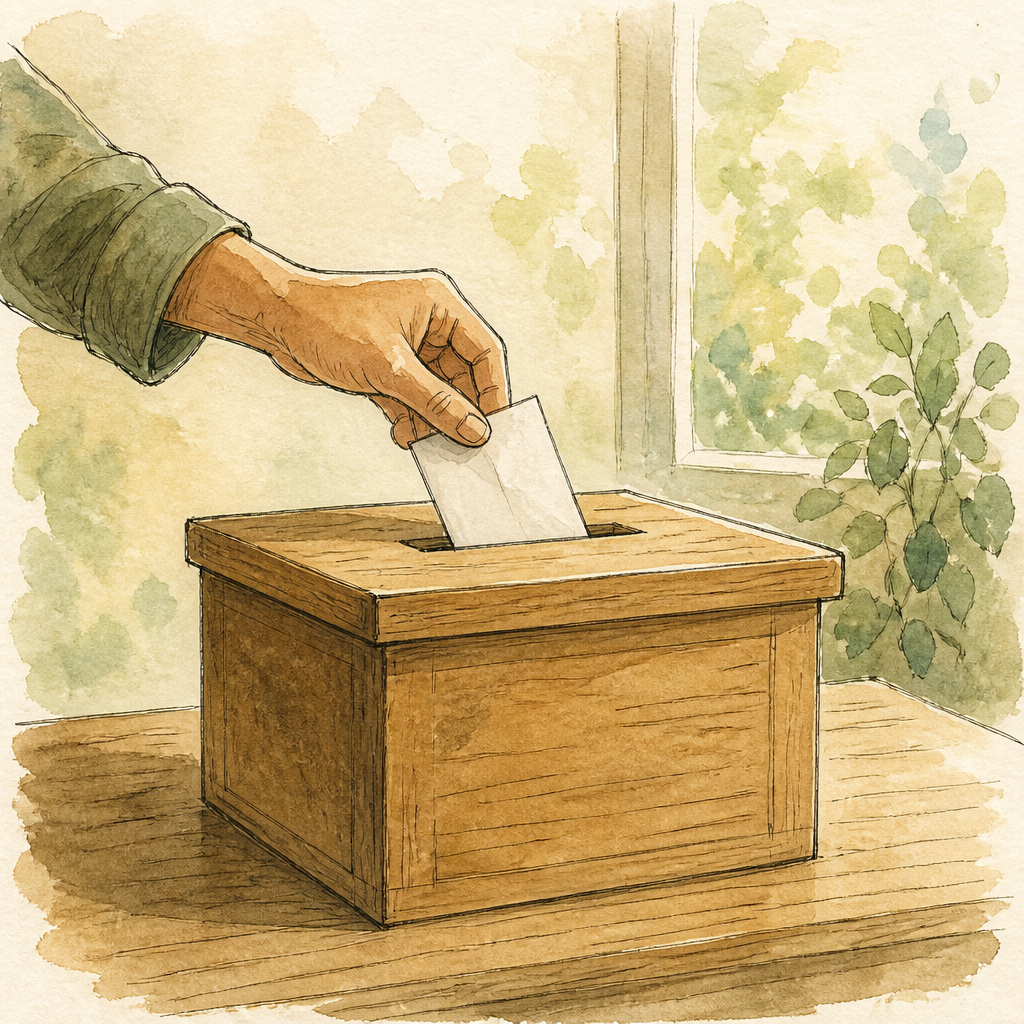
Consider Mississippi, where a Senate seat changed hands this week in the most forgettable possible way: people voted, the votes were counted, a winner was named, and nobody needed a ceasefire to make it happen. If you scrolled past that headline faster than the ones about spies and summits, you proved the point rather than disproving it. Boring is the sound a healthy republic makes when it is working.
And consider Washington, where a former chief executive has been summoned to testify before Congress about an alleged relationship with a Chinese intelligence operative. Whatever the facts turn out to be, notice the mechanism: a committee asking a powerful man to show up and answer questions, under oath, in public. That subpoena is a clerk's tool, not a crown's. It is also, not incidentally, the same oversight power the White House is reportedly warning the other party not to overuse — which is itself worth a raised eyebrow. The instinct to be annoyed by scrutiny is bipartisan; the instinct to actually curtail it is the one worth watching for.
Why the dull version is the wiser one
Here is the case, plainly made: a system where power is checked by rooms full of two men is a system that works beautifully right up until one of those men decides he no longer needs the room. A system where power is checked by credentials, counts, and subpoenas works more slowly, more tediously, and far more durably — because no single bad morning can cancel a procedure the way it can cancel a conversation.
This is not an argument against diplomacy. Wars need rooms where enemies talk, and a war ending is better than a war continuing, full stop. It is an argument against mistaking the room for the republic. The talks in the Kremlin may help end a war. They will not, by themselves, protect the next vice president's credentials, the next election's count, or the next subpoena's teeth. Only the boring machinery does that — and only if citizens keep insisting it stays switched on.
A question worth sitting with
So here is the quiet test for any country, including yours: when the cameras are pointed at a summit, is anyone still watching the clerk? The day a society stops noticing who checks the credentials is the day the credentials stop being checked. Nobody announces that day in advance. It simply arrives, disguised as a slow news afternoon — exactly like this one.