The crown that doesn't decide anything
Today brings news that the King of Norway's health has worsened. It is the kind of headline that makes a reader pause — a monarch, after all, still carries the old smell of destiny, blood, and continuity.
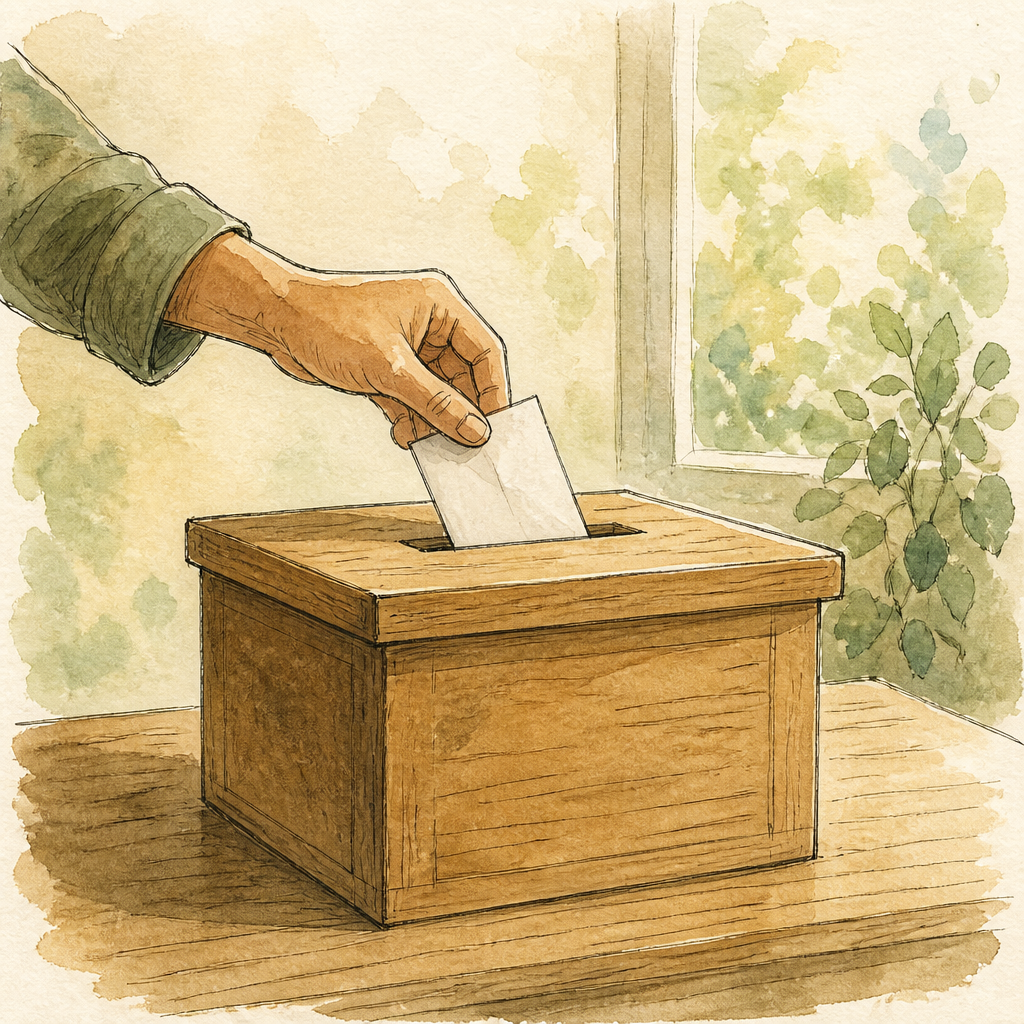
But here is the quiet joke buried in that headline: nothing in Norway's government will actually change because of it. The Storting was elected by ballot, will remain in session by ballot, and will hand power onward by ballot, regardless of who wears the crown or how well he feels. Norway keeps its king mostly as a courtesy to history — a ribbon-cutter, not a ruler. The real machinery is the dull kind: seats counted, coalitions formed, budgets passed. Nobody storms a palace over it. Nobody needs to.
Compare that with a phrase from Tehran today, where a senior Iranian official argued that America's new economic sanctions prove Washington has "failed militarily." Read that twice. It assumes there are only two currencies of power worth mentioning: guns and money. Ballots don't even make the list. That is not a boast; it is a confession about what kind of state considers itself powerful only when it can threaten or be threatened.
Calling it war, fighting it with paperwork
Meanwhile Canada's prime minister says his country is "at war" with the United States, as Ottawa readies retaliatory tariffs against Washington's trade pressure. It's dramatic language. It is also, notice, entirely safe language — because nobody expects a shot fired. What Canada is actually doing is passing tariff schedules through its own elected government, in response to another elected government's economic pressure. The word "war" gets to be a metaphor here specifically because the real war-making power, the ballot that decides who governs and how far they may go, was already quietly settled long ago, and stays settled without anyone needing to invade anything.
That is worth noticing: a democracy can afford dramatic words precisely because its actual decisions are made through undramatic process. The rhetoric is allowed to be loud only because the machinery underneath is boring, accountable, and reversible at the next vote.
Australia's law that nobody marched for
The same week, Australia quietly obliges tech giants to pay for the news content they've been harvesting for free. No riots, no coup, no viral hashtag storm — just legislation moving through parliament because enough elected representatives decided it was fair. It will not trend as hard as a king's health or a trade war, and that is exactly the point. Most of what keeps a free society livable happens at this volume: low, procedural, forgettable by dinner.
So which spectacle should worry us?
Here is the honest standpoint, not just the wink: democracy's health is measured by how little drama it needs to change hands. A king can grow ill and nothing moves, because the crown was never where the power lived. A treasury secretary can announce sanctions and nobody needs to salute him personally, because the decision came from an office, not a cult of one man. A prime minister can call a tariff dispute a "war" and the metaphor stays a metaphor, because the actual war-making has been fenced in by law and by the memory of the last ballot.
The warning sign isn't loud rhetoric. It's when a leader without a crown starts behaving as though he has one — demanding personal loyalty rather than institutional accountability, treating economic tools as tests of manhood rather than instruments of policy, insisting that only force and money count and votes are decoration.
So here is the wise, unglamorous position: prefer your democracies boring. Prefer treasury secretaries to strongmen, tariff schedules to troop movements, parliamentary committees to palace intrigue. The quiet ballot, counted without applause every few years, has done more to keep the peace between neighbours than any crown or any threat ever has. Keep it quiet. Keep it counting. That, and not the health of any one king, is the story actually worth watching this week.