A Bus, a Blackout, and a Question of Standing
Thirty people died on a bus in Ukraine this week, killed by a Russian strike, while Kyiv's lights flicker under a deliberate campaign against its power grid. NATO allies met to discuss the war. South Korea recalled its ambassador over a prisoner dispute with Russia's ally North Korea. These are not European stories alone. But they are stories in which Europe keeps insisting it has something to say.
And it should. A continent that spent the twentieth century learning, at enormous cost, what happens when borders are redrawn by force has earned the right — perhaps the duty — to say plainly that bombing civilian buses is a crime, not a strategy. Saying so is not noise. It is memory doing its job.
The Awkward Mirror
But here is the Socratic itch: on what grounds do you ask others to respect democratic process if the rules of your own elections are being rewritten while critics are still arguing about what just happened to them?
Italy this week approved an overhaul of its electoral system, which the opposition calls a "scam." Perhaps it isn't. Perhaps it is a reasonable modernisation, and the opposition cries wolf the way opposition parties always do when rules change under them. That is exactly why it deserves scrutiny rather than a shrug — because the whole point of a liberal democracy is that changing how votes are counted is too important to wave through on trust.
Europe does not get a free pass simply because it is not Moscow. A union of democracies earns its voice abroad by keeping its own house legible — rules debated in daylight, opposition heard rather than merely outvoted, courts and electoral commissions strong enough to referee their own governments. The day European leaders defend Ukrainian ballots more loudly than they defend the clarity of their own, the mirror gets awkward.
Presence Is a Form of Speech
There's a quieter story in the same week: most UK diplomats are leaving the East Jerusalem consulate, even as London insists "vital services" will remain. Maybe that's true. But diplomatic presence is not decoration — it is often the last thin wire of accountability in places where a ceasefire is more rumour than reality, and where, as reporting from Gaza keeps showing, "every day there is killing" despite the paperwork of peace.
Europe likes to say it stands for the rules-based order. Standing for something, in diplomacy, sometimes literally means standing there — staff in the building, eyes on the ground, a government that can say "we saw it" rather than "we were briefed on it." Withdrawing staff while insisting nothing important changes is the kind of sentence that deserves a raised eyebrow, not applause.
Consistency Is the Cheapest Form of Power
None of this means Europe should fall silent until it is perfect. No democracy ever is, and perfection has never been the entry fee for having opinions. But credibility is not free either. It is bought with the boring stuff: transparent electoral law, diplomats who stay close to the suffering they report on, institutions that survive a change of government without changing their referee.
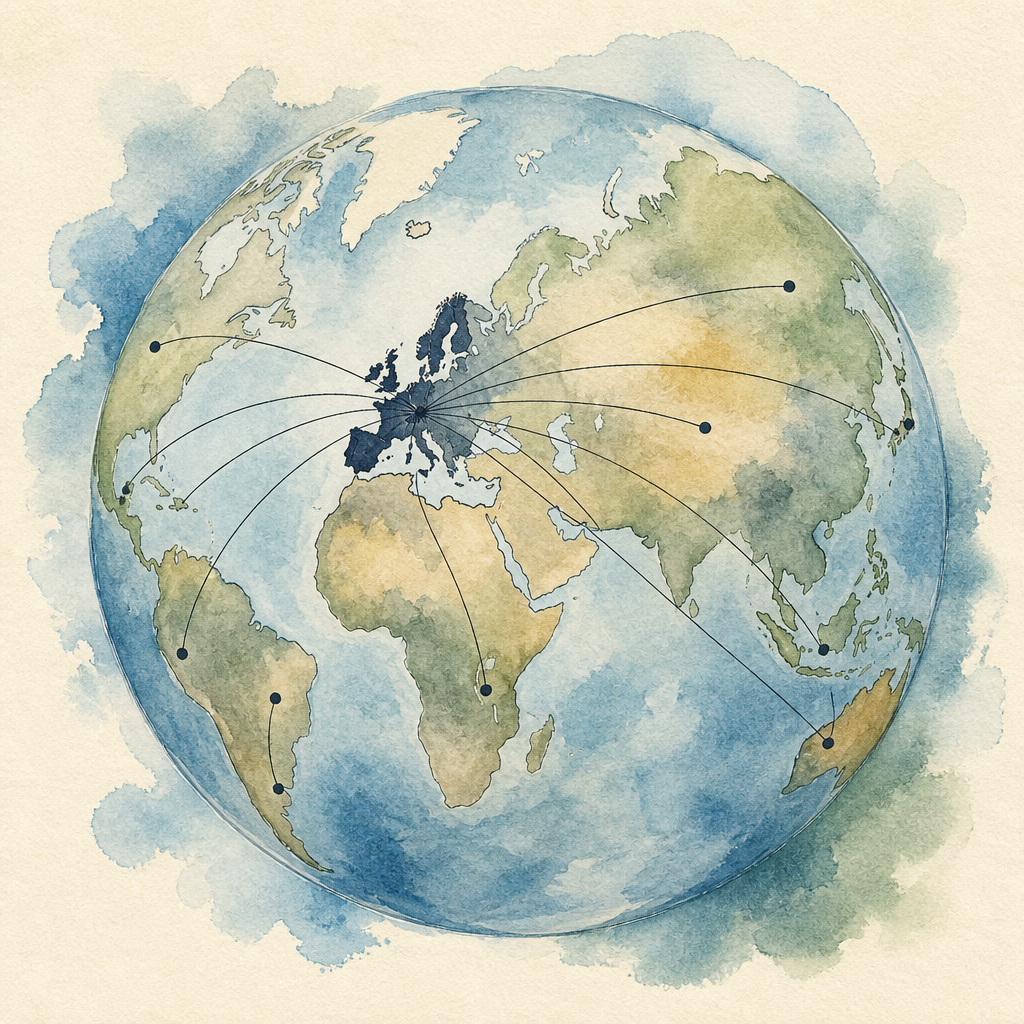
The case for European cooperation — a shared currency of law, elections, courts, and diplomatic presence across very different member states — has always rested on this quiet bet: that acting together, under visible rules, is more convincing than any single government acting alone, however well-intentioned. Convincing to Ukrainians under bombardment. Convincing to Gazans watching a ceasefire leak. Convincing, even, to Italians arguing about their own ballot.
The world does not need Europe to be loud. It needs Europe to be consistent — a continent whose defence of democracy abroad is backed, unglamorously, by the state of its democracy at home. That consistency costs nothing but discipline, and it is the one kind of power that autocrats cannot simply out-shout.