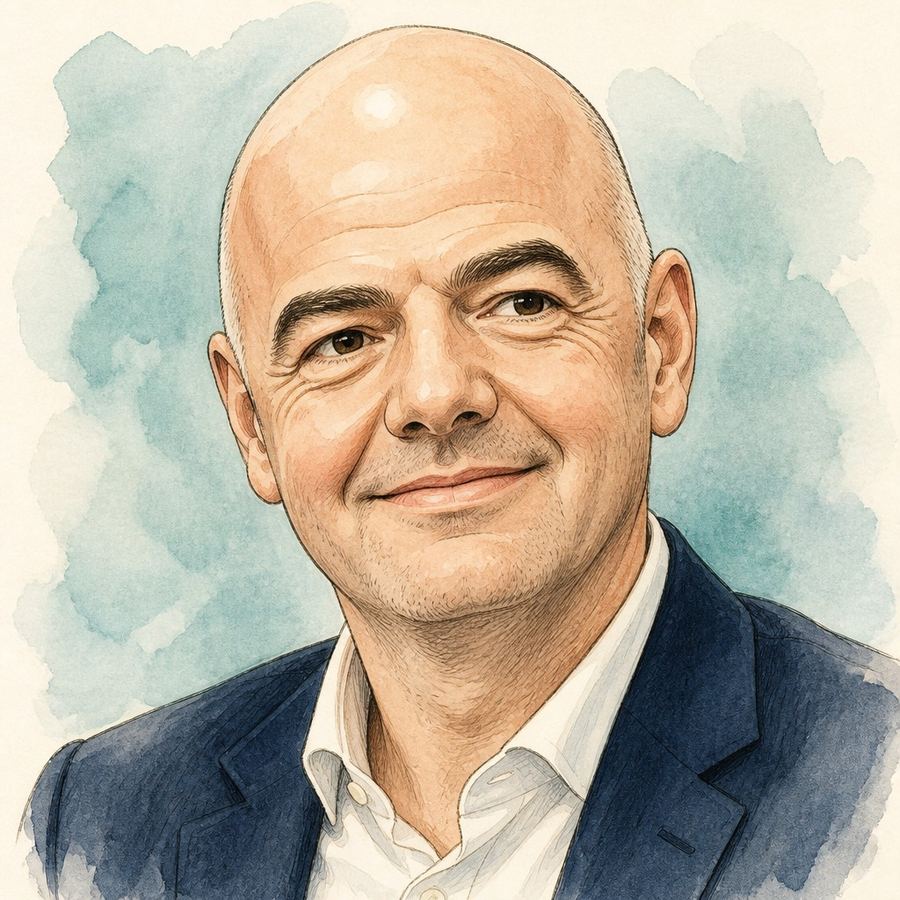
The purest ballot on earth
On paper, FIFA runs the fairest election in the world. Tiny Andorra's football federation carries the same vote as Brazil's. No veto, no permanent seats, no weighted shares for size or wealth. If you wanted to design a model United Nations, you could do worse than copy football's one-country, one-vote rule.
So why did this week's crisis meeting produce, instead of a contest, "internal support" for Gianni Infantino to remain president? A parliament with equal votes should occasionally surprise us. A parliament that never does is not measuring opinion — it is measuring loyalty.
Loyalty is not the same as consent
Here is the quiet trick of institutions built on formal equality: the vote stays free while the incentives stop being free. Development grants, tournament hosting favors, committee seats, travel budgets — all flow through the same office whose leadership is up for renewal. A federation president in a small country does not need to be bribed to hesitate before opposing the man who signs the checks. He only needs to do the arithmetic.
This is not a FIFA-specific sin. It is the oldest habit of power anywhere: concentrate enough discretionary favor in one office, and the surrounding "democracy" starts producing suspiciously unanimous results. We have seen the pattern in parliaments before. Football is not immune to it merely because it is joyful.
A useful contrast, this week
Elsewhere in the same news cycle sits a smaller, sharper story: Iranian footballers who defied Tehran have become Australian citizens. Their federation back home is not merely political — it is an instrument of the state, and defiance of it can cost a career, a passport, even safety. Those players chose exile over obedience.
Put the two stories side by side and a useful question appears. FIFA exists partly to prevent football from becoming what Iran's federation became — a tool of one government's authority. But an organization cannot inoculate 211 members against political capture if its own governing habits — internal consolidation, discouraged challengers, leadership that outlasts scrutiny — rhyme with the very pattern it claims to guard against.
What the member federations owe their own citizens
Every football federation answers, in theory, to its country's clubs, players, and fans. Every one of those federations would tell you, in the abstract, that they favor democratic accountability over one-man rule — most operate inside countries that say the same about their own governments. Reciprocity is a simple test: would this federation accept, from its own national government, the level of internal-only "support" it just extended upward to Zurich? If the answer is no, something is being applied selectively.
A modest, unglamorous reform
The fix is not abolition of the presidency or a dramatic uprising. It is boring good governance: fixed term limits enforced without waivers, independently audited finances published without delay, minutes of "internal" meetings made public rather than summarized by press release, and — most of all — a culture among member federations where declining to support the incumbent is treated as ordinary democratic behavior, not defection.
None of this requires hating football, or Infantino personally, or pretending the sport itself is corrupt. The sport remains one of the best rehearsals humanity has for living together: mixed squads, shared rules, rivalry without hatred. That is exactly why its governing body deserves the same scrutiny its members' own citizens would demand of a national government drifting toward one permanent leader.
The scoreboard is honest. The ballot box should be too. Readers who enjoy the tournament are not obliged to enjoy the boardroom — but they are entitled to ask, politely and repeatedly, who really counted those votes, and why the count keeps landing the same way.