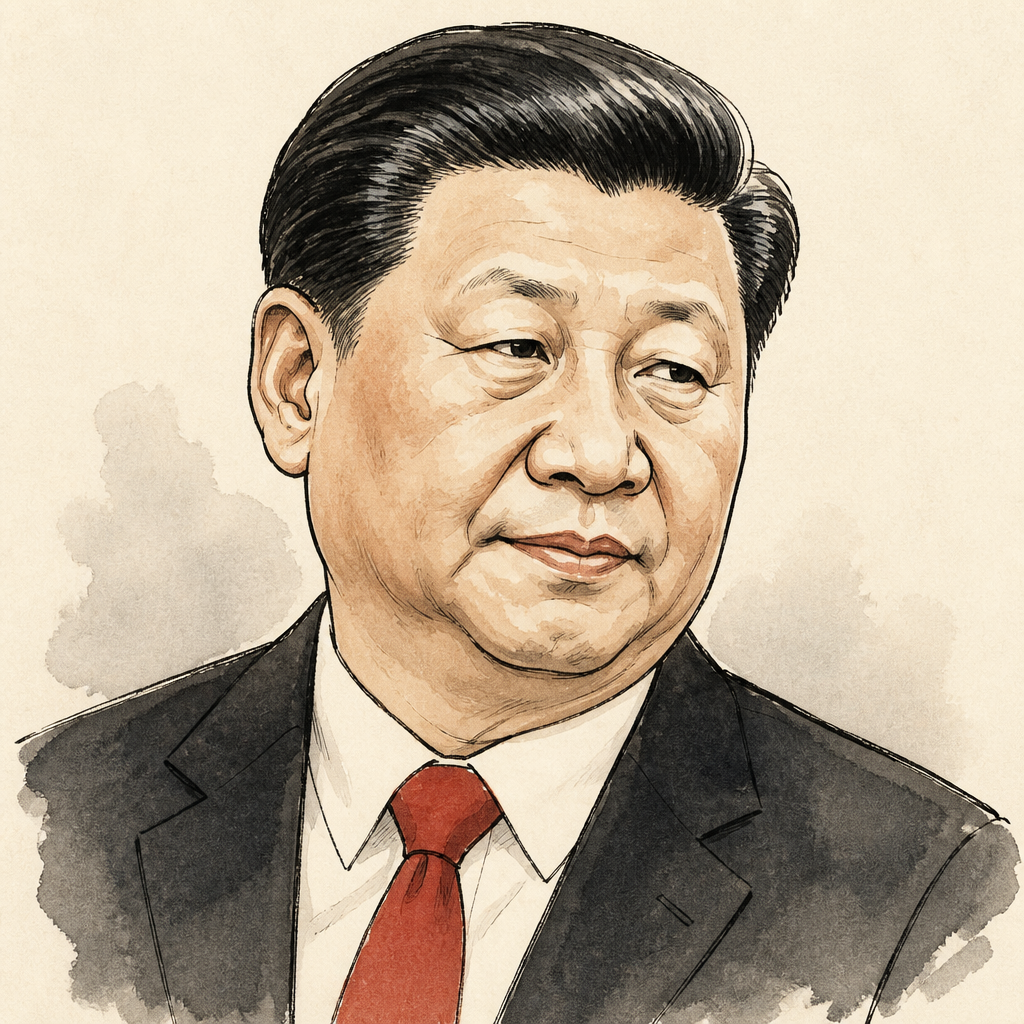
What Passes Through Us Unseen
This year's physics Nobel went to the hunters of neutrinos — "ghost particles" that pour through the planet, through buildings, through you, almost never touching anything at all. Billions pass through your body as you read this sentence. You will never feel one.
It is a strange thing to win a prize for: proving that something enormous can move through us while we notice nothing.
On the same day, Germany confirmed the arrest of a former spy chief, accused of trading state secrets and treason. A man who once stood at the center of a democracy's defenses is alleged to have spent years moving quietly, undetected, until the moment he was caught. Not a ghost particle. A ghost agent.
Put those two stories side by side and a question forms that has nothing to do with physics.
The Old Doctrine, Updated
Deng Xiaoping once counseled China to "hide your strength, bide your time." It was meant as modesty for a poor country catching up. Xi Jinping inherited a country that no longer needs to hide much of anything — a navy, a chip industry, a diplomatic reach that touches every continent in the headlines you read today, from drone strikes in the Black Sea to rebel recruitment in Tigray to surgeries funded for a boy in Somalia.
So here is the fear, stated plainly rather than hinted at with a raised eyebrow: is patience, for Xi, still a virtue — or has it become a tactic? Does Beijing play along with summits, trade talks, and the language of "win-win cooperation" because it believes in the rules, or because the rules are simply useful until they are not?
A neutrino does not announce itself before it interacts. It is detected only at the instant of collision, often by accident, often too late to prepare. Is that the model? Smile, trade, cooperate — until the balance of power makes smiling optional.
Why the Question Is Not Paranoia
Sceptics will say this is the same tired alarm that gets rung about every rising power, and they are not entirely wrong. Suspicion dressed as foresight has justified plenty of bad policy. Reciprocity — the oldest moral test there is — demands we ask what we would think if our own government were accused, as a democracy's was in Berlin, of quietly serving another capital's interests for years before anyone noticed.
But reciprocity cuts the other way too. If we would resist a ghost agent inside our own institutions, we are allowed to ask whether a system with no free press, no independent courts, and no protest — unlike the voters currently marching in India over changes to their own electoral rolls, however imperfect that democracy's self-correction looks from outside — intends, eventually, to stop asking our permission for anything at all.
That is the honest fear. Not that Xi is secretly villainous in some cartoon sense. That he may simply be rational, patient, and unconstrained by any domestic check that could slow him down — and that the rest of us mistake his patience for peace, the way we mistake an empty room for safety just because no neutrino has interacted with us yet.
The Wise Hedge
The answer is not to abandon engagement, trade, or the slow, unglamorous work of diplomacy. Isolation breeds exactly the paranoia it claims to prevent, on both sides.
The answer is to stop confusing patience with trust. Keep counter-intelligence sharp — Berlin's arrest shows what happens when it is not. Keep democratic institutions resilient enough that a voter-roll dispute ends in protest and correction, not in silence. Keep alliances and defenses funded, not because war is inevitable, but because deterrence is the only language a patient power reliably respects.
And keep asking the question in public, calmly, the way a Nobel committee asks what is really passing through us unnoticed. Ghosts are only dangerous when nobody is watching the detector.