A Flag Needs No Audit
This week a head of state travelled to islands his country calls its own and Japan calls occupied. Tokyo protested, as it does most years, and the visit made headlines, as it does most years. Notice the shape of the gesture: no committee approved it, no opposition candidate contested it, no ballot box weighed in. A crown does not need a quorum. It needs a photograph.
Compare that to Zambia, where an election is reportedly haunted by the ghost of the incumbent president's arch-rival — a rival who, whatever the specifics, is present mainly by absence. Fear, once installed, does not need to reappear in person. It can govern a ballot from beyond the campaign trail, shaping who dares to run, who dares to speak, who dares to count.
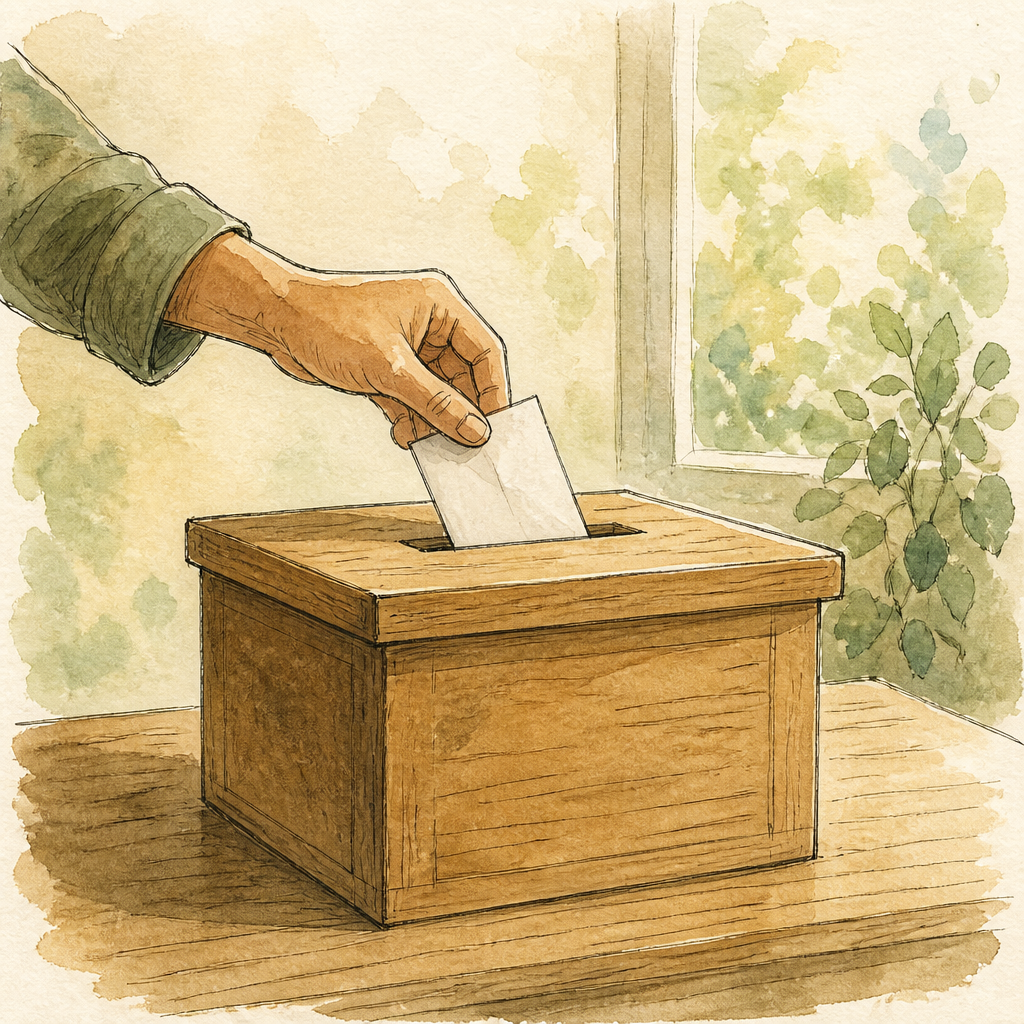
And then, almost invisibly, American voters went to the polls on an ordinary Tuesday for primaries that produced no coronation, no disputed island, no viral photograph — just numbers, precinct by precinct, added up by people whose names nobody will remember. This is the least glamorous item on the list. It may also be the most important.
Two Ways to Hold Territory
A monarchy holds territory by visiting it. A republic holds territory — including the territory of public opinion — by counting it. These are different grammars of power. One says: I was here, therefore it is mine. The other says: we were counted, therefore it is ours.
The first grammar is thrilling. Flags, motorcades, disputed rocks in a cold sea — these make for good footage. The second grammar is tedious by design. Nobody photographs a tally sheet with the same hunger they photograph a flag. And that asymmetry is a quiet danger: spectacle is easy to sell, counting is easy to defund, ignore, or quietly corrode.
Zambia's haunted election is a warning about what happens when the grammar of fear leaks into the grammar of counting. A ghost does not need to stuff a ballot box. It only needs to convince enough people that showing up, or running, or objecting, costs more than it is worth. The count can be procedurally perfect and still be haunted.
The Discipline Nobody Applauds
Here is the case for the boring version of democracy: it is boring because it refuses to need a hero. A Tuesday primary does not require a strongman's blessing or a rival's permission. It requires poll workers, a ballot, a count, and the shared agreement that the number that comes out the other end will be respected even by the side that loses.
That agreement is not a law of nature. It is a habit, trained over generations, and habits atrophy exactly when nobody is watching them — which is most of the time, since counting heads is not televised the way visiting islands is. The golden rule applies here as plainly as anywhere: a country that would be furious to have its own votes ignored should not tolerate the slow strangling of anyone else's, whether by intimidation, by ghost campaigns, or by a leader who prefers ribbon-cuttings to recounts.
What to Watch, Quietly
So here is a modest civic exercise for this Thursday. Ask, of any political event that crosses your feed: is this a crown or a count? Is someone claiming legitimacy by showing up somewhere dramatic, or by submitting to a tally that could go against them? Notice which leaders schedule photo opportunities and which ones schedule audits. Notice which elections are haunted, and by whom, and why the haunting is allowed to work.
Democracy's real defense is not outrage on the day a strongman visits disputed rocks. It is the unglamorous insistence, every ordinary Tuesday, that heads get counted rather than crowned — and that a ghost, however old or however feared, does not get a vote.