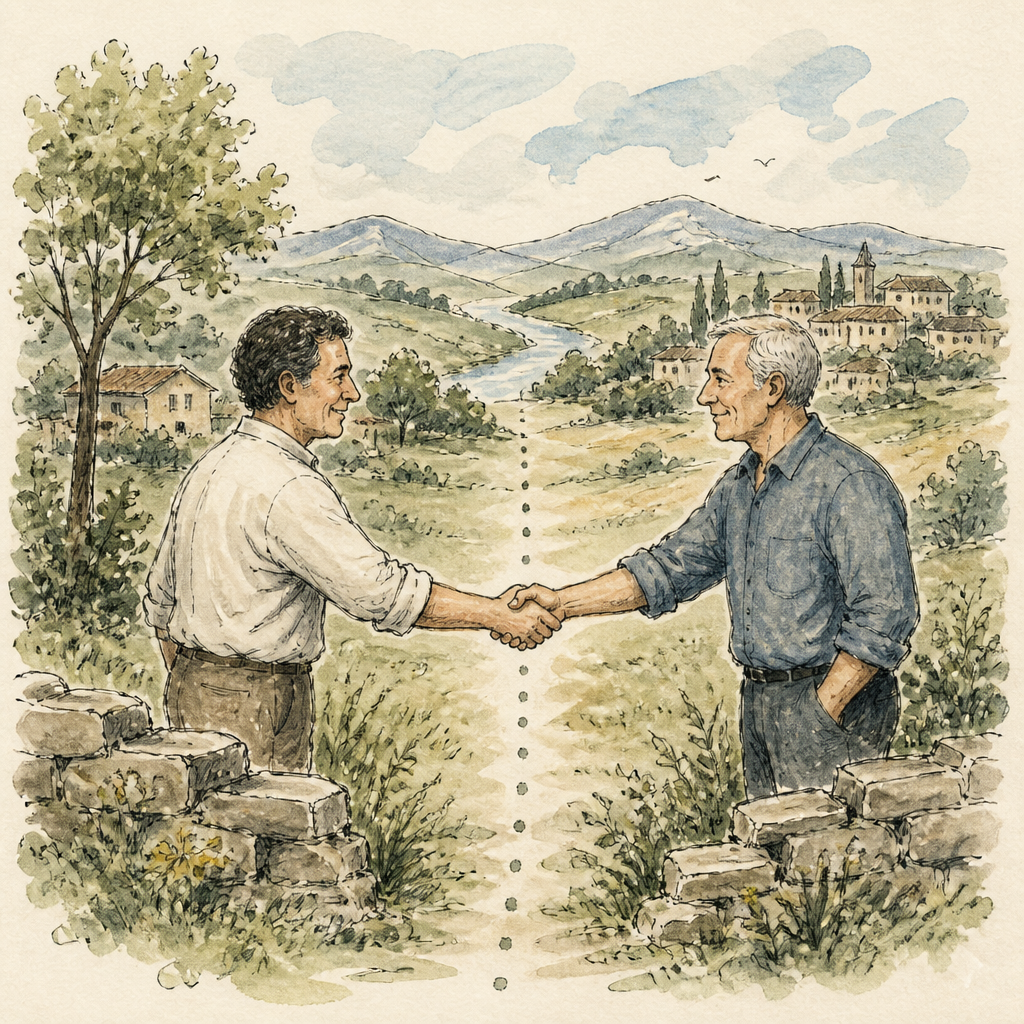
A border is not a friendship
Geography is generous. It hands out neighbours for free — the country next door, the sea lane your ships must cross, the market your factories depend on. What geography does not hand out is trust. That has to be built, rehearsed, and occasionally repaired at 2 a.m. by tired negotiators. Today's headlines are a small museum of what happens when that maintenance stops.
Start with something unglamorous: auto parts. Canada and the United States share the longest undefended border on earth, decades of integrated factories, and now a trade war that is giving parts makers a headache. Nobody is shooting at anybody. And yet a windshield wiper motor made in Ontario can suddenly cost more to sell in Michigan than it did last year. Ask yourself: if two democracies this close, this intertwined, this culturally similar, can let tariffs fray their supply chains over politics, what exactly was holding the partnership together — sentiment, or rules?
The honest answer is rules. Sentiment is lovely at a hockey game. It does not clear customs.
When the rulebook is optional
Compare that friction — real, costly, but negotiable — with what happens where there is no rulebook to fall back on at all. In the Red Sea, the Houthi movement claims new advances and a tighter grip on one of the world's busiest shipping lanes, a chokepoint the whole world's neighbours depend on whether they asked to or not. Analysts already warn this could push fuel prices higher far from Yemen's coast. This is what neighbourliness looks like when it is taken by force instead of negotiated by law: everyone downstream pays, and no one downstream was consulted.
Then there is Hong Kong, where a court has sentenced three organisers of the Tiananmen vigil to prison. For years that candlelight was Hong Kong's quiet argument that "one country, two systems" meant something — that Beijing and Hong Kong could be neighbours under one roof without one simply absorbing the other's memory. A courtroom has now answered that argument. It is worth noticing, without shouting, what kind of neighbour writes its promises into a treaty and then edits them with a verdict.
Europe's unglamorous invention
Set against a seized strait and a jailed memory, the European Union starts to look less like a bureaucratic slogan and more like a genuine invention: a way for neighbours who fought each other twice in a century to write down, in boring legal language, exactly what they owe each other — and then actually show up when a court says so. It is not romantic. It has never once inspired a candlelight vigil. But it has kept the French and the Germans from doing to each other what a court in Hong Kong just did to its own citizens, and what an armed movement is now doing to a shipping lane nobody elected it to control.
Is the EU perfect? Ask any farmer wrestling its paperwork, any small business drowning in forms it did not choose. Overreach is real, and democracies that let procedure smother citizens invite exactly the backlash that strongmen love to harvest. But the fix for clumsy rules is better rules, chosen together — not the absence of rules, which is what a seized port or a silenced vigil actually offers instead.
What a neighbour actually owes
So what does neighbourliness across a border require, once you strip away the flags and the folk songs? Something almost dull: a shared court both sides will actually obey, a trade rule neither side rewrites by ambush, and a memory neither side is allowed to bury by force. Canada and the United States are testing whether decades of proximity survive without renewed effort. Hong Kong is showing what a broken promise between neighbours looks like from the inside. The Red Sea is showing what happens when there is no promise at all, only the strongest hand on the strait.
None of this asks for slogans. It asks citizens, quietly, on a Saturday, to notice which of their own borders still run on rules — and to defend that unglamorous machinery before someone decides it was never really binding.