The Word "Historic" Is Doing a Lot of Work
A leader announced this week that his country would control 65 billion barrels of someone else's oil, and called the arrangement "historic" — in the same breath, as if history itself had been consulted and agreed.
Historic is usually a word other people use, later, once the thing has survived contact with reality. When the author of an act also supplies its verdict, in real time, with an adjective this large, a reasonable citizen might pause. Not to deny the deal happened. Just to ask: who benefits from skipping the waiting period between event and judgment?
Certainty that arrives before evidence is not analysis. It is décor.
A Flood With Two Passports
Meanwhile, flash floods tore through Nepal and the Tibetan plateau this week, killing hundreds and leaving over a thousand missing. On the Nepali side, the world is watching in something close to real time — daughters searching for parents, glaciologists explaining the melting ice above, journalists asking what more floods like this one mean for a warming Himalaya.
On the Tibetan side of the same mountain range, the footage largely isn't shown, and the victims are largely uncounted, at least not in public.
Same water. Same peaks. Two very different relationships between a government and the truth about its own citizens' suffering. One government seems to have calculated that grief, unlike gross domestic product, is not something it wants measured and displayed.
Ask yourself which government you would rather live under during the next disaster — not the one that manages the story best, but the one that lets the story be told at all.
Entrenchment Is Not the Same as Trust
Six months into the war, Iran's regime remains standing, we're told — battered, but entrenched. Entrenchment is a useful word for regimes, because it sounds almost like an achievement. Dig in deep enough and survival gets mistaken for legitimacy.
But a government that survives by digging trenches around itself has told you something important: it expects to need them. Democracies rarely entrench against their own people. They hold elections instead, on the theory that a leader who has to ask permission every few years develops a healthier relationship with humility than one who has to build a bunker.
Kings Who Know They're Not Kings Anymore
Contrast this with Norway this week, where a king died and his son ascended the throne, and almost nothing changed — because almost nothing was supposed to. A constitutional monarch's entire dignity rests on possessing enormous symbolic weight and almost no actual power. It is, in its quiet way, one of the more honest arrangements humans have invented: all the ceremony, none of the danger.
Iceland, on the same news day, held a close vote on whether to even restart talks about joining a larger union of nations — a decision so ordinary, so procedural, so free of grand adjectives, that it barely made international headlines. Which is rather the point. Nobody needed to call it historic. The ballots will decide what it was.
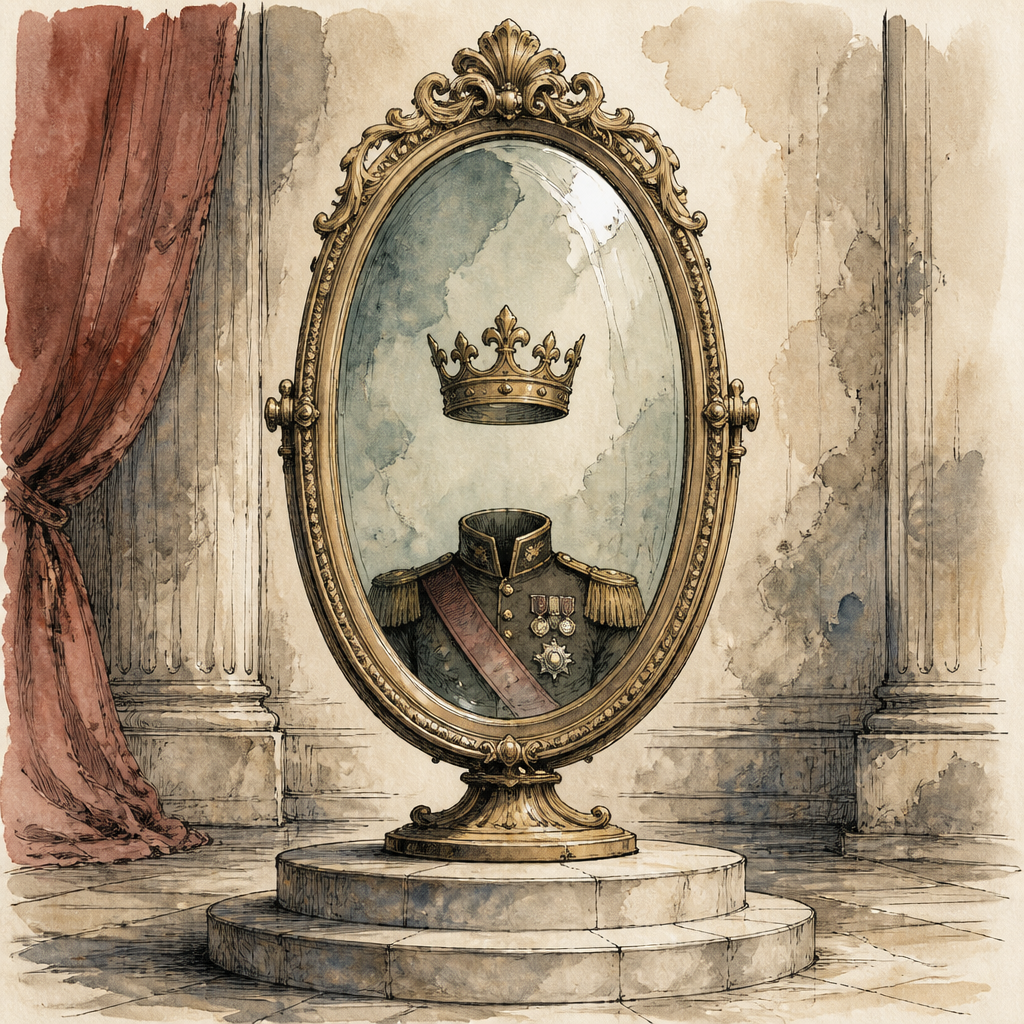
What the Mirror Never Shows
A strongman's mirror is a specific kind of mirror. It shows the leader looking resolute, decisive, larger than the moment. It does not show the flood victims whose footage never aired. It does not show the trench being dug. It does not show the difference between an oil deal and a good oil deal — because that distinction requires time the mirror doesn't grant.
Democracies have a duller instrument than a mirror: the delay. The free press that asks annoying follow-up questions. The election that arrives whether or not the incumbent feels ready for it. The vote that lets ordinary people, not adjectives, decide what was historic.
None of this is glamorous. It rarely produces a triumphant photograph. But a system that makes you wait for the verdict, rather than supplying it in advance, is one that has at least admitted the obvious: the person announcing his own greatness is the last person qualified to judge it.