A number that was allowed to exist
In Assam this week the flood death toll reached one hundred. Thousands lost their homes. The number was reported, revised, argued about, and printed again. Nobody arrested the journalists who counted the dead.
That sentence should not need writing. But look around the world this week — a former MP allegedly confessing to killing an official on YouTube in Thailand, evidence of state-linked violence against a detective in South Africa, a rebel leader killed in Colombia, drone strikes counted in the dozens across Russia and Ukraine — and you notice how rare a boring, well-reported disaster actually is. Somewhere, a district officer in Assam had to answer for a levee. That is what accountability looks like when it is working: not glamorous, just visible.
The vacuum question
Elsewhere in the news, the United States is closing five consulates, and critics worry China will simply walk into the diplomatic space left behind. It is a fair worry. Power abhors a vacuum, and the twenty-first century has taught us that vacuums get filled by whoever shows up with money and patience, not necessarily by whoever shows up with a constitution.
Which raises the honest question of the day: who is showing up for the world's liberal democracies right now, at scale? Not a rhetorical flourish — a real inventory. Europe is preoccupied and, per this week's news, even reintroducing border checks between its own members. Washington is retrenching. And India — 1.4 billion people, the largest electorate on Earth, a free press vigorous enough to publish its own government's flood failures in real time — sits exactly where a vacuum-filler would want to sit, if it chose to.
Does it choose to? That is worth asking plainly, not as flattery and not as suspicion, but as the kind of question a mature democracy should be able to survive being asked.
Modi, and the habit of applause
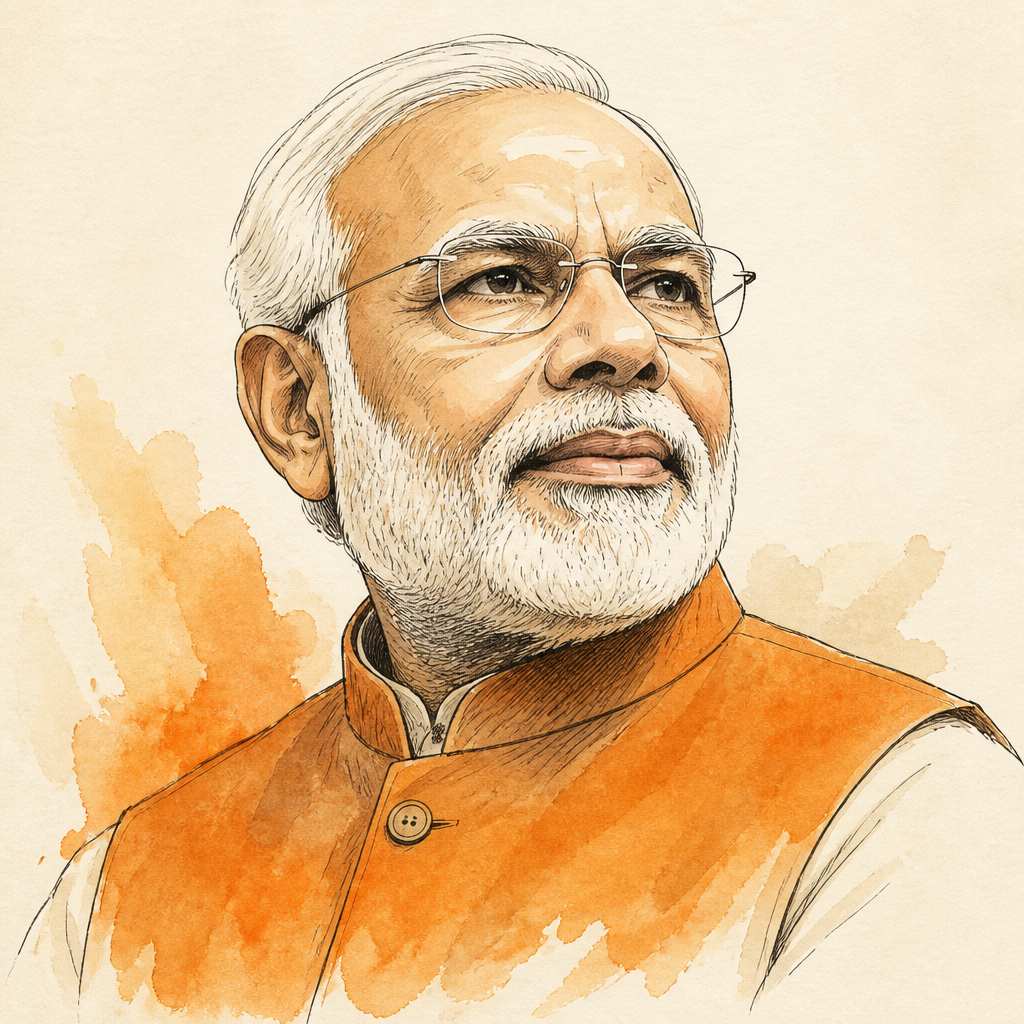
Narendra Modi has given India genuine global standing — infrastructure, a seat at every table that matters, a diaspora that carries Indian confidence into Silicon Valley and Westminster alike. None of that should be waved away with irony. Scale and competence are real achievements, and pretending otherwise would be its own kind of condescension.
But here is the test this newspaper applies to every leader, strongman or elected: does criticism of him still reach the public unfiltered? Do opposition-run states still function, still win elections, still argue back? Does a minority still worship as it pleases without a permit from the majority's mood? On the honest reading, India's answer is: mostly yes, under visible strain, with real reporters still asking real questions — which puts it in a different category entirely from the personality cults this newspaper watches with more worry. But "mostly yes, under strain" is not a status to relax into. It is a status to keep checking, the way you check a levee before the monsoon, not after.
The mirror, not the pedestal
The useful comparison is not Modi versus Putin versus Xi, as if democracy were a talent contest. The useful comparison is India versus its own founding promise — the same comparison every democracy owes itself. An Indian citizen who praises Modi's global stature and still demands a free press, an independent court, and a counted flood toll is not being disloyal. That citizen is doing the actual job of citizenship. A subject who only applauds is doing something else.
Why this is the wise standpoint
The temptation, watching a retreating West and an assertive China, is to root for whichever democracy is biggest and call the argument finished. That is lazy. Size is not virtue; transparency is. India earns its claim to global leadership not because it has the most people, but because it still lets those people find out how many of them drowned this week. Keep that arithmetic honest, and the rest of the argument — about influence, about vacuums, about who the twenty-first century belongs to — takes care of itself.