A King's Boast, a Board's Minutes
Somewhere between the headline and the truth sits a boardroom. Nvidia's chief executive, Jensen Huang, is reportedly back in his seat, and the American president says he convinced Nvidia to put him there. It is a flattering story — for the president.
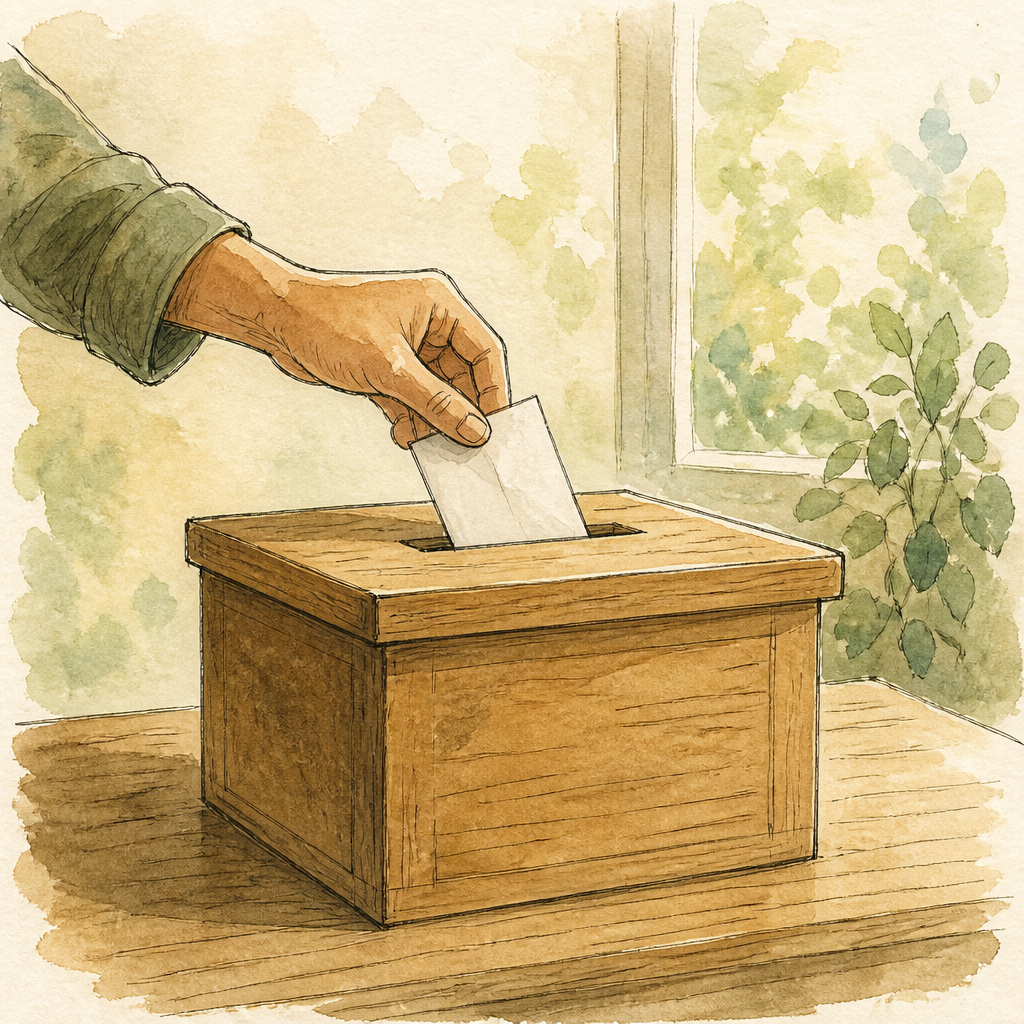
But boards do not generally work by royal conviction. They work by meetings, memos, and votes that nobody photographs. Directors raise hands, or don't. Shareholders own stock, or sell it. Somewhere in that unglamorous machinery, a decision got made. The president's claim is theatre layered on top of a ballot box most people never see.
This is not a small distinction. It is the whole distinction.
Crowns Love an Audience; Ballots Do Not Need One
A crown performs. It needs a throne, a camera, a story in which one man's will moves the world. A ballot, by contrast, is almost insultingly boring. Nobody weeps over a quorum. Nobody builds a monument to a quarterly shareholder vote. And yet the quorum is what actually holds companies, courts, and countries together when the cameras go home.
It is worth noticing who is drawn to the throne story and who is not. Xi Jinping, watching from Beijing, is reportedly studying what Huang's return teaches him about Trump — not because boardroom procedure is thrilling, but because a leader who can make a company say "yes sir" in public is a leader worth understanding, or worth copying. That is the quiet danger in a loud boast: it teaches every strongman watching that institutions can be made to look like extensions of one man's wish. Whether or not that is what truly happened at Nvidia, the lesson lands anyway. Spectacle travels faster than footnotes.
The Alliance That Counts, the Satellite That Threatens
The same contrast shows up at a larger scale this week. NATO's chief is promising to defend against the threat of a Russian nuclear satellite in orbit — a single alarming object, launched by decisions made, as far as any outsider can tell, by very few hands in Moscow. NATO's answer is not a single man's vow either, however it is phrased by a secretary general standing at a podium. It is thirty-two governments, each accountable to its own parliament, each needing its own quiet count of votes before a single euro or soldier moves. Slower. Less cinematic. And historically far harder to turn into a catastrophe, because a catastrophe usually needs one unaccountable will, not thirty-two negotiated ones.
Meanwhile the war itself keeps proving the same point from the other direction. Drones struck Russian ships off Libya; a Russian warship sank near Benghazi; incursions into NATO territory are reportedly increasing. Each is a reminder that wars started by counted decisions are rare, and wars started by uncounted ones are common. Crowns go to war more easily than committees do. That is not an accident of temperament. It is a design feature of accountability.
Why the Boring Machinery Deserves Our Loyalty
So here is the case, plainly: prefer the quiet ballot to the loud boast, even when the boast is more fun to read. Prefer the board that nobody photographs to the leader who photographs himself fixing it. Prefer the alliance that needs thirty-two signatures to the satellite that needs none.
This is not a call to admire bureaucracy for its own sake — a company drowning in paperwork is its own small tyranny, and so is a democracy that forgets how to decide anything on time. The point is not more counting; it is counting that is real, proportionate, and visible to those being counted.
The test for any claim of power, corporate or national, is simple and almost dull: who actually voted, and can they prove it? If the answer is a shrug and a photograph, be polite about it — and then go check the minutes.