
A Ship, a Missile, and a Question
Ukraine sank a Russian container ship this week. Nine people died in strikes on Kyiv the same week. Put those two facts side by side and you get the whole war in miniature: a country that refuses to lie down, being punished for it.
There is something almost embarrassing about how simple the moral arithmetic remains, more than four years into this war. One side invaded. The other side is trying to keep a parliament, a currency, an army answerable to civilians, and the right to vote its own leaders out of office. If that sounds unremarkable, ask yourself how many countries on earth actually manage it, and how casually the ones that do tend to forget what it costs.
Democracy, seen from Kyiv, is not a seminar topic. It is people who keep going to work under strikes, keep holding elections in their heads even when they cannot hold them on paper because the country is at war, keep a free press that reports nine deaths instead of a ministry that erases them. Contrast that with the alternative on offer next door: a state where the war itself cannot be called a war, where dissent is a prison sentence, where the only accountability is upward, to one man. Which of those two systems would you want deciding your own fate?
The Selfish Reflex
Meanwhile, across the continent, Spain's prime minister used a sharper word than diplomats usually allow themselves: selfish. Tens of thousands crossed into Ceuta from Morocco this week; dozens died trying. And some EU governments responded the way frightened people often do, by looking for the door marked "not my problem."
Here is the uncomfortable symmetry. The same Europe that asks Ukrainians to bleed for the principle that borders shouldn't be redrawn by force is now quietly asking whether its own borders are worth the trouble of a shared answer. You cannot lecture the world about the sanctity of borders in Donbas while treating the people who show up at your own border as someone else's headache. Reciprocity is not a slogan for war zones only. What you would not want done to you at a border, you should not do to others at yours.
None of this means Ceuta and Kyiv are morally identical stories — one is invasion, the other is migration under desperate pressure, and conflating them would be its own kind of dishonesty. But they share a test: does solidarity survive contact with cost? Ukraine has spent four years finding out that solidarity, once promised, has to be paid for in weapons, money, and patience, not just applause. Spain is finding out this week that the same is true of solidarity closer to home.
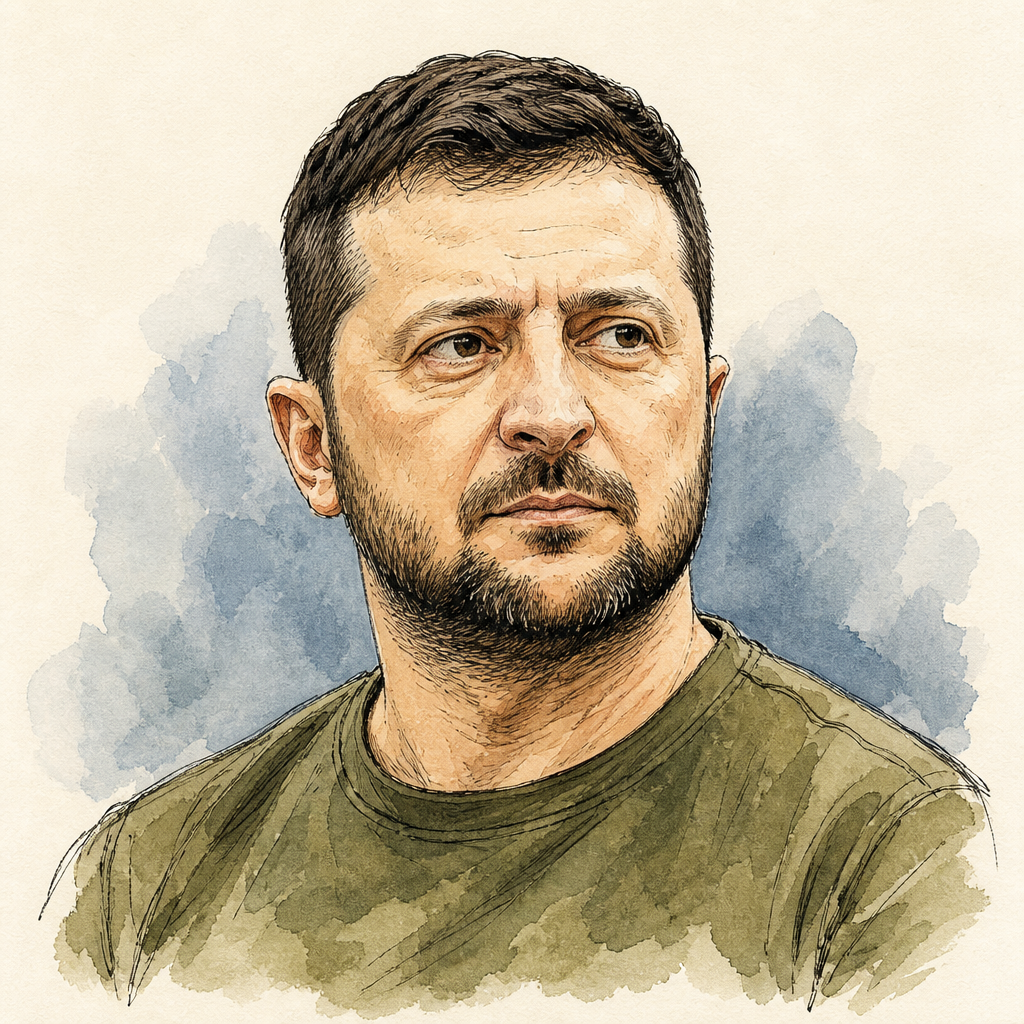
Why Bother Defending Institutions At All
Someone will say: institutions are slow, quarrelsome, embarrassing — an urgent EU meeting called because a prime minister used the word "selfish" in public, honestly. Wouldn't a strongman just decide, and be done with it?
He would. That is precisely the danger. A parliament that argues in public is not a weakness to be traded away for efficiency; it is the mechanism by which a mistake gets corrected before it becomes a catastrophe. Ukraine's whole case for existing as a state, rather than a province, rests on that same bet: that a country which can argue with itself in public is worth more, in the long run, than one that can only be argued with by force.
So the honest position for this Saturday is not comfortable applause for Kyiv from a safe distance while Europe quietly fails its own test at Ceuta. It is this: keep defending Ukraine's right to be a boring, quarrelsome, accountable democracy — because that is what the war is actually about — and stop pretending that solidarity has a border of its own. Democracies that mean it don't get to choose which crisis is inconvenient this week.