One Table, One Set of Rules
In Munich this week, NPR reports, breakfast beer with sausage and pretzels is apparently never too early. Whatever one thinks of the hour, notice what makes an Oktoberfest tent work at all: everyone at the long table plays by the same rules — one tap, one price list, one closing time. Nobody gets a private bar with private laws just because their family arrived from somewhere else. Trivial example, serious principle.
That principle is being tested, in far less cheerful settings, all over today's headlines.
Denmark's Uncomfortable Premise
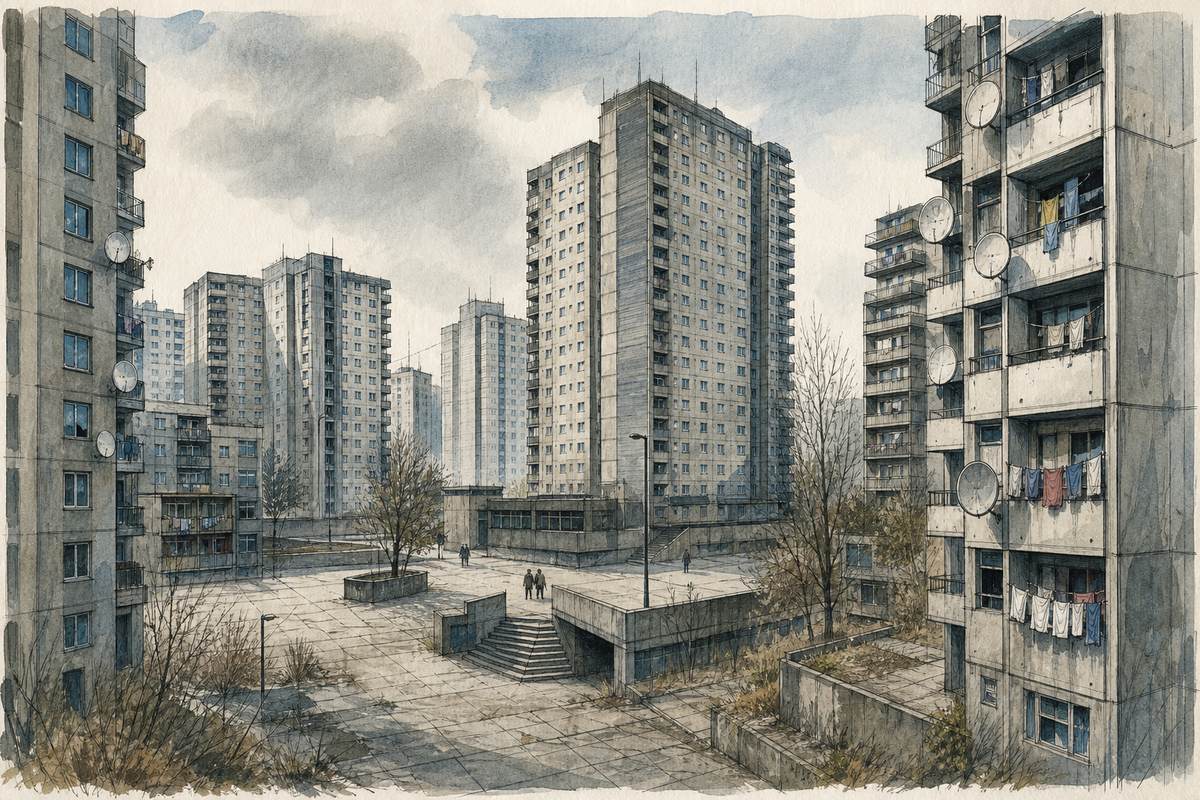
Denmark's 2018 "Ghetto Package" — officially aimed at ending parallel societies by 2030 — was controversial for good reason. It restructured public housing, made cultural integration mandatory in certain neighbourhoods, and gave courts tools against enclaves that quietly opted out of the common rulebook. Critics called it heavy-handed. They were not wrong to worry: any policy that singles out neighbourhoods risks singling out people by ancestry rather than by conduct, and that risk deserves permanent vigilance, not a one-time debate.
But strip away the controversy and one premise remains hard to argue with: a democracy cannot indefinitely host two legal systems, two policing arrangements, two sets of enforceable norms, operating side by side on the same soil. Not because difference is dangerous — freedom of belief is not up for negotiation — but because law that applies to some and not others stops being law and starts being privilege.
Same Question, Bigger Stage
Watch that premise travel today. Israel has rejected a 15-point plan for Gaza, with Netanyahu demanding Hamas disarm before anything else proceeds. Set aside, for a moment, every other layer of that conflict — the occupation, the civilian toll, the decades of grievance on both sides, none of which this essay can or should flatten into a footnote. Focus only on the narrow, almost boring, structural point buried inside the disarmament demand: can a governed territory function with two armed authorities claiming legitimacy at once? Denmark's planners, arguing about apartment blocks in Aarhus, and negotiators arguing about Gaza's future, are circling the same unglamorous truth. A state — or a proto-state, or a neighbourhood — either has one monopoly on legitimate force and law, or it has none.
Spain's new border checks on travellers from Italy are a gentler version of the same instinct. Schengen's whole promise was one shared space, one set of rules for who crosses and how. When a government reaches for a temporary checkpoint, it is signalling — rightly or wrongly — that it no longer trusts the shared rulebook to be applied evenly at every gate. That instinct deserves scrutiny too: Europe should be wary of letting "temporary" checks become a permanent habit, since bureaucracy that creeps rarely retreats. But the underlying worry — a common space needs common enforcement, or it stops being common — is not paranoia. It is Denmark's question, asked at a highway exit instead of a housing block.
What the Golden Rule Actually Asks
Here is a fair test, and it works in Copenhagen, Gaza, or the Spanish border alike: would you accept a private court, a private militia, or a private checkpoint operating a few streets from your own house, answerable to no one you elected? If the honest answer is no, then consistency — not prejudice — requires you to ask the same of every enclave, everywhere, regardless of who lives there.
The danger, always, is doing this selectively: demanding one law for immigrant neighbourhoods while shrugging at native ones, or demanding disarmament from one side of a conflict while arming the other without conditions. Shared law only earns its legitimacy by being genuinely shared — applied to conduct, not ancestry; to weapons, not to flags; to checkpoints justified by evidence, not by fear of a particular passport.
Denmark did not invent this question. It only had the nerve to write it into law first. The rest of the world, from Gaza to a Spanish toll road, is still deciding how honestly it will ask the same one.