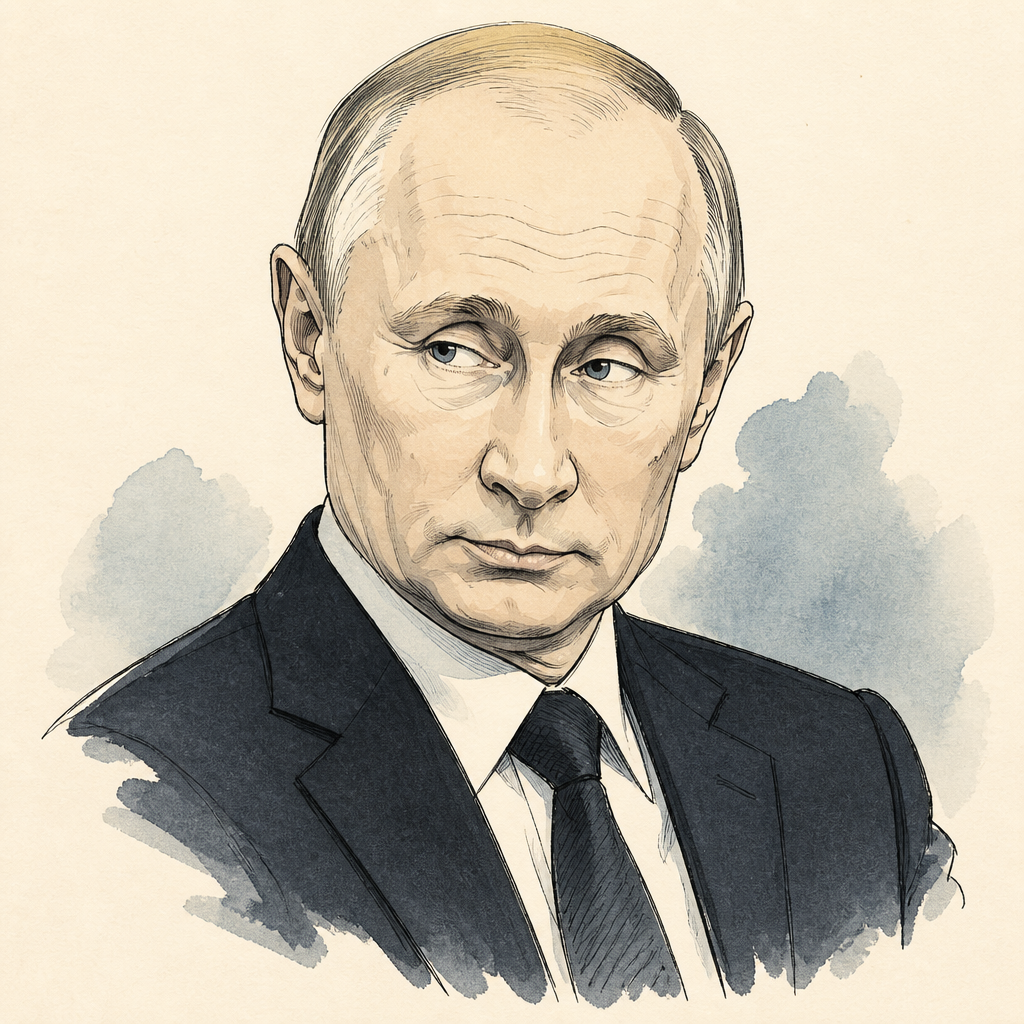
A Morning of Many Fires
Open any front page today and you will find a world in motion. Rescuers dig through mud in Nepal. Prosecutors describe near-daily assaults in Ceuta. Sudanese families sit in a refuge city that cannot hold them. Finance ministers gather in North Carolina. A ballroom project in Washington survives a court challenge. An army secretary resigns. A president muses aloud about the Falklands, as if borders were a matter of mood.
It is a lot to carry before breakfast. And it is tempting, faced with so much noise, to treat every unsettling headline as roughly the same size of worry — one flat category called "bad news," filed and forgotten by lunch.
But fear, like attention, is a limited resource. Spend it everywhere and it protects nothing.
The Fire That Doesn't Go Out
Somewhere in that same list, almost easy to miss between the deals and the deportations, is a short line: Russian strikes have hit rail workers in Kyiv again. Not soldiers on a front line — workers keeping trains running so that a city can still function like a city.
This is not new. It has not been new for years. It is not a scandal that will produce a resignation or a court ruling by Friday. It is a pattern, repeated with the patience of someone who has concluded that the world's attention will always be pulled elsewhere — to a ballroom, to an oil deal, to a review of some islands nobody was fighting over yesterday.
That patience is the thing worth fearing.
Theater and Doctrine Are Not the Same Weight
Let's be fair to the noisier headlines. A court allowing a construction project to continue, an army secretary stepping down, a president wondering out loud about a distant territory — these are the habits our own tradition warns us to notice early, before they harden into something worse. That vigilance is correct. Democracies stay democracies partly by refusing to shrug at small erosions.
But notice what also happens in each of those stories: a court still rules. An official still resigns rather than being removed by force. A remark gets walked back or argued over in public, by people who are still free to argue. The machinery of accountability, however creaky, is still running.
Now ask the same question of the strikes on Kyiv's rail lines. Which court will rule on them? Which resignation will follow? Which free press inside Russia will be allowed to ask the question at all?
The difference is not tone. It is capability, and the absence of anything left to check it.
What Fear Is For
Fear, used well, is not panic. It is a measuring instrument. It tells you where your attention actually needs to go, and it should be proportioned to what a man has already shown he is willing to do — not to how loudly he says it.
Putin has shown, repeatedly and without much variation, that he is willing to redraw a neighbour's borders by force, to strike the ordinary infrastructure that keeps ordinary lives running, and to do so for years past the point where most leaders, checked by courts or voters or a free press, would have been stopped. That is the standard by which fear should be measured — not by comparing him to whichever strongman-adjacent gesture is trending in Washington or Pretoria this week.
This is not an argument for excusing anyone else's authoritarian habits. It is an argument for clarity: lump every worrying figure into one undifferentiated dread, and you dilute the alarm that should be reserved for the one still doing the most damage, right now, to the most people.
Where the Discipline Should Go
The finance ministers meeting this week, the sanctions campaigns being argued over Iran and Venezuela, the whole apparatus of coordinated economic pressure — all of it works better with focus than with scatter. If allies cannot agree on Iran because China is the hole in the plan, imagine how much easier it is to let Ukraine slide down the agenda between a ballroom ruling and an oil deal.
Fear Putin most, plainly and without embarrassment. Then let that fear do something useful: keep the aid moving, keep the sanctions coordinated, keep the rail workers of Kyiv from becoming a line item nobody reads past.