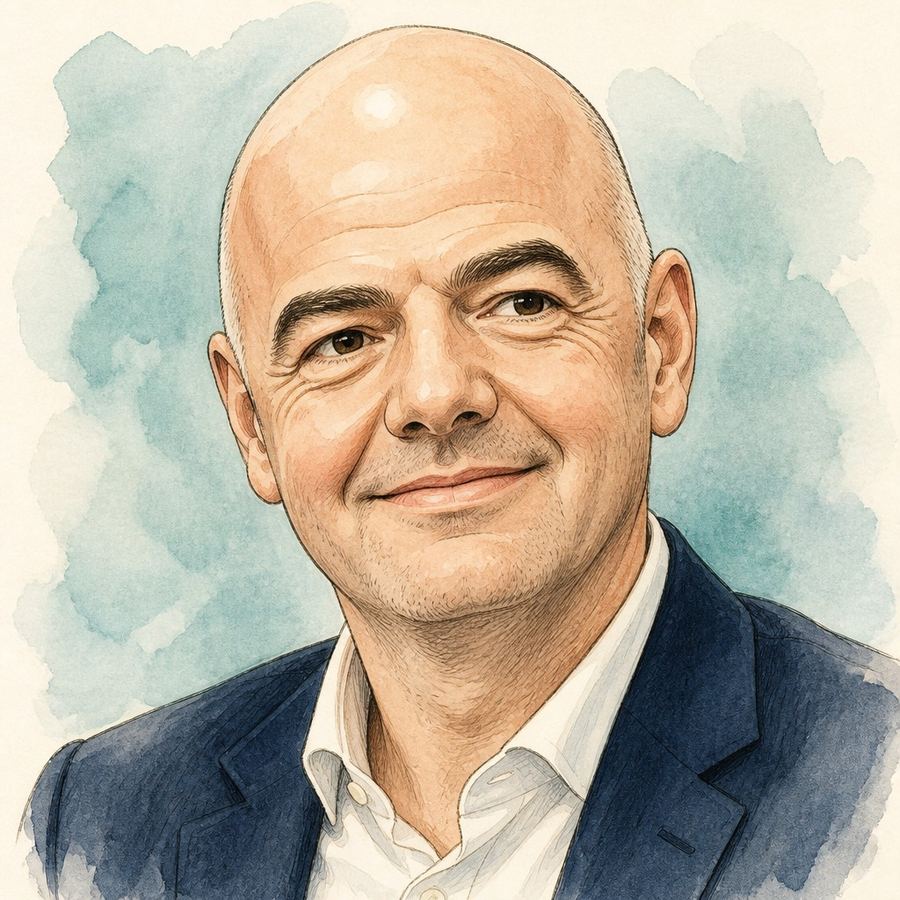
A crown passes, and nobody votes
This week two thrones changed hands. Norway's King Harald V died at 89, and his son becomes King Haakon VIII by the oldest rule there is: birth order. Elsewhere, the world's youngest reigning traditional monarch died at 34, and somewhere a chamberlain is already measuring a new head for a crown. Nobody held an election. Nobody expected one.
We accept this in Norway for a simple reason: the king reigns, he does not rule. Parliament governs. Courts judge. The monarchy is folklore with good manners, kept small on purpose by a democracy that decided ceremony can be inherited as long as power cannot.
A congress meets, and nobody contests
Now compare a different institution that insists, loudly and often, that it is democratic to its core: FIFA. Two hundred eleven member associations, one country, one vote — more members than the United Nations, and proud of it. Every four years a congress convenes to elect a president. The last real contest was some time ago. Since then, the man in the chair has mostly been reaffirmed, sometimes by acclamation, the football equivalent of a parliament that claps instead of votes.
Here is the Socratic bit: if a congress only ever ratifies one name, is it electing a president, or crowning one? A ballot with a single candidate is not a choice. It is a coronation with a spreadsheet.
The habit of the decree
This week also gave us a smaller, almost comic case study in the same instinct. An American executive order renamed Lake Ontario "Lake America" — a lake shared with a sovereign neighbour, redrawn by signature rather than treaty. No one asked Ottawa. No one needed to, apparently, because the pen decided.
It is easy to laugh at a lake. It is worth pausing on the reflex behind it: the belief that authority is proven by acting alone, not by persuading others. Infantino's FIFA has its own quieter version of this reflex — hosting decisions, calendar changes, expansion plans arriving as announcements to be applauded, not proposals to be argued over. The congress exists, technically. It just rarely disagrees.
What a real vote requires
A vote is not democratic because ballots are printed. It is democratic when losing is possible — when there is a rival candidate, a secret ballot that could go either way, a term limit that eventually empties the chair, and financial books open enough that member federations can ask uncomfortable questions before they clap.
FIFA has none of these reliably. It has the form of democracy — one member, one vote — without the friction that makes democracy worth the name: contestation. And football, of all global institutions, can least afford to teach the world that unanimity is a virtue. It is the one arena where 32 nations already share a pitch, a referee, and a rulebook without anyone pretending the outcome is fixed in advance. That is the lesson football is built to teach. FIFA's own presidency, ironically, teaches the opposite.
The stance
So: is FIFA a democratic organization? Formally, yes. In practice, it behaves like an elective monarchy — a crown passed by acclamation inside a structure that could, with very little redesign, be a real democracy instead.
The fix is not exotic. Term limits that bind. Contested elections with real rivals, not sacrificial ones. Hosting bids weighed openly against basic human-rights conditions rather than announced as done deals. Member federations — many of them functioning democracies at home — could simply start behaving like citizens abroad: nominating alternatives, asking for the books, voting no sometimes.
A king who only reigns can be inherited without harm, because he holds no lever. A president who governs a $10 billion global sport should never be inherited in all but name. Next time a congress meets and every hand goes up together, it is worth asking the child's question adults forget to ask: was there ever another name on the ballot?