The Whistle That Must Sound the Same for Everyone
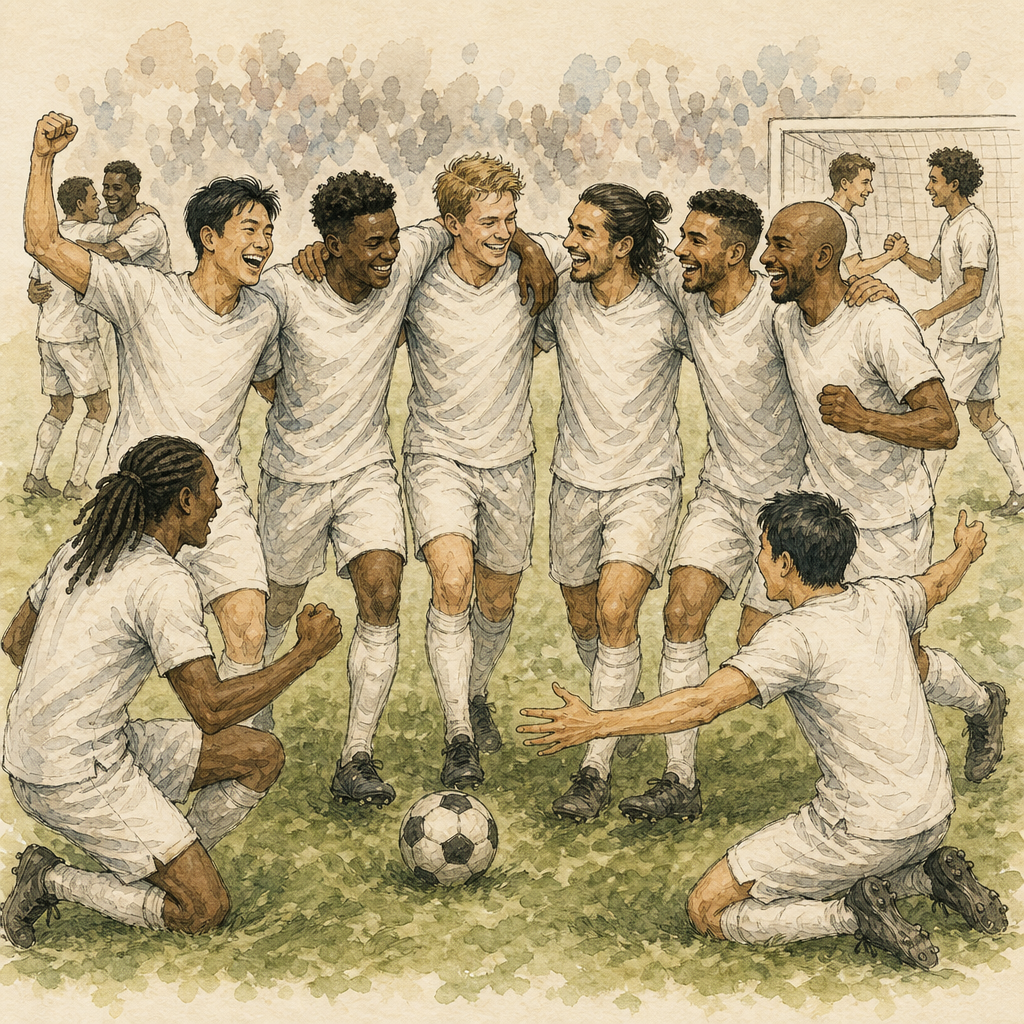
Football works because the whistle is blind. It does not care whose captain scored, whose fans are louder, whose federation has more money. A foul is a foul in Lagos, Lyon, or Lahore. That sameness is the whole point — it is why mixed squads and traveling rivals can leave a stadium as neighbours rather than enemies. The rules, not the flags, are what people actually agree to share.
So it is worth noticing, this week, that Russia is set to host the first Olympic federation world event since the invasion of Ukraine began. Sport, the argument goes, should stay above politics. A tidy sentence. But a whistle that sounds different depending on who is holding the ball is not above politics — it is politics, just quieter about it. If a war is still being fought with the very soldiers whose uniforms share a locker room with these athletes' federations, hosting is not a neutral fixture. It is a message about which rules currently apply, and to whom.
None of this means punishing individual athletes for their government's war — reciprocity cuts both ways, and collective guilt is its own kind of foul. But a federation choosing to hold its showcase event on the host's soil is a different decision than an athlete lacing up boots. One is sport continuing despite politics. The other is politics borrowing sport's good name.
Students Who Played the Long Game
Contrast this with Serbia, where a long-serving ruler has just lost an election to a movement that began, inconveniently for him, with students. Not a coup. Not a riot that burned down the stadium. A campaign fought inside the rules — registering, organising, voting, waiting, counting — until the scoreboard itself delivered the verdict a strongman had spent years trying to make unreadable. That is the slow, unglamorous version of fair play: you do not storm the pitch, you out-organise the ref's friends.
It is tempting to call this naive. Authoritarians rarely leave power because an election technically says so. And yet here it happened, because enough people decided the shared rule — one person, one vote, votes counted in public — was worth defending even when the man in charge had spent a decade bending it. The lesson travels: rules survive not because they are self-enforcing, but because enough citizens keep showing up to enforce them.
A Captain Returning to a Contested Field
María Corina Machado's return to Venezuela after months in exile is the same test in a harder key. She is walking back onto a pitch where the other side still controls the whistle. Whether her homecoming means anything will depend entirely on whether Venezuela's rulers can be made to honour rules they did not choose and clearly resent. Courage alone does not win that match; it only earns the right to keep playing it.
And across in Israel, an electorate that has visibly changed is about to find out whether its leadership changes with it, or whether incumbency has its own home-field advantage built in. Elections, like matches, mean nothing if the losing side quietly keeps the trophy.
The Rehearsal Is Only as Good as the Referee
International sport earns its reputation as a rehearsal for peace precisely because the rules do not bend for power. Mixed squads, shared rulebooks, rivalry without hatred — all of it depends on everyone believing the whistle is the same whistle for everyone. The moment a federation, a court, or an election board starts whistling differently depending on who is playing, the rehearsal becomes theatre, and theatre does not keep the peace.
So welcome Russian federations back to the world's playing fields — the day their state stops using force to redraw its neighbour's lines. Welcome Venezuela's opposition back into genuine contests — the day ballots there are counted as honestly as goals are counted here. And give Serbia's students their due: they remembered that the surest way to beat a strongman is not to break the rules louder than he does, but to keep them better than he expects.
A shared kit means little without a shared rulebook. The rulebook means nothing without someone willing to blow the whistle on the powerful. That, more than any trophy, is the game worth watching.