A Loud Day, and One Silence
Open today's news and the world sounds like a crowded waiting room. Spain accuses its neighbours of a "selfish" response to the Ceuta crossings, where at least 57 people have died this week alone. Uefa says it has "lost confidence" in Fifa's leadership. A Peruvian ex-president walks free after his corruption sentence is overturned. Wildfires push families out of their homes in France, an Ebola outbreak spreads faster than any before it, and a settler in the West Bank tells a reporter, on camera, that revenge is justice. Even a conference map of Africa, put up by the country that likes to lecture the world on precision, gets every country wrong.
It is, in short, a normal Saturday for democracies: loud, sloppy, self-critical, occasionally embarrassing, endlessly correcting itself in public.
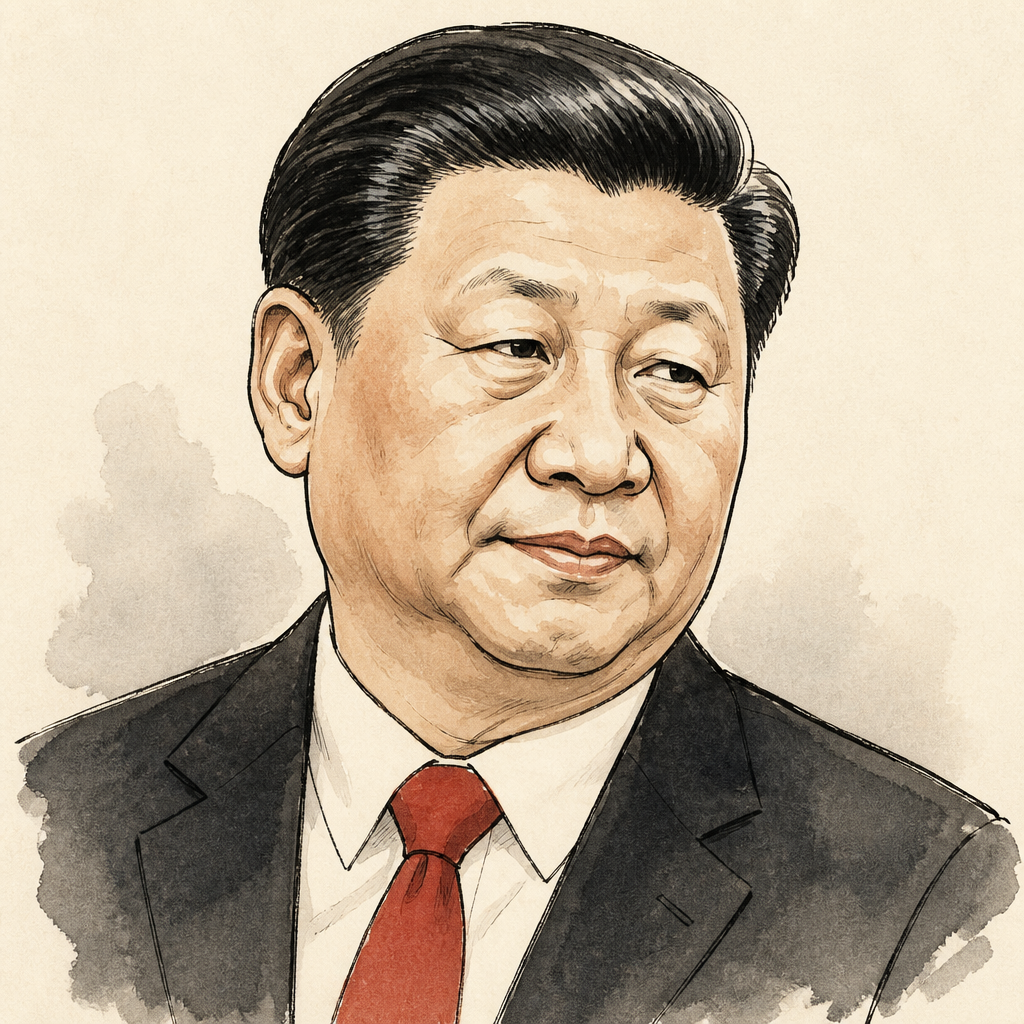
And somewhere in that noise, one name does not appear. Xi Jinping is not in today's headlines. Not because nothing is happening in Beijing — but because nothing needs to be announced. That absence is the story worth sitting with.
The Advantage of Saying Nothing
Here is the uncomfortable question. Is the quiet a sign of restraint — or of patience? A man who does not need daily headlines is not necessarily a man doing nothing. He may simply be a man who has learned that democracies exhaust themselves arguing about migrant quotas and football governance while he keeps building, unhurried, toward a moment when the argument no longer matters to him.
That is the fear worth naming plainly: not that Xi will lash out tomorrow, but that he is content to let the rest of us squabble today, calculating that patience compounds like interest — until one morning the world discovers he no longer needs its permission for anything.
Is that fear reasonable, or is it flattering him with a coherence he may not possess? Autocracies are not immune to their own version of Ceuta and Fifa — internal rot, quiet purges, economic strain nobody is allowed to headline. Silence is not proof of mastery. It may just be proof of better censorship.
What the Noise Is Actually For
Here is where the argument must land, not merely wink. The scramble we saw today — Spain blaming Brussels, Uefa distrusting Fifa, a court reversing a conviction, a newspaper embarrassing a superpower's own map — is not democracy's disease. It is democracy's immune system doing its job in public, badly lit, but working. A system that argues about who failed the migrants at Ceuta is a system that still believes someone should be held accountable for it. A system that cannot fix its own map is at least a system that lets you notice the mistake.
The patient model offers something different: no arguments to overhear, because no argument is permitted. That is not strength. It is the absence of a corrective, stored up rather than spent — and stored-up problems, in states as in bodies, tend to surface eventually, just later and worse.
The Wise Response Is Not Panic
So what should a reader do with this fear on a Saturday in August? Not spiral into admiration of the quiet man, mistaking his silence for competence. And not use him as an excuse for our own disorder — "at least we're not as bad as China" has never fixed a single migrant policy or a single football federation.
The wiser response is to match his patience with our own: strengthen the institutions that argue in daylight — courts that can be trusted to reverse verdicts fairly, football bodies that answer to someone, borders managed by agreement rather than blame — precisely because the day may come when patience is tested by more than headlines. A house gets its repairs done while the weather still allows visitors in. That is not fear. That is common sense.