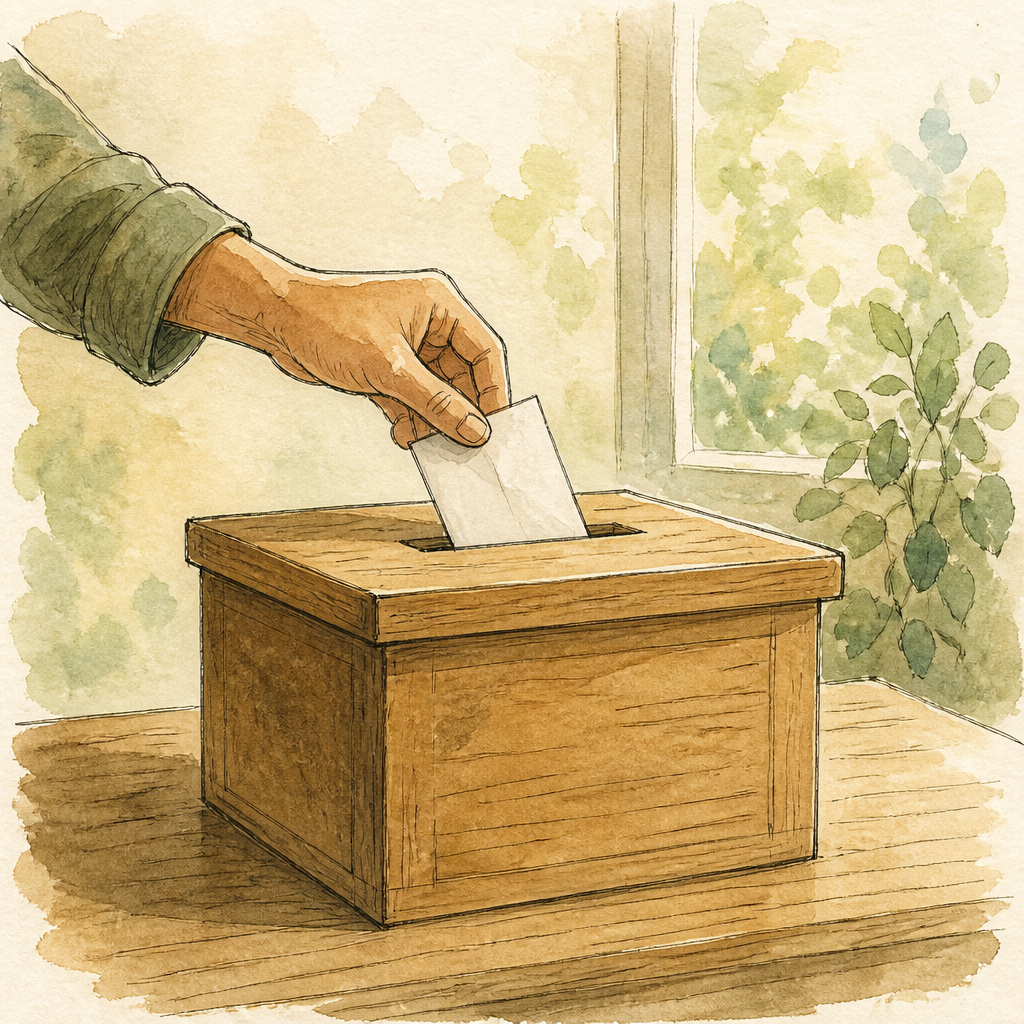
A Sunday for counting
Sunday is traditionally the day democracies vote, and the day congregations count their blessings. Both habits share something: they are boring on purpose. A vote tallied in silence is not a lesser event than a crowd roaring in a square. It may be the more important one.
This week gave us plenty of roaring. In Germany, cost-of-living protests turned into looted shopfronts. In France, youth-led demonstrations spread across Europe, echoing a frustration that needs no translation: prices rise faster than patience. Anger at the cost of living is legitimate. Smashed windows are not an argument; they are a symptom of an argument no one has finished having.
But look past the noise, and the quieter stories of the week matter more.
Who counts, and who answers for it
In the United States, a judge dismissed a president's lawsuit against a newspaper over an unflattering book. No crowds gathered for that ruling. No one looted anything. A court simply did what courts are for: it looked at a claim, found it wanting, and said so. That is democracy's least photogenic moment and one of its most essential ones — power tested against a rule it did not write for itself.
In India, the opposition held a mega rally demanding the resignation of the election chief. Strip away the slogans and the real question is almost mathematical: do citizens trust the person who counts their ballots? A democracy survives contested elections. It does not survive a broken belief that the counting itself is honest. That belief, once cracked, is far harder to repair than any single result.
In Egypt, an independent outlet, Mada Masr, was shut and its editor fined for the work of reporting facts. Journalists are, in their unglamorous way, also counters — of casualties, of budgets, of broken promises. Close the counters and you do not make the numbers better. You only make them invisible.
And in Beijing, a political meeting produced its "key takeaways" the way a kitchen produces a finished dish: prepared elsewhere, presented whole. No count. No contest. No surprise. That is the other model on offer — government by announcement rather than by arithmetic. It is tidy, certainly. It is also the kind of tidiness that leaves no one to ask whether the recipe was ever put to a vote.
The crowd is not the ballot
Here is the uncomfortable symmetry worth sitting with. A looted shop in Germany and a closed newsroom in Cairo look nothing alike, yet both are attacks on the same quiet thing: a society's willingness to settle disputes by counting rather than by force or decree. One mob burns because it has lost faith that counting changes anything. One government censors because it never intended to let counting matter in the first place.
Should we romanticize the crowd, then, as the voice of the people, and the ballot as its pale bureaucratic cousin? It is a tempting story, especially for the young protesters filling French streets with real and justified grievances. But a crowd has no memory and no accountability between Tuesdays. A ballot, badly as it is sometimes treated, can be recounted, audited, challenged in court, and still mean the same thing a year later. That durability is not a bureaucratic inconvenience. It is the whole point.
So here is a modest, unfashionable stance for a Sunday: protest all you like — it is a legitimate pressure valve and sometimes the only one available. But spend at least as much civic energy defending the boring machinery that makes protest meaningful afterward — independent election commissions, courts that can rule against presidents, newsrooms that can publish inconvenient numbers. Crowns are won by acclaim or by force. Ballots are won by habit, repeated patiently, counted honestly, year after unglamorous year.
The next time a government announces its conclusions without anyone having voted on them, or a mob decides a shop window is where politics happens, ask the same quiet question either way: who did the counting, and can anyone check their work?