An absence worth noticing
Scan today's world news and count how many stories carry a name attached to blame. Israel rejects a peace plan — Netanyahu's name is right there. Nigeria's army rescues hostages — credited, on the record. Ecuador charges a former minister — a name, a charge, a court.
Then there are drones over a German military base, days after a bomb incident in Leipzig. Nobody is named. Nobody claims it. It sits in the news the way fog sits on a runway: present, inconvenient, and impossible to point at directly.
That is not a small detail. It is a method.
Why one fear outranks the others
There is no shortage of leaders in today's world worth watching with a raised eyebrow. Strongmen test elections, courts, and journalists on every continent, and this newspaper has no shortage of irony for any of them.
But ask a simple question: which of them has built an entire toolkit around being unprovable? Not tanks rolling openly across a border — that at least forces the world to say a name out loud, as it did in Ukraine. The harder pattern is the one that leaves no fingerprint: an unmarked drone, an unclaimed cable cut, an election-season leak with no return address, a poisoning that reads, if you squint, like an accident.
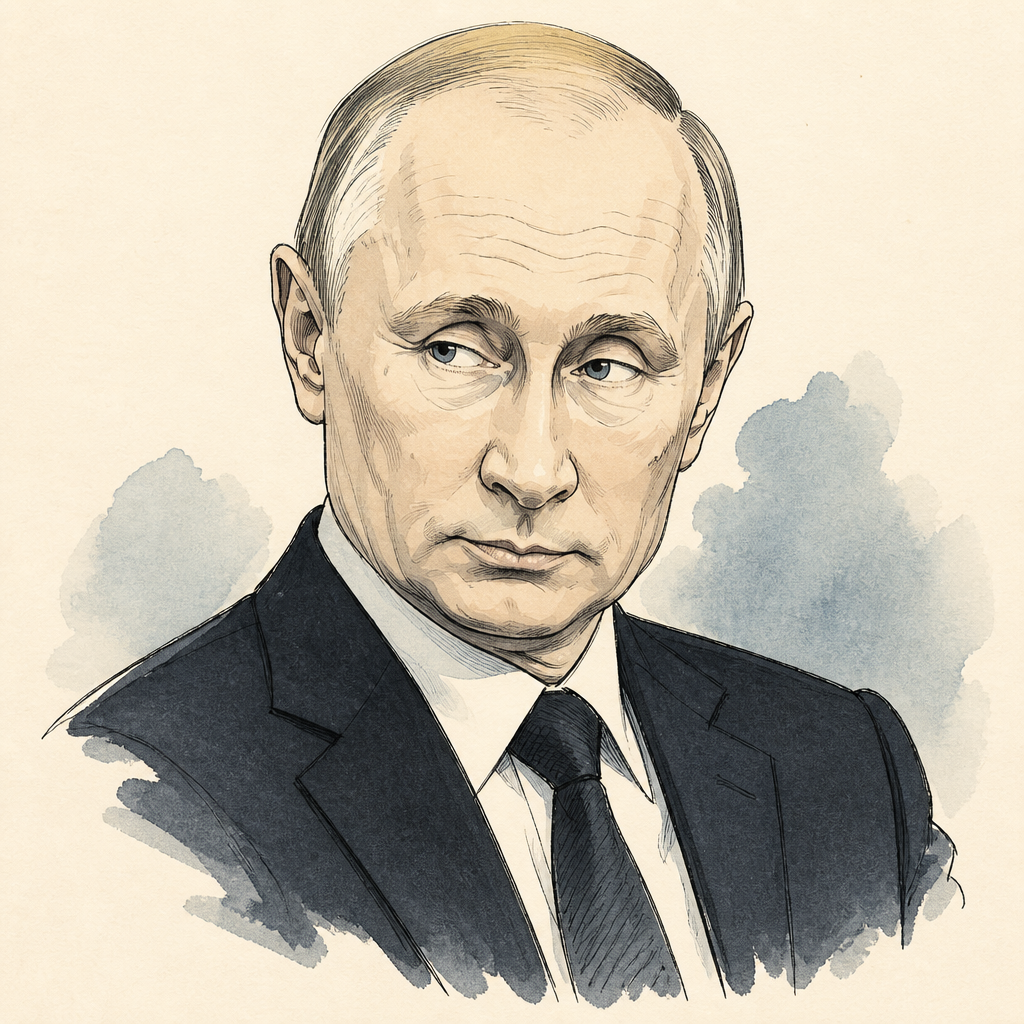
That is the specific shape of the fear worth naming plainly: not that Vladimir Putin might one day do something loud, but that his method is built for exactly the days when the world's attention is elsewhere — a day like this one, with wildfires racing through Canada, an Ebola strain mutating in the Congo, and Washington quietly closing five consulates while diplomats worry aloud that Beijing will simply move into the empty chairs.
A fragmented front page is not evidence of a plot. But it is the weather in which plausible deniability grows best.
The discipline this actually requires
Here the easy move is panic, and this newspaper does not do panic. The harder, wiser move is discipline.
First: insist on attribution, patiently, even when it is unsatisfying. A drone over a German base deserves an investigation loud enough to outlast the news cycle, not a shrug because nothing exploded this time. Ambiguity rewards the actor who benefits from ambiguity.
Second: keep funding the boring parts of defence — radar, cyber-hygiene, the unglamorous stuff that makes probing expensive rather than free. A democracy that treats deterrence as someone else's budget line is inviting more tests, not fewer.
Third, and least comfortable: keep Europe's own house tidy while watching the neighbour's fence. Spain checking passports from Italy is a small crack in Schengen, not a betrayal of it — but every crack is a rehearsal for the next one, and a Union distracted by its own border squabbles is a softer target than a Union that argues hard internally and closes ranks at the edge.
What this is not
None of this is a call to see a Kremlin hand in every wildfire or every unmarked drone — that habit turns citizens into conspiracy theorists, which is its own kind of civic decay, and arguably useful to an authoritarian too, since a public that suspects everything eventually believes nothing.
The standpoint here is narrower and, I think, sturdier: of the strongmen currently testing the patience of open societies, the one who has most deliberately mastered the unattributable act deserves the steadiest, least distracted attention — precisely on the mornings when the rest of the world is looking somewhere else.
Notice early. Ask who benefits from the silence. Fund the boring deterrence. That is not fear as spectacle. That is fear used correctly — as a reason to stay awake.