An empty runway asks a question
RAF Fairford has hosted American bombers for decades, so reliably that the sight became furniture — the kind of thing a neighbourhood stops noticing because it has always been there. This week the bombers left. No alarm, no ceremony, just an empty runway where a routine used to sit.
It is tempting to read this as abandonment. It is more useful to read it as a question: what, exactly, has Europe been renting instead of building?
Cooperation is not a hotel reservation
For seventy years, "the alliance" has functioned partly as a slogan and partly as a landlord-tenant arrangement — American hardware parked on European soil, European leaders free to spend the savings on almost anything else. That arrangement was never going to be permanent, and treating it as permanent was always a little lazy.
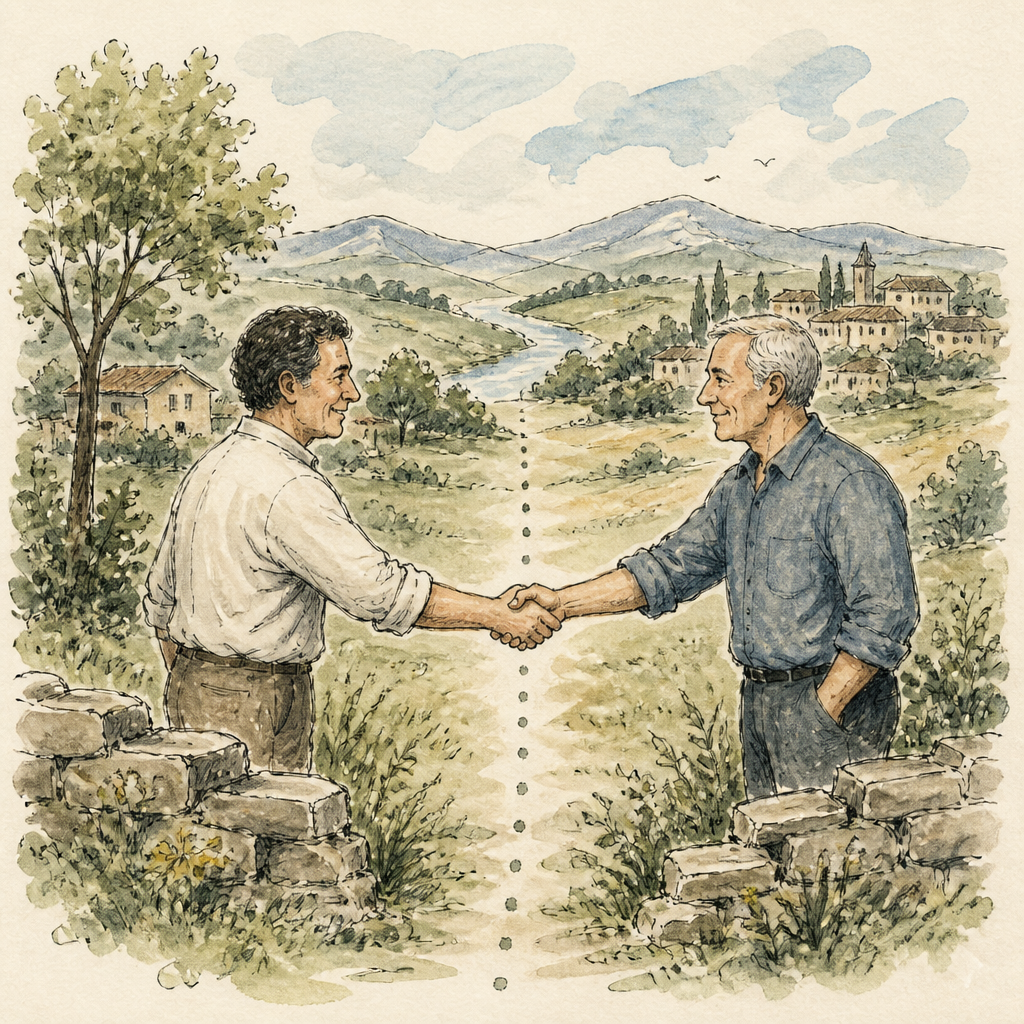
Real neighbourliness between democracies is not a guest list. It is reciprocity: you keep your share of the common roof in repair, I keep mine, and neither of us assumes the other will quietly cover the difference forever. An empty tarmac at Fairford is not an insult. It is an invoice, and a fair one.
The honest response is not panic about abandonment, nor nostalgia for a previous decade's comfort. It is investment — in European defence industry, in joint procurement, in the unglamorous plumbing of actually sharing a burden rather than merely sharing a flag at the photo opportunity.
Five hundred schools, closed on purpose
Meanwhile in France, something that looks like disorder from a distance looks, up close, like a democracy breathing. Up to five hundred schools closed Monday because students organised protests large enough that authorities judged closure the safer course. No tanks, no detained newsrooms, no terrorism charges for teenagers with placards — just a loud, inconvenient, entirely legal exercise of the right to be heard.
Compare that, gently, to an Egyptian newsroom detained wholesale this same week, with a journalist now facing terrorism charges for apparently doing journalism. One country closes schools because citizens are shouting and the state tolerates the shouting. Another closes newsrooms because journalists were listening and the state does not tolerate the listening. Which pattern would you rather live inside?
France's closed schools are not evidence of a fragile republic. They are evidence of one confident enough to let its teenagers be annoying in public without arresting the inconvenience away.
A mirror from across the ocean
Brazil, this same week, sent its presidential race to a run-off — Lula against a Bolsonaro son, the Amazon's future quietly on a ballot most voters aren't thinking about, the country's alignment with Washington or Beijing hanging on a vote rather than a decree. Whatever one thinks of either candidate, notice the mechanism: contested, loud, uncertain — and still resolved by counting, not by force. Democracies watching from Europe might take this not as foreign drama but as a mirror held up to their own habit of taking the counting for granted.
One final contrast, offered without shouting
And then there is the other model on offer this week: a single "Super Intelligence Force" unveiled to oversee the most consequential technology of the century, answering upward to one office rather than outward to many parliaments. It is worth noticing, quietly, the difference between a democracy distributing power across institutions that argue with each other, and a system that prefers one force to oversee the future on everyone's behalf. Efficient, certainly. Reassuring, perhaps not.
The standpoint
Neighbourliness among free countries is not a feeling you declare at a summit. It is a practice you fund, defend, and tolerate being annoyed by. An empty runway in Gloucestershire and five hundred closed schools in France are, oddly, cousins: both are proof that cooperation among democracies works best not when it is sentimental, but when it is paid for, argued over, and still standing the morning after.
That is worth more than any slogan about alliance. It is simply what good neighbours actually do.