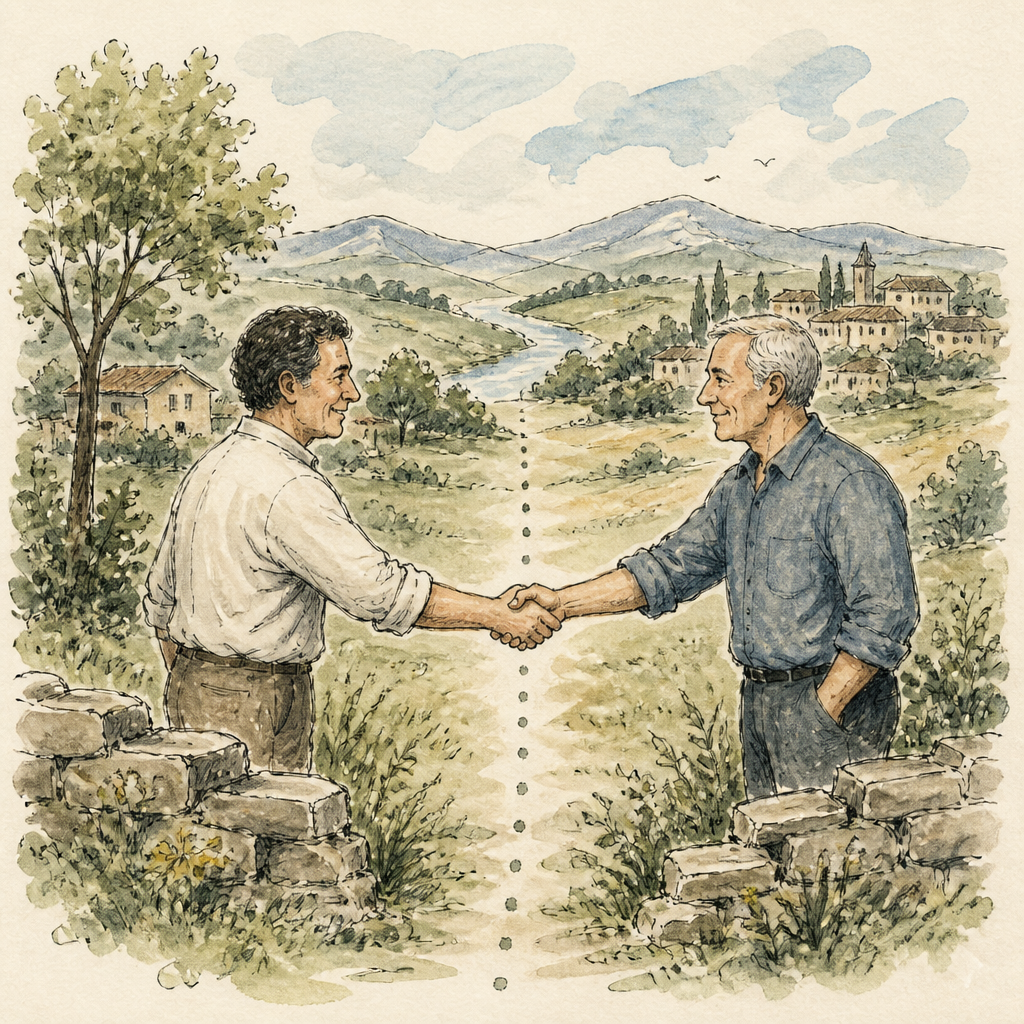
A Toll Booth That Isn't There
Somewhere this month, a family will drive from Poland into Germany, or from Slovenia into Italy, and the only sign anything changed will be the language on the road markers. No queue. No stamp. No uniformed stranger deciding whether their holiday continues.
This is worth pausing on, because it is not natural. Borders have been fought over, mined, and garrisoned for most of human history. That a driver can miss one entirely is not an accident of geography. It is the accumulated residue of thousands of unglamorous meetings, treaties, and technical committees that nobody photographs for a campaign poster.
Cooperation Is a Habit, Not a Mood
Here is a question worth sitting with: if a slogan can build a border-free continent, why did it take seventy years of institutions, courts, and compromises to actually do it?
The honest answer is that slogans don't build anything. Habits do. A shared currency requires central bankers who show up to dull meetings for decades. A shared market requires judges willing to rule against their own government when a regulation is unfair to a neighbour. A shared peace requires officers from formerly hostile nations training together until "the other side" stops meaning anything.
None of this is inspiring on television. All of it is why the toll booth isn't there.
The Seduction of the Wall
It is easy, and periodically fashionable, to romanticise the border as a symbol of identity — a wall as proof that a nation still means something. Strongmen of every stripe have found this a reliable applause line, whether the wall is physical, tariff-shaped, or merely rhetorical.
But ask what the wall actually protects. Rarely the wages of the worker praising it. Rarely the pension of the retiree cheering it on television. Usually it protects the political usefulness of having an enemy nearby, foreign or domestic, real or invented. A permanent neighbour is harder to rule against than a permanent threat.
Pro and Contra, Honestly Weighed
Skeptics of deep cooperation are not wrong about everything. Shared institutions can drift toward distant bureaucracy. Pooled sovereignty can feel like reduced sovereignty when a local decision is overruled from far away. Fiscal solidarity has limits; no union can indefinitely subsidise choices it did not make, and pretending otherwise breeds resentment on both sides of the transfer.
These are real costs, and a mature democracy should keep arguing about them loudly, in parliaments, not suppress the argument in the name of unity.
But weigh that against the alternative already tested twice in the last century: a Europe of proud, fully sovereign, heavily armed neighbours settling disagreements without shared courts or shared currencies. The bureaucracy is annoying. The alternative was catastrophic.
Practice, Not Slogan
So here is a standpoint, offered plainly: European cooperation is worth defending not because it is inspiring but because it is functional, and function is harder to fake than inspiration.
A mixed football squad training together says more about shared rules than any anthem. A university exchange student mangling a neighbour's grammar over dinner does more for peace than a summit photograph. A twinned town exchanging fire brigades in an emergency has already answered, quietly, the question a slogan only asks.
The reader crossing an invisible border this August might reasonably ask what kept it invisible. The answer is not magic, and it is not permanent. It is maintained, meeting by unglamorous meeting, by people who understood that a neighbour worth having is a neighbour worth practising with — daily, patiently, and without expecting applause.