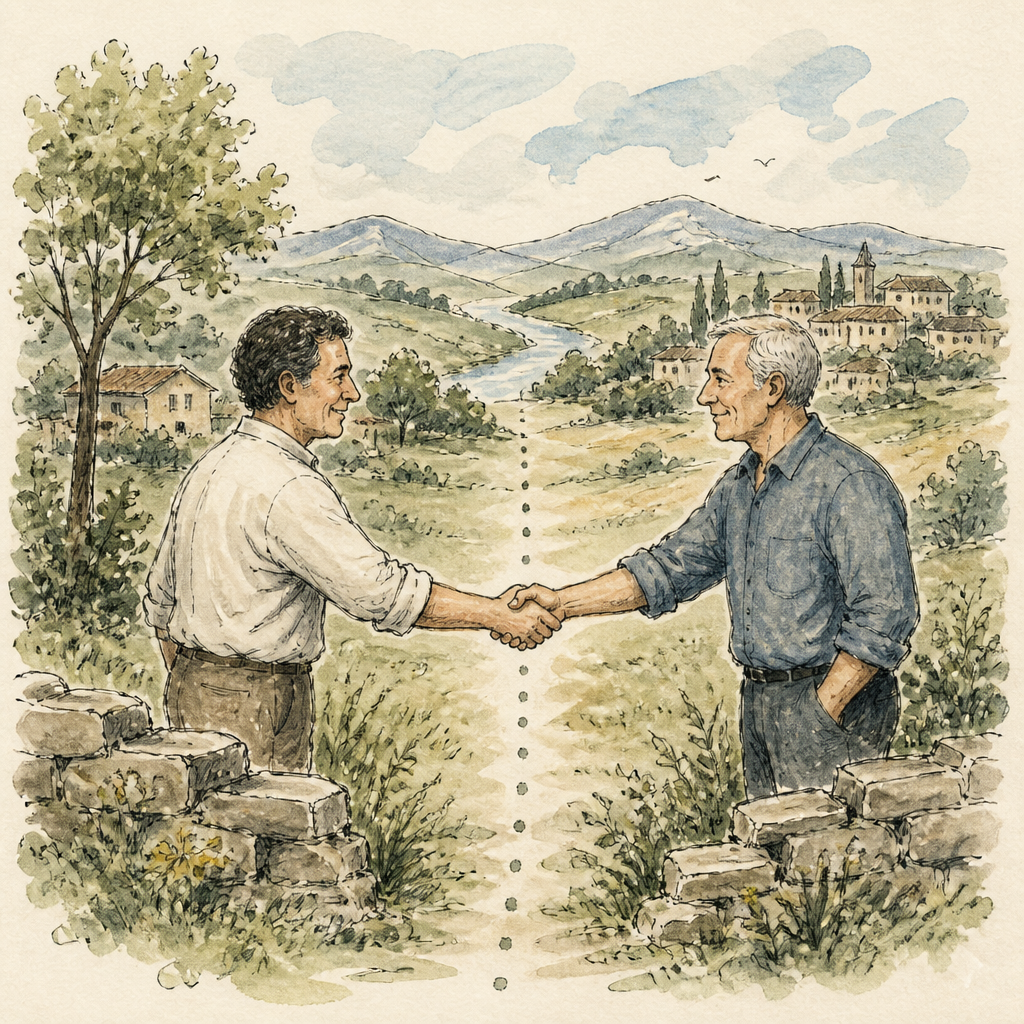
A Fence, a Statement, and a Choice
Someone breached the border fence at Ceuta this week. Spain's prime minister then did something almost embarrassingly undramatic: he said Morocco was not to blame.
No speech about civilizational clashes. No demand for apologies. Just a shrug toward the obvious — that a fence gets tested by many hands, and pinning the failure on the neighbour across it solves nothing and poisons everything.
This is not a thrilling story. It will not trend. But it is exactly the kind of moment this newspaper exists to notice, because good neighbourliness between nations is made of a thousand small refusals to escalate, not one grand treaty.
Sovereignty Is Not the Same as Solitude
Contrast that with Nepal, where flood relief has stalled partly because the government has been slow to accept foreign help. Pride is not a shameful instinct in a country that has spent generations fighting to be seen as capable, not dependent. But pride and drowning villages are a poor combination.
Accepting help is not the same as surrendering sovereignty. A country that lets rescue teams and water pumps cross its border has not been conquered by them. It has simply done what neighbours are for. The nations that recover fastest from disaster are rarely the proudest — they are the ones who let help in quickly and argue about the paperwork later.
The Limits of Solidarity, Honestly Named
Meanwhile people fleeing Sudan's civil war are arriving in a refuge city the Guardian describes, plainly, as dire and deteriorating. This is the other honest half of the neighbour question: hospitality has a floor, but it also has a ceiling. A city absorbing refugees faster than it can build latrines and clinics is not failing at compassion — it is running into the arithmetic of compassion. Solidarity that pretends capacity is infinite eventually breaks the very people it meant to help.
So the useful question is never "should neighbours help neighbours" — of course they should — but "what structure lets help arrive without collapsing the host?" That is a question for institutions, funding, and burden-sharing among many countries, not for one border town to answer alone.
Europe's Unglamorous Homework
Which brings us back to the fence at Ceuta, and to why the European project, for all its jokes about bureaucrats and blue flags, remains a genuinely useful invention. Not because it produces harmony — Spain and Morocco are not in the EU together, and friction at that border is real and recurring. But because the European habit, when it works, is precisely the habit the Spanish prime minister showed this week: resist the easy blame, keep the working relationship intact, solve the next problem together rather than refight the last one.
That habit did not appear by magic. It was built, slowly, out of decades of countries that used to invade each other learning instead to sit in the same room and argue about fishing quotas. It is tedious. It produces summits nobody watches. And it is the only alternative anyone has found to the other habit — the one where border disputes become national humiliations, and national humiliations become excuses for strongmen.
Meanwhile, an even older ledger is being reopened: a UN committee saying nations may be legally obliged to consider reparations for historical slavery. Whatever one concludes about the specifics, the instinct behind it is not foreign to good neighbourliness — it is the same reciprocity, extended backward in time: what was taken from a people does not simply evaporate because the border on the map has since been redrawn.
The Question Worth Carrying Home
So here is the test, and it applies as much to a reader's own town as to prime ministers: when something goes wrong at the edge of your community, is your first instinct to name the neighbour at fault, or to name the problem that needs fixing?
The countries doing better this week — however imperfectly — are the ones that answered problem first. That is not a slogan. It is a habit. And like all good habits, it looks boring right up until the day it is the only thing standing between a border town and a war it never needed to have.