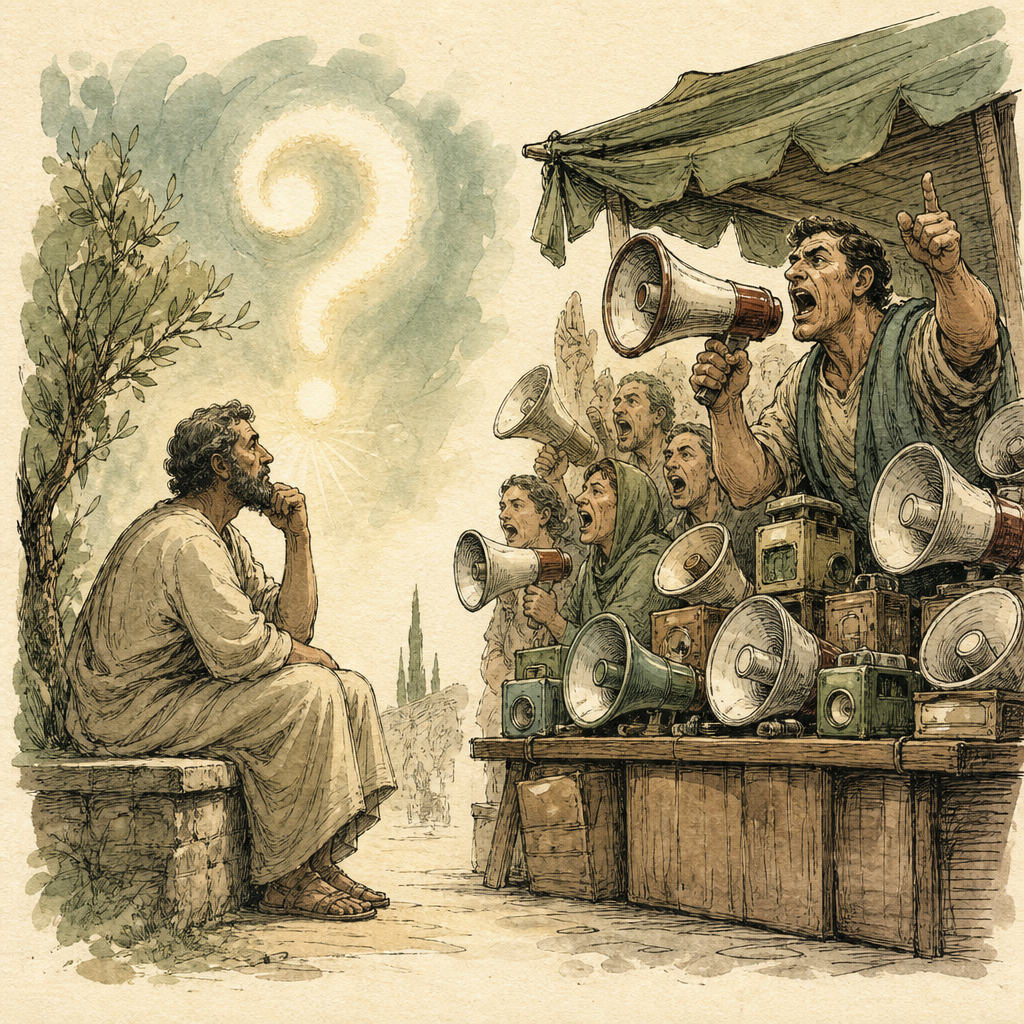
The Bazaar of Absolute Answers
Every September the world's leaders arrive at the United Nations and set up their stalls. Each one sells the same product: certainty. Certainty that the enemy is clear, that the vote was clean, that the weapon will be controllable, that the coalition must collapse.
Certainty is a popular item. It requires no change of mind and no further reading. The only trouble is that it is almost always sold at a discount, because the seller has skipped the part where you check the goods.
Three Booths, Same Product
Walk past the first stall. In Washington, three news organisations — CNN, MS NOW and Politico — have gone to court over a ban on their access to the White House. The administration's certainty is that unfriendly coverage forfeits a seat in the room. A free press's answer is a lawsuit, not a slogan. That itself is worth noticing: when institutions disagree with power, the disciplined move is to ask a judge, not to shout louder. Democracy's real advantage over strongman rule is exactly this — it keeps a room where the question can still be asked.
Walk to the second stall, in Moscow. Russian elections produced, as expected, few surprises. The Kremlin's certainty is that this reflects the settled will of the people. Perhaps ask one more question: settled by what, exactly, when the ballot arrives pre-answered? An election without real contest is not evidence of consent; it is evidence that consent was no longer required. Notice the difference. Don't shout it. Notice it.
Walk to the third stall, inside the General Assembly itself, where autonomous weapons and AI are high on the agenda. Here the certainty runs both ways: some insist the technology will be safely governed, others that it will inevitably run away from us. Both certainties are comfortable, because both let you stop thinking once you've picked a side. The harder, less comfortable position is to say: we don't yet know, so let's build the rules before the machines outrun the room built to discuss them.
A Small Refusal in Berlin
Amid all this salesmanship, one story is almost boring by comparison, which may be its virtue. Germany's chancellor lost ground in state elections and, instead of either collapsing the coalition in panic or pretending nothing happened, chose to hold his ground and keep the partnership working for what he called the country's democratic future. No thunderclap. No purge. Just the unglamorous work of governing through disagreement rather than around it.
That is not weakness. That is the opposite of the certainty stalls. It is a leader admitting the electorate is annoyed, without concluding that annoyance requires abandoning the shared table. Ask yourself which habit you would rather your own government practice when it loses an argument.
The Discipline of One More Question
Here is the wager of common sense, plainly stated: the side selling the loudest absolute answer this week is usually the side least willing to be asked a follow-up question. Watch for it. When a government bans the press instead of answering it, when an election needs no real contest to declare a mandate, when a technology's boosters or doomsayers both refuse to say "we're not sure yet" — that refusal is the tell.
Common sense does not mean refusing to ever decide. It means asking one more question before you buy what's on the loudest table: Who benefits if I stop asking now? What would change my mind? Would this rule be fair if it were used against me?
That last question, the oldest one there is, still works better than any weapons treaty or press-access lawsuit on its own — because it is the one certainty-sellers can never quite answer without noticing the mirror.
The stalls will still be there tomorrow. So will the option not to buy.