A parliament of two hundred and eleven
FIFA likes to remind the world of its arithmetic. San Marino, population roughly 34,000, casts one vote at the FIFA Congress. Germany, population 84 million and four World Cup stars on its badge, casts one vote too. On paper this is as democratic as international bodies get — more so, in fact, than the United Nations Security Council, where five countries hold a veto that the other 188 members can only watch.
So why does the Congress keep behaving like a coronation rather than a parliament?
The habit of unanimous applause
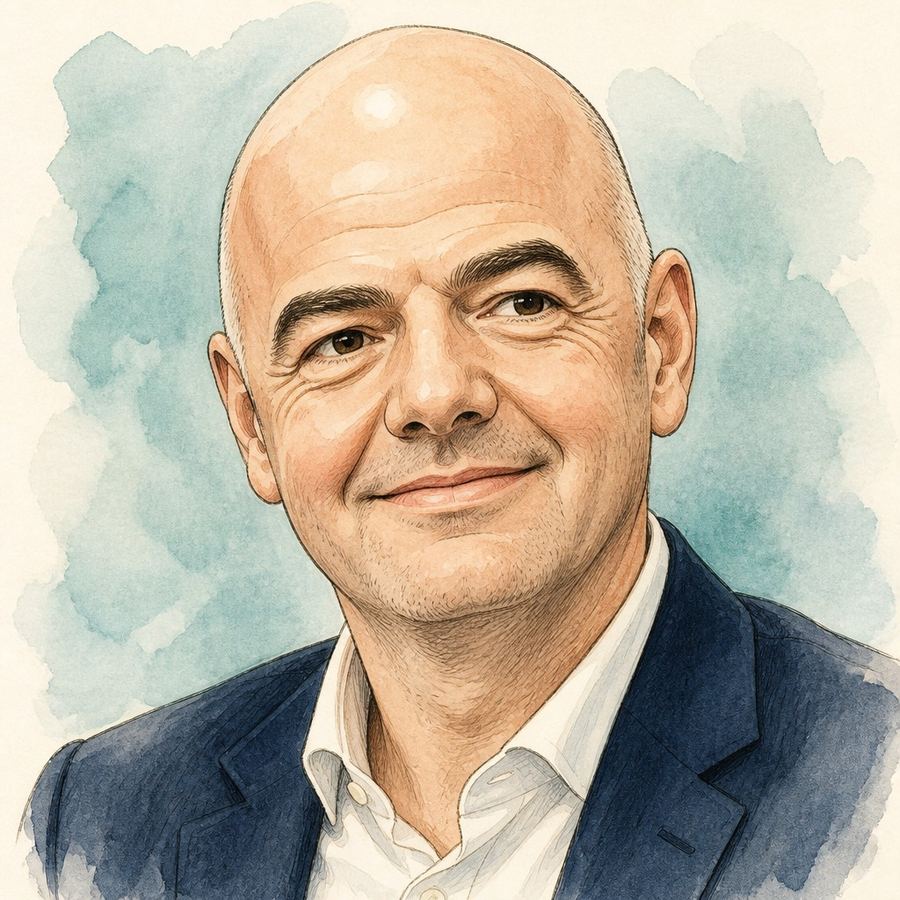
Gianni Infantino has led FIFA since 2016. Term limits were adjusted along the way to make room for him to stay. Qatar hosted a World Cup under his presidency despite years of labour-rights concern; Saudi Arabia is now awarded 2034 after a bidding process so uncontested it barely qualified as a contest. None of this required force. It required something gentler and more familiar: a room full of equal votes choosing, again and again, not to use them.
This week the world happens to be watching a related picture. Donald Trump has been touring Asia for conversations with Xi Jinping and Vladimir Putin — two leaders whose own domestic "congresses" are famous for similar unanimity. Meanwhile in Geneva, diplomats are trying to agree rules for autonomous weapons, so-called killer robots, through consensus among states that include exactly the powers least eager to be constrained by anyone's rulebook. The pattern repeats at every scale: formal equality of voice, informal concentration of decision.
Coalitions of the willing, football edition
Five EU countries announced plans this week for a migrant return hub in Rwanda — not all twenty-seven, five. It is a useful reminder that when full consensus is slow, smaller coalitions act anyway, for better reasons or worse. FIFA's own history runs the same circuit: continental confederations horse-trade votes long before the Congress ever convenes, so that by the time 211 hands are counted, the outcome was settled by perhaps a dozen.
Is that corruption? Not necessarily. Coalition-building is how most democracies actually function — committees, caucuses, backroom persuasion, then a floor vote that ratifies what was already decided. The trouble starts when the floor vote stops being a check and becomes theatre: when no delegation risks dissent, when sponsors and hosts have more leverage than members, when the president's travel schedule looks more like a head of state's than a civil servant's.
What would make it democratic, actually
One country, one vote is necessary. It is not sufficient. A vote only functions as democracy when someone is willing, credibly and without cost, to vote no. Judge any assembly — FIFA's Congress, a national parliament, a UN committee — by a simple test: when was the last contested vote that the leadership actually lost?
If the honest answer is "I can't remember," the body has drifted from democracy toward acclamation, whatever its bylaws say.
The game is still worth defending
None of this is an argument against FIFA, or against international football. The pitch itself remains one of the better rehearsals humanity has for living together — mixed squads, shared offside rules, rivalries that end in handshakes rather than tribunals. That is exactly why its governing structure deserves to be held to its own promise, not excused because the product on the field is beautiful.
The national federations that make up FIFA's 211 votes are, mostly, answerable to someone back home — ministries, fan associations, sometimes actual elections. They could ask harder questions at Congress than they currently do. So could citizens of countries whose leaders now prefer bilateral summits to multilateral tables, and whose international bodies increasingly resemble FIFA's: wide membership, narrow dissent.
The question worth carrying out of the stadium is not whether the vote was counted correctly. It is whether anyone in the room still remembers how to vote no.