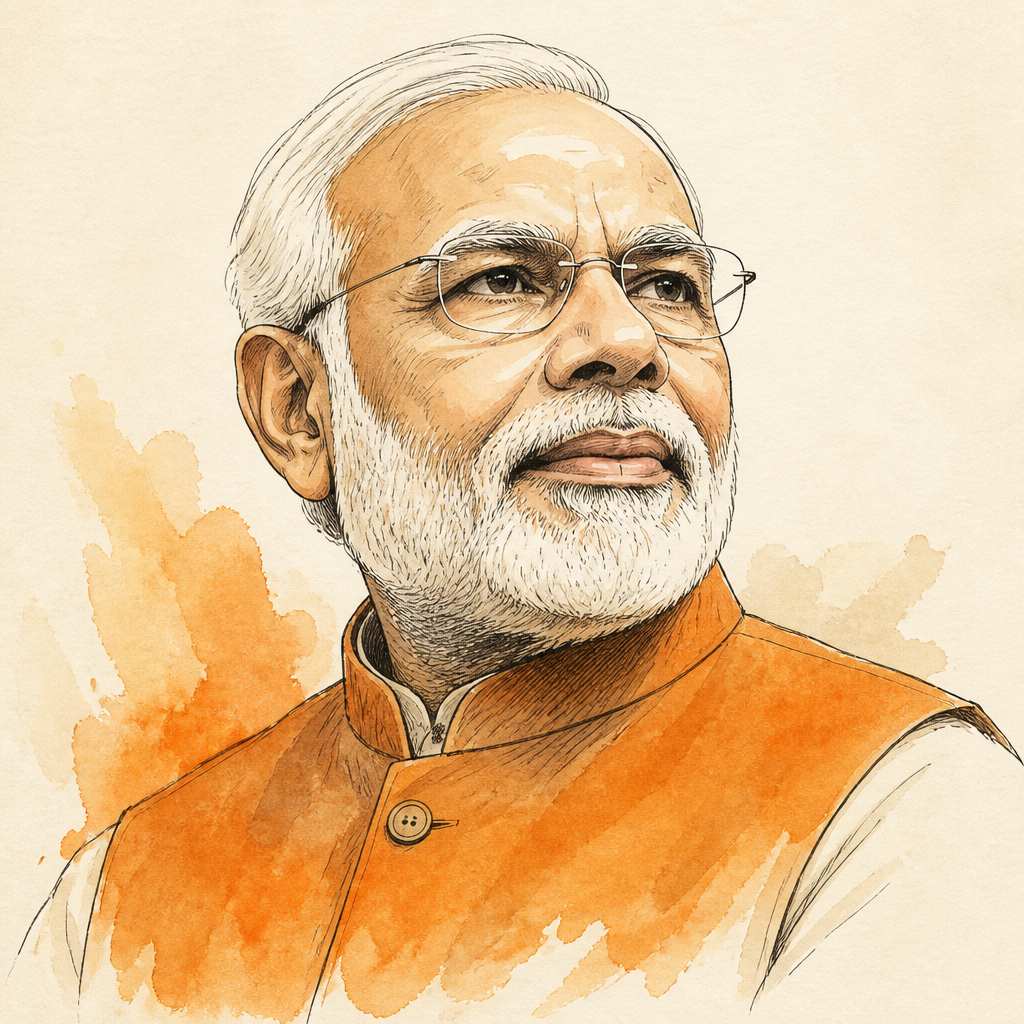
A Statement With Three Names
On Saturday's front pages sit three habits of modern power, side by side, as if the world had arranged its own seminar. Canada and the United States are trading tariffs like insults. A North Korean leader is being courted with the flattery once reserved for prom dates, while Seoul watches nervously from the hallway. And the United Kingdom, Canada and Australia have jointly condemned Israel for refusing a criminal probe into the killing of aid workers in Gaza.
Three democracies signed that statement. A fourth, larger one did not. India was not named among them — not condemned, not credited, simply absent, the way a guest can be absent from a group photo by choosing where to stand.
Is that wisdom or is it a missed roll call? Ask an Indian diplomat and you will hear the word "balance." Ask a citizen of Gaza, or of Ukraine, whether balance is a virtue or a luxury, and you may get a different answer.
Strategic Autonomy, or Just Strategic Silence?
India calls its foreign policy "strategic autonomy," a phrase with real history behind it — a country that once led a movement of nations refusing to be anyone's client, and still buys Russian energy, courts Israeli technology, and hosts American investors, all in the same week without apparent contradiction.
There is a defensible case for this. A country that keeps every door open can mediate where blocs cannot. It is not obliged to pick a side in every quarrel between the American century and whatever comes after it. Strategic autonomy has kept India out of wars it did not start.
But autonomy bought at the price of never co-signing an accountability letter starts to look like something narrower: a policy of frictionless relationships, not principled ones. If the world's largest democracy only ever says yes to trade deals and never to joint statements on the rule of law, its size becomes a fact about population, not a fact about leadership.
The Charm Offensive Problem
Notice, too, the style of diplomacy on display elsewhere in today's headlines. A summit is being dangled toward Pyongyang like a prize, personal rapport standing in for policy, while the region that will actually live with the consequences — South Korea — worries about being sidelined by its own ally's romance with a dictator.
Modi has not been immune to this style of diplomacy either — the stadium rallies, the handshakes engineered for cameras, summitry as spectacle. It photographs well. It is also, on its own, hollow. A photograph of two leaders smiling settles nothing that a court, a treaty clause, or a parliamentary vote would settle instead.
The honest question for any democracy, including India's, is not "does our leader get invited to the good rooms?" It is "do our institutions get stronger while he is in them?"
Tariffs Teach the Same Lesson
Watch Canada and the United States, two allies, now matching tariffs dollar for dollar as if trade were a duel rather than a partnership. The lesson is blunt: personal goodwill between capitals does not protect a country from being squeezed the moment interests diverge. Only durable institutions — courts, trade rules, alliances built on more than a leader's mood — do that.
India will need both things it has been slow to fully choose: economic resilience that does not depend on any single patron's temperament, and a willingness to stand inside coalitions of democracies even when standing there costs something.
What Leadership Would Actually Look Like
Leadership among liberal democracies is not measured by the size of a country's electorate, its GDP, or the warmth of a state visit. It is measured by two duller things: whether courts, press and minorities at home are strengthened rather than managed, and whether a government is willing to put its name beside its stated values when doing so is inconvenient.
India has the size, the history, and the democratic legitimacy to lead that conversation rather than watch it from the doorway. The absence noted on this particular list is not a scandal. It is an invitation — to ask what it would cost to sign the next one, and what it costs, quietly, not to.