
A Small Incident, A Large Question
A drone drifted into Lithuanian airspace. NATO jets brought it down. By the standards of a war that has ground on for years next door, this barely counts as news — a paragraph, not a headline.
But ask yourself why it was NATO jets, not shrugs, that answered it. The alliance did not debate whether an unmanned object over allied territory deserved a response. It responded. That reflex — boring, procedural, almost administrative — is exactly what a healthy defensive democracy looks like from the outside. Not dramatic. Just present.
Compare that reflex to the alternative: waiting to see if the next one is worse, and the one after that. Ukraine has lived inside that alternative for years now. It did not get the boring, procedural response early enough. It got the war instead.
Early Courage, Late Bills
There is a comfortable myth that supporting a democracy under attack is a matter of charity — something generous countries do for a grateful smaller one, until compassion fatigue sets in and the invoice starts to feel unfair. It is a tidy story. It is also backwards.
Ukraine's fight is not a favour being done to Ukrainians. It is a rehearsal, paid for in Ukrainian lives, of a question every democracy eventually faces: what happens when a neighbour decides borders are negotiable and elections are decorative? Lithuania's jets scrambling for a drone are a cheap answer to that question. Ukraine's trenches are the expensive answer, the one nobody wanted to write first.
This is the arithmetic that gets lost in fatigue: early solidarity is inexpensive compared to late war. A tripwire held together is cheaper than a front line rebuilt from ash. Democracies that understand this fund air defence and ammunition lines not as generosity but as insurance against paying the Ukrainian price themselves, later, alone.
The Bureaucracy Trap
None of this means solidarity should drown in paperwork. Ask any Ukrainian official waiting on a shipment tied up in procurement rules designed for a peacetime committee, not a besieged democracy, and you will hear the same complaint civic reformers make everywhere: process without proportion becomes its own kind of failure. A democracy that cannot move faster than its own forms is not defending itself, it is filing itself into irrelevance.
So the honest position is not unconditional applause for every mechanism of Western support. It is a demand that the mechanisms match the urgency of what they are meant to protect — clear rules, fast enough to matter, instead of caution dressed up as prudence.
What Is Actually Being Defended
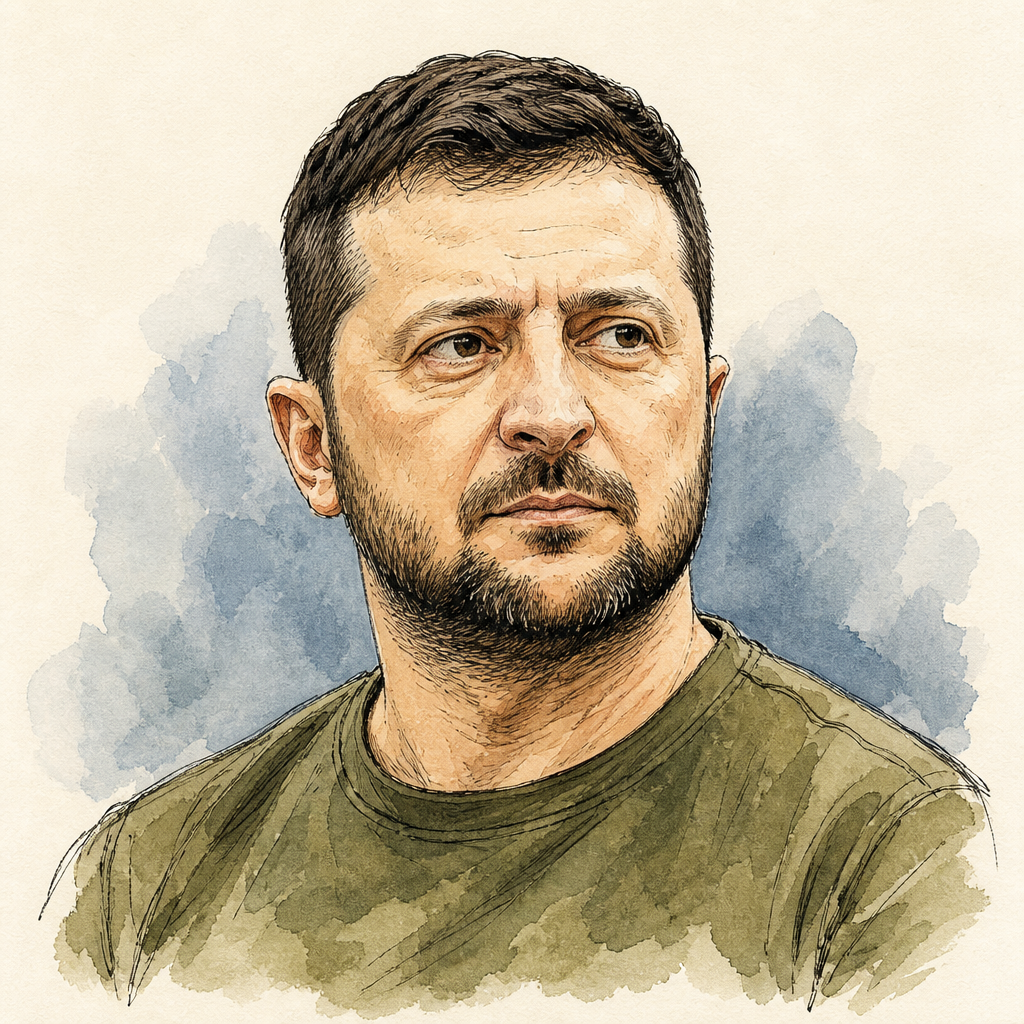
It is worth being plain about what is at stake, since war has a way of turning arguments into logistics. Ukraine holds elections, however imperfect wartime ones must be. It has a press that criticises its own government. It has courts, however strained, that at least aspire to answer to law rather than to one man's preference. These are not small things. They are the entire difference between a state and a personality cult with a flag.
That contrast is the argument, more than any speech could be. A country defending the right to disagree with its own leaders is not the same kind of actor as a country invading to make disagreement impossible. Confusing the two — treating this as merely two sides in a border dispute — is not neutrality. It is a failure to notice what is actually on the table.
The Case for Steadiness
So: is continued, serious, well-governed support for Ukraine's democracy wise? Weighed against the alternative — a Europe that treats each intercepted drone as an isolated nuisance rather than as one note in a longer, louder song — the answer holds. Support Ukraine not because war is glorious, it never is, but because ballots, courts, and a free press are worth defending before they are gone, not mourned after.
The drone over Lithuania fell in seconds. What it was testing will take longer to answer. Democracies that answer early, clearly, and without excess paperwork tend not to have to answer twice.