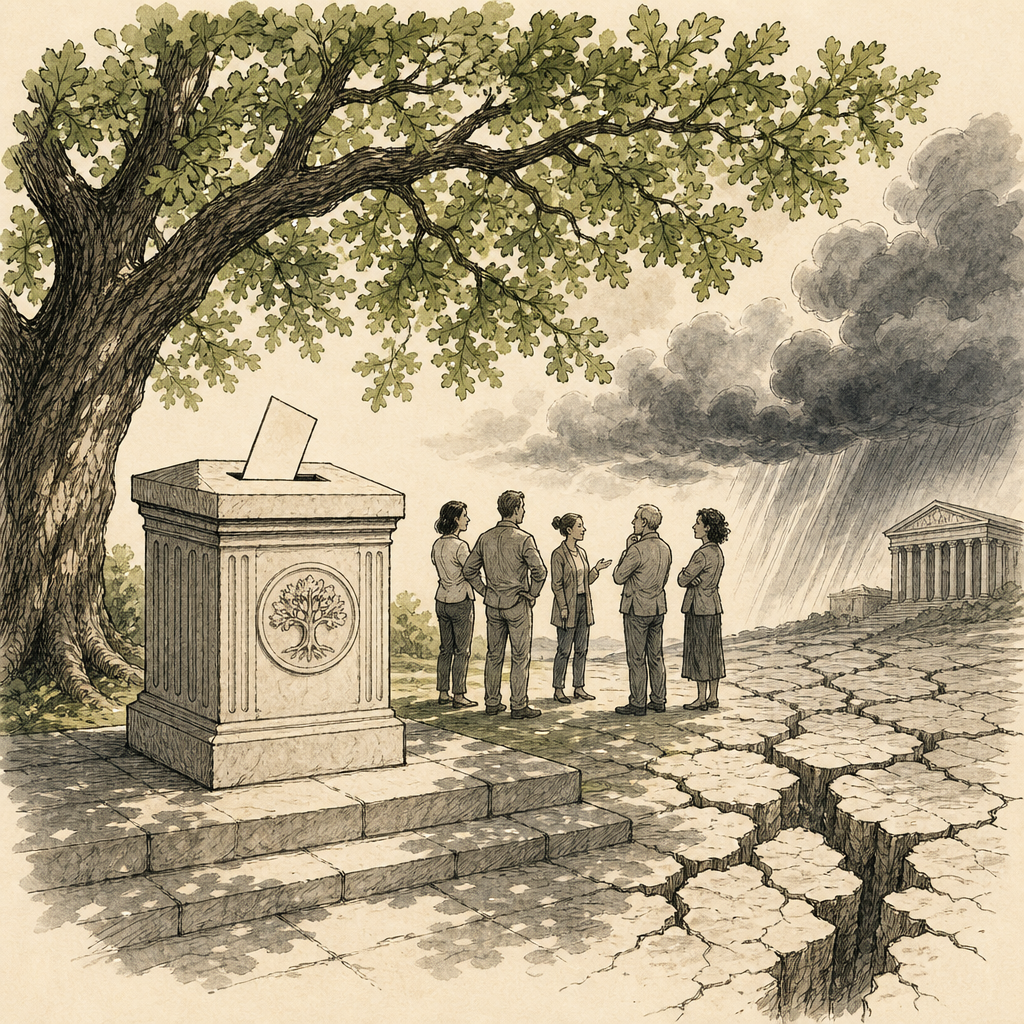
Two notices, one morning
This week brought two small administrative items that will barely make a paragraph in most history books. A prominent Russian newspaper closed its doors under pressure from the authorities. In Egypt, a respected editor, Lina Attalah, was fined and her outlet, Mada Masr, was shut down.
Neither event involved tanks. No one declared a state of emergency. A fine here, a licensing problem there, a shortage of newsprint, a tax inquiry. Bureaucracy, not drama. That is usually how it goes.
The pattern you can set your watch by
Ask yourself a simple question: has any government in history ever announced, on the record, "we are now becoming a dictatorship"? Of course not. What happens instead is procedural. A court becomes slower to rule against the state. A broadcaster loses its license over a paperwork technicality. An editor is fined into bankruptcy rather than jailed outright — tidier, and harder to protest against, since who objects to the enforcement of a tax code?
The genius of modern authoritarian drift is that each individual step can be defended in the language of order. Only the sequence reveals the direction.
Not every noisy country is the problem
Here is where the lazy reader gets it backwards. Spain's transport minister is refusing to resign over a high-speed rail disaster, and commentators are furious. Israel is stuck in political deadlock with no government able to form. China, meanwhile, just elevated a general to its Politburo and tightened party discipline — smooth, orderly, no deadlock at all.
Which of these should worry you more?
The honest answer is: the quiet one. A minister who won't resign still faces a free press, an opposition, and voters who remember in the next election. A deadlocked parliament is a democracy doing its job slowly and annoyingly — but doing it in public, under cameras that are still allowed to film. Mess is not the same as decay. Sometimes mess is the immune system working.
A system where dissenters are reshuffled out quietly and a single party decides who sits where is not calm. It is a country where disagreement has simply stopped being visible, which is a very different thing from disagreement having stopped existing.
Why defending the boring institutions is wise
It is tempting to treat press freedom as a slogan for press conferences, something diplomats mention and move past. But a free newsroom is closer to a smoke detector than a decoration. It is cheap, it is annoying when it goes off for no reason, and it is the thing you will miss most on the one night it actually mattered.
Once an independent court or an independent newsroom is gone, it is not easily rebuilt. Licenses are not un-revoked. Editors who have fled do not simply walk back into an office that no longer exists. This is why the wise moment to object is early — when the complaint still sounds like overreaction, when the fine still looks like an ordinary legal matter, when the friend who says "it's just one newspaper" still sounds reasonable.
A standpoint, not just a wink
So here is the stance, plainly: a free press and an independent judiciary are not optional accessories to democracy, they are its load-bearing walls. Citizens in functioning democracies should treat every erosion of them — even abroad, even procedural, even boring — as information about where power is heading, not as foreign news to skim past.
Defending that boring infrastructure now, loudly, while it still sounds unnecessary, is cheaper than defending it later, when it will sound impossible.