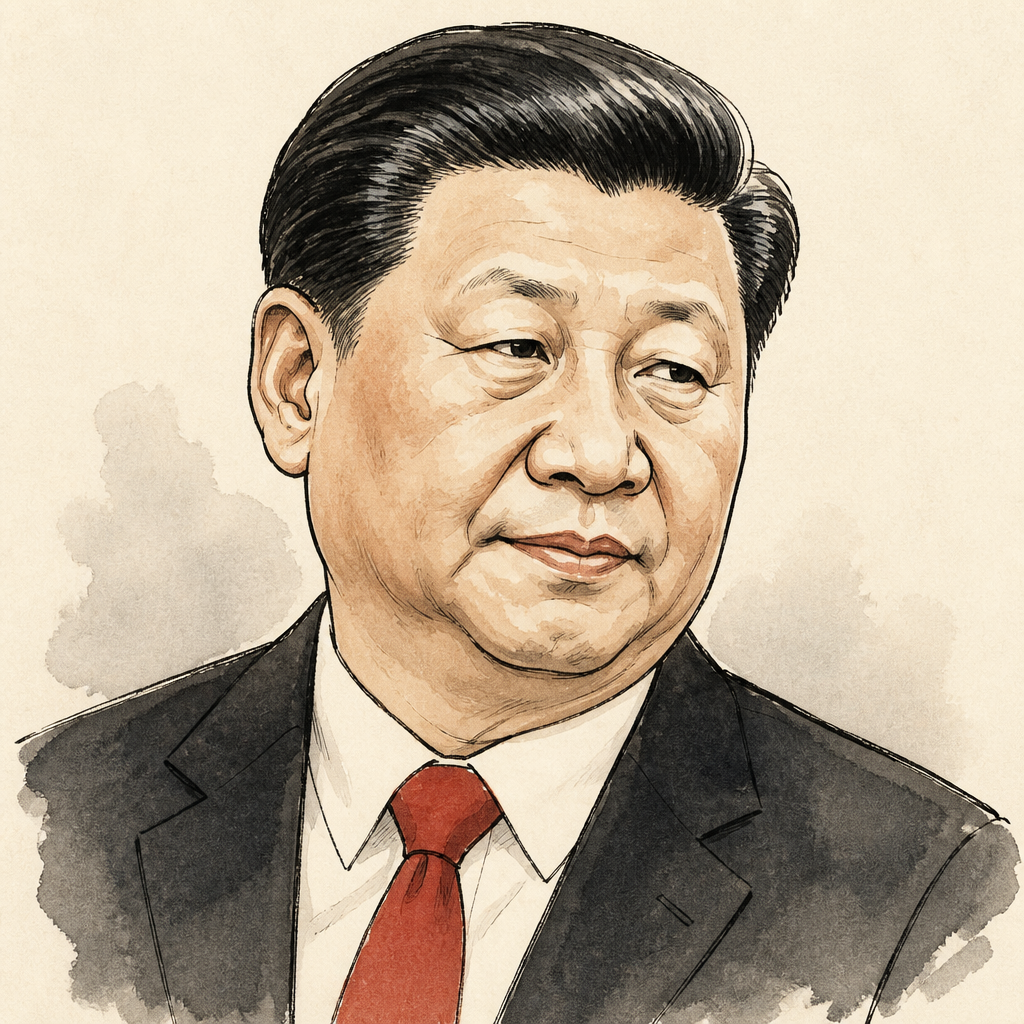
The Hole in the Room
This week's diplomatic vocabulary produced an unusually honest phrase. Washington's plan for economic pressure on Iran, we are told, has one big hole: China. Not a leak, not a loophole. A hole — the shape of an entire economy that simply declines to show up where it is inconvenient.
Finance ministers from the G20 are gathering in North Carolina this week, sitting at the same table, presumably nodding at the same communiqués about coordinated response and shared rules. And somewhere in that room, or conspicuously represented but not truly present in spirit, sits the country whose cooperation the sanctions campaign needs and does not have.
This is not new information. It has simply become the week's plain-spoken sentence.
The Patience Gap
Here is my fear, stated as a question rather than an accusation, because accusations are easy and questions are harder to escape: is Xi Jinping simply waiting — buying Iranian oil, watching Russia's war exhaust itself over Ukrainian skies, watching Washington negotiate an oil deal with Venezuela, watching the wedding-strike and the retaliation and the next retaliation — until the moment he no longer needs to answer for any of it?
A useful thing about authoritarian power is that it does not run on election cycles. While democracies argue about ballroom construction rulings, army secretaries resigning, a golfer's plea deal, and a murder trial that will consume a news cycle for months, a government with no midterm and no free press to embarrass it can simply let the clock run. Patience, for a strongman, is not a virtue. It is a resource democracies keep handing him for free, one distracted news cycle at a time.
That asymmetry is the real hole. Sanctions regimes assume shared urgency. Xi's calendar does not.
The Wager on Waiting
But let us be fair to the question before we answer it, because irony without argument is just a smirk.
It is possible to overstate the grandmaster theory of Xi Jinping. A government that keeps its own citizens under surveillance, that manages a slowing economy and a restless youth generation, does not behave like an actor certain of eventual dominance. Every year China declines to fully align with a sanctions coalition, it also declines the trust, the market access, and the technological partnerships that alignment would bring. Waiting has a cost too. Confidence and caution can look identical from the outside.
So perhaps the honest answer is: we do not know if Xi is playing us or simply hedging, the way any large power hedges when the alternative is picking a costly side in someone else's war.
What Wisdom Looks Like Without Certainty
Here is the useful part. Democracies do not need to solve the riddle of Xi's inner confidence to know how to act. Whether he is patiently waiting to ignore us or merely protecting his own uncertain economy, the wise response is the same: stop building coalitions with holes in them and calling them coalitions.
A sanctions regime that everyone can see has a hole is not really a sanctions regime. It is a stage set — useful for press conferences, useless for pressure. If the free world wants Tehran's calculus to change, or Moscow's, it will need partners who actually pay a cost for holding the line, not partners who applaud from the doorway while quietly keeping the back door open.
And none of this requires treating the Chinese people as the object of suspicion. The distinction between a government's strategic patience and a billion people's daily lives is exactly the distinction democracies should insist on — anti-racism is not optional even when foreign policy gets uncomfortable.
The fear I started with is not really about Xi's mind. It is about ours. Do we notice, while we are consumed by our own trials and scandals and golf pleas, that someone at the table has all the time in the world — and that the time is being spent, patiently, on outlasting us? That is worth asking today, while there is still a table, and still a chair for everyone at it, even the empty one.