The easy verdict
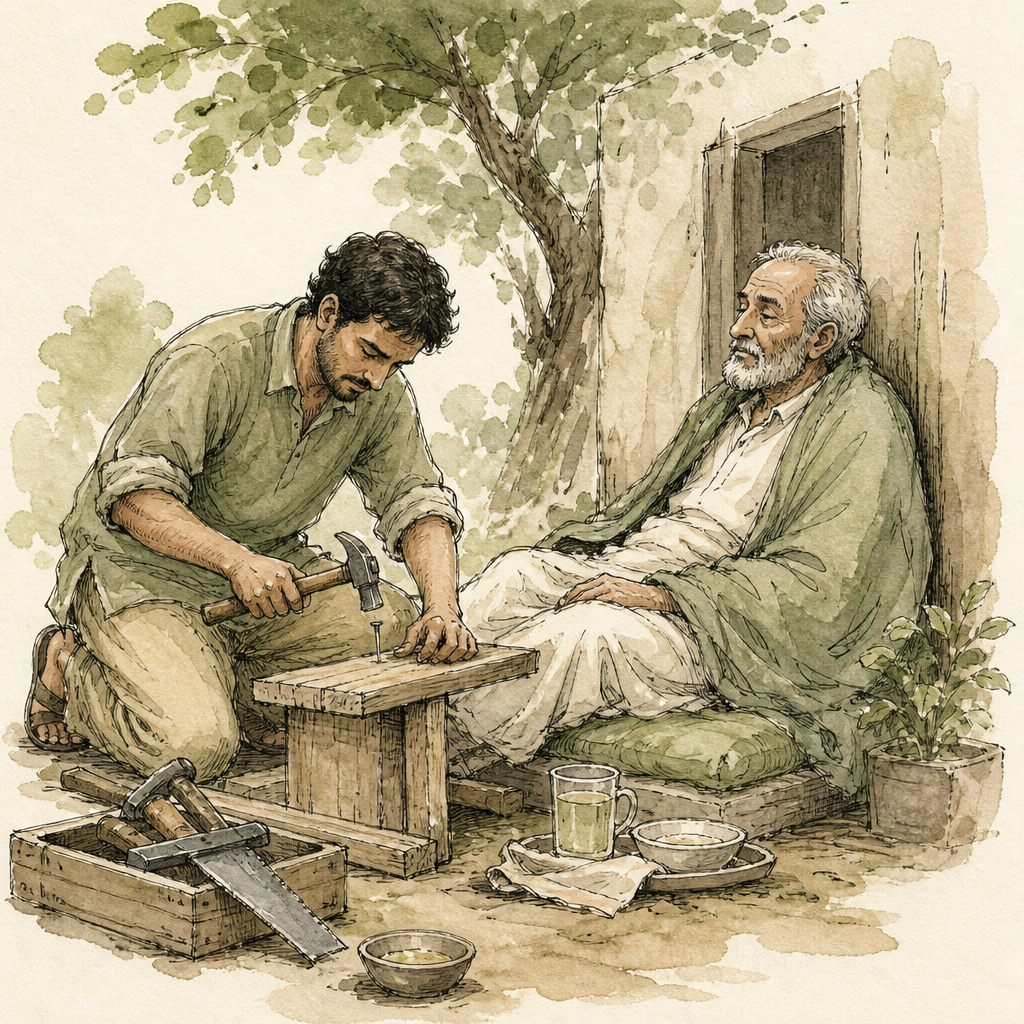
It is one of the oldest judgments humans pass on each other: that one doesn't work, so that one must be lazy. It is satisfying because it is simple. It is also, almost always, premature.
This week's headlines offer two very different bodies on which that judgment is being tested — and both suggest the verdict is harder to reach honestly than it looks.
The patient who cannot be seen
In Kenya and Nigeria, health authorities are still tracing how Ebola crossed into new patients, including a 65-year-old woman who has now died. Nobody watching someone collapse with Ebola asks whether they are simply unmotivated to get up. The illness is visible enough, eventually, to settle the question. But notice what made the early days hard: contact tracers didn't know who was sick until the disease told them. Capacity to work, it turns out, is not always legible from the outside. Sometimes it takes a laboratory, a contact-tracing team, and patient, unglamorous verification to know who can carry a load and who is already carrying an invisible one.
The patient who is sent away instead
Now turn to a very different kind of case file. Advocates report that severely ill detainees in U.S. immigration custody face deportation to unspecified African countries — removed, reportedly, while too unwell to meaningfully contest the decision. Here the logic runs backward from the Ebola ward. Nobody is waiting for a diagnosis. The illness that would, in one context, excuse a person from labour is, in this context, simply inconvenient to the system processing them. Sick enough to be unable to argue for themselves; apparently well enough to be put on a plane. That is not a medical judgment. It is a bureaucratic shortcut dressed up as one.
Two failures, same root
Both failures come from the same temptation: deciding what someone can bear without doing the actual work of finding out. One failure assumes danger where there may be none. The other assumes fitness where there may be none. Neither is compassion. Neither is even efficiency, properly understood — a system that doesn't verify capacity will eventually misjudge in both directions, at cost to itself as well as to the people it mishandles.
What the golden rule actually asks of institutions
"Those who can work should work" is a fine civic principle — dignity through contribution, not idleness as an ideal. But the principle only holds if the word "can" is answered honestly, case by case, not by assumption, stereotype, or administrative convenience. The reciprocity test is simple: if you were the one running a fever, would you want your capacity decided by someone who never checked? If you were the one filing the paperwork, would you want "too sick to object" quietly reclassified as "fit to remove"?
This is also why proportionate bureaucracy matters — not paperwork for its own sake, which drowns people and breeds resentment, but enough process to ask the right question before the consequential answer is delivered. A society that skips verification to save time on the sick is not lean; it is simply careless at someone else's expense.
A standpoint worth holding
So here is the stance, not just the question: societies should refuse both shortcuts. Refuse the lazy assumption that illness is malingering. Refuse the equally lazy assumption that illness, once declared inconvenient, can be waved toward a border and called resolved. Build the slow infrastructure — contact tracers, medical review, actual hearings — that tells us who can carry weight and who is already buried under it.
It is not a glamorous standard. It will not fit on a campaign poster. But it is the only standard that survives contact with reality, where fevers are real, paperwork is real, and the gap between "cannot" and "will not" is exactly where a decent system is supposed to do its quiet, unflattering work.