Two doors, closed on the same day
In Madrid, an 87-year-old woman was put out of the home she had lived in for decades, and the city noticed. People took to the streets. The government, to its credit, is now announcing new housing measures. That is how a democracy is supposed to work: someone is wronged, the wrong becomes visible, the law moves.
In the West Bank, a Palestinian family tried to return to their village and found settlers blocking the road, attacking rather than arguing. No court ordered this. No official measure will follow it through parliament next week. It happened because someone decided they had the power to decide who belongs, and no one stopped them in time.
Put the two stories side by side and a plainer question appears than either headline admits. A home is not really secured by a deed or a key. It is secured by whether the people around you agree, in practice, that you have a right to be there. Everything else — paperwork, walls, locks — is decoration on top of that agreement.
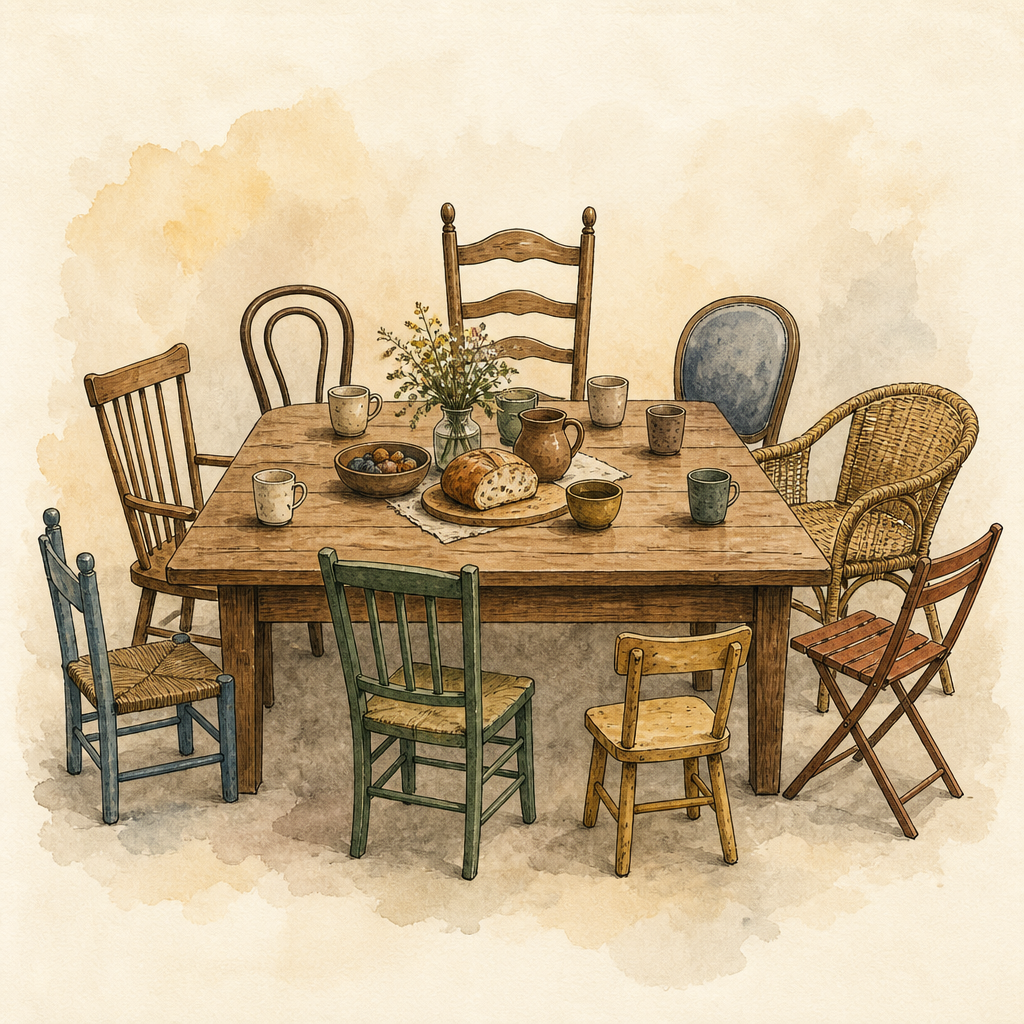
The shared table has two guards
A shared table needs two things working at once, and both stories show what happens when one goes missing.
The first guard is fair law — rules that decide who keeps a roof, applied evenly, adjustable when they grind people down. Spain's eviction system produced a result nobody who saw the woman's age could defend, and the useful part of the story is that protest pushed the state to admit it and adjust the rule. That is not weakness. That is a government still capable of embarrassment, which is a healthier condition than it sounds.
The second guard is equal protection — the promise that no neighbour, mob, or armed group gets to overrule the law by simply being stronger on a given afternoon. A family blocked from their own village by settlers is not a housing dispute. It is a preview of what a country looks like when the second guard falls asleep: rules still exist on paper, but whoever shows up with more force decides who eats at the table today.
Democracies fail in the first way often, and can usually correct themselves — through protest, court, election, embarrassment. Democracies fail in the second way more rarely, but when they do, the correction gets much harder, because the people doing the blocking have stopped believing the shared table needs a law at all.
Why "welcome" cannot depend on ancestry, or on who shouts louder
Here is where common sense earns its keep instead of just nodding sympathetically at both stories. A humane society does not decide who belongs by bloodline, and it does not decide it by who is willing to use more force in a given moment either. It decides by one shared rule, applied to everyone sitting at the table, changeable by argument and vote — not by eviction crews with bad judgment, and not by settlers with none.
This is, not coincidentally, the logic behind serious integration efforts like Denmark's push against parallel societies: not "you don't belong because of where your grandparents were born," but "you belong if you accept the same law, the same language of public life, the same table manners as everyone else here." That standard is strict, and it should be. But it is also, crucially, the same standard for the newcomer and the neighbour who has been there a hundred years. Nobody gets to skip the table because their claim to be there is older than the paperwork, and nobody gets removed from it because their claim is newer.
The test that travels
So here is a modest test for any story about who stays and who goes, whether it is an eviction notice or a blocked road: would the rule survive if the people applying it had to sit across the table from the person they are removing?
Madrid, under pressure, is at least rewriting the rule. That is worth noting without cynicism — protest did its job, and a government listened before the story calcified into shame. The harder case is the one without a government in the room at all, where the only response to a blocked door has to come from conscience, diplomacy, and the slow, unglamorous work of insisting that force is not the same thing as law.
A shared table is not sentimental. It is the practical machinery of a society that intends to keep functioning after this week's headlines fade. Anyone still hungry for a seat at it deserves to know the rule that decides whether they get one — and to know that the rule was written by law, not by whoever pushed hardest.