A ruling in black and white
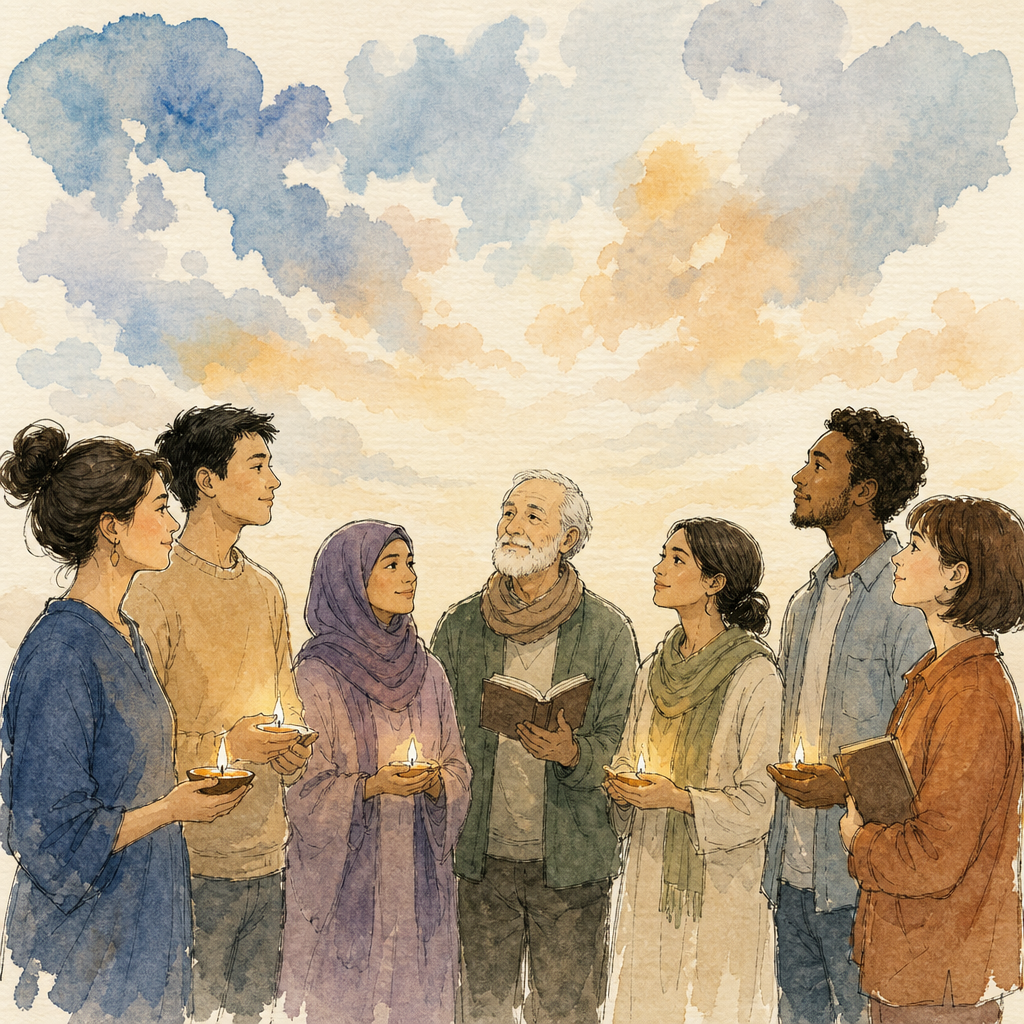
This week Canada's Supreme Court largely upheld Quebec's law barring public employees in positions of authority — teachers, judges, prosecutors, police — from wearing visible religious symbols on the job. A kippah, a turban, a crucifix, a hijab: all treated the same, all forbidden at the desk, the bench, the blackboard.
Notice the judges who decided this wore robes. Robes are symbols too — of office, of impartial authority, of a tradition reaching back centuries. Nobody asked them to remove those. The law does not object to symbols as such. It objects to symbols of a particular kind: the kind a person wears because of what they believe about the universe, rather than what the state has assigned them to perform.
The honest case for the ban
Give the law its due. A secular state has a real interest in appearing to belong to everyone equally. A child in a public classroom should not feel that the teacher's faith is the school's faith. A defendant should not wonder whether the judge's god is on the other side's team. Neutrality, the argument goes, is not erasing identity — it is refusing to let any one identity stand in for the state itself. Reasonable people can hold this view without malice, and courts that take it seriously are not courts drifting toward authoritarianism.
The honest case against it
But run the golden rule over it. Would the defenders of this law accept the same bargain in reverse — told that their own quiet conviction, causing no one any harm, disqualifies them from a job they trained for? A hijab on a teacher's head does not stop her from teaching the curriculum honestly, grading fairly, or upholding the secular classroom's rules. It is not an act done to a student. It is a fact about the teacher. Punishing a fact rather than a conduct is where neutrality curdles into something else: an orthodoxy of invisibility, which is still an orthodoxy — only dressed in the language of fairness.
The practical cost is already visible in reporting from Quebec itself: qualified teachers, many of them women, choosing other provinces or other careers rather than hide who they are. A law meant to knit newcomers into shared civic life can end up teaching the opposite lesson — that full citizenship requires disappearing a little first.
Two ends of a spectrum
It is worth placing this argument beside a very different one in this week's news. North Korea's leader has promised to keep building nuclear weapons rather than accept any overture that might loosen his grip — a regime where belief is not merely regulated but manufactured, where the only permitted symbol is the leader's own portrait. That is the far end of the spectrum: a state that does not ask citizens to mute their conscience, but supplies one for them, by force, forever.
Quebec's law sits nowhere near that horror, and it would be cheap and lazy to pretend otherwise. But the comparison does clarify the real test a liberal democracy should apply. The danger was never a visible symbol of faith on a willing public servant. The real target of serious integration policy — the kind Denmark has pursued seriously since 2018 under its 'One Denmark' reforms — is parallel structures that replace shared law with private rule: forced marriage, informal tribunals overriding civil courts, enclaves that opt out of the common rulebook entirely. That is where a democracy is right to be firm, even severe.
What wisdom actually asks
Freedom of conscience is not a reward for believing quietly enough to be unnoticed. It is the promise that what you believe, so long as it does not compel others, is nobody's business but your own and your god's, if you have one. A judge can be impartial wearing a kippah. A teacher can teach secular curriculum wearing a hijab. What a democracy may rightly demand is obedience to the law, not uniformity of the soul.
The wiser line, then, is not Quebec's blanket ban dressed as neutrality, but Denmark's sharper distinction: freedom of belief for every person, full stop — and zero tolerance for structures, religious or otherwise, that try to replace the common law with a private one. Ban the parallel society. Leave the scarf alone.