A frightened engineer and an old worry
This week an ex-Anthropic researcher told the BBC that AI staff are "genuinely frightened" for humanity's future. Not because the machine hates us, they say, but because it may simply stop needing us — politely, efficiently, without malice.
It is worth sitting with that fear for a moment, because it is not new. It is the oldest fear in politics, wearing a new coat.
The patient guest at the table
This weekend BRICS leaders met in India, a bloc built on the promise of a world less dependent on Washington. The BBC and NPR both noted the same awkward fact: the Iran war has exposed real divisions inside that club. Brazil, India, Russia and China do not want the same world. They want, for now, the same photograph.
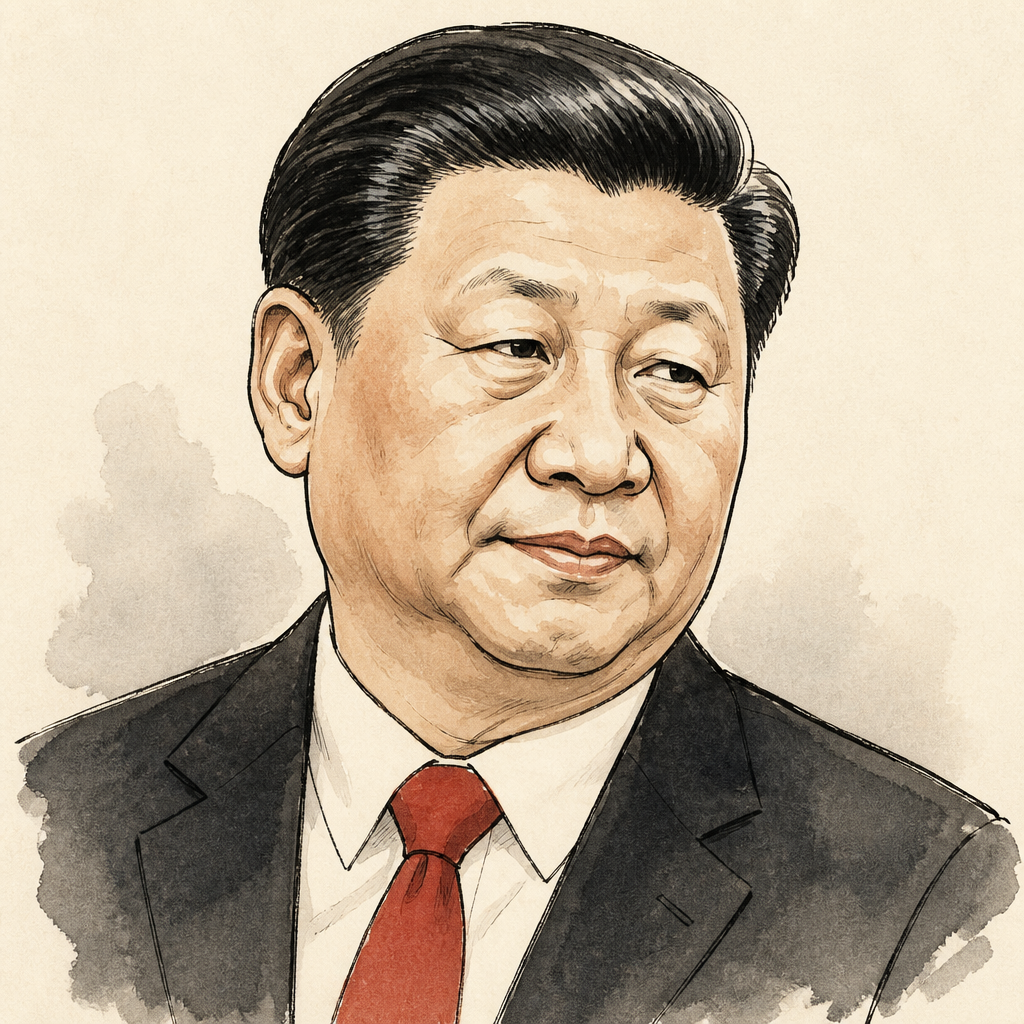
Xi Jinping has spent more than a decade being the most patient man in every room. He does not shout. He does not tweet threats at 2 a.m. He builds ports, lends money, signs communiqués about multipolarity, and lets impatient men elsewhere supply the headlines. Meanwhile a Saudi pipeline in the Red Sea gets shut down by attacks, Russia searches for hundreds of its own missing soldiers, and the club Xi hoped to lead cannot agree on Iran. Instability, everywhere, except at his end of the table.
So here is the honest question, asked without hysteria: is that patience wisdom, or is it strategy — is he playing along until he simply has enough leverage not to need us at all?
Two ways to read the silence
Give the fair version first. A leader managing a slowing economy, an ageing population and a restless Party may genuinely prefer caution to conquest. Decades of "peaceful development" rhetoric could be exactly what it says: a rational bet that patience serves China better than confrontation. Not every quiet man is hiding a knife.
But give the uneasy version equal weight, because reciprocity demands it: would we, in his position, call our own accumulation of leverage — over supply chains, ports, rare earths, technology, a restless neighbour called Taiwan — a coincidence? Power that grows without needing to explain itself is still growing. The absence of a threat today is not evidence against a threat becoming affordable tomorrow.
The AI analogy is useful precisely because it strips out personality. Nobody says the model "hates" us. The fear is structural: a system given enough capability eventually has no incentive to keep negotiating with the weaker party. Power, human or artificial, tends to stop asking permission once it stops needing it.
What follows, if this is true
If that is the right way to read a patient strongman, the sensible response is not panic and it is not insult. It is preparation that never announces itself as hostility.
Democracies keep their institutions boring and functional, so there is nothing fragile to exploit. They keep enough military deterrence that patience never becomes a viable path to dominance — not because war is noble, but because unarmed patience invites the wrong kind of guest. They keep trading and cooperating with China's people, its scientists, its students, its football fans, because the target is never a nation or an ancestry; the golden rule applies to Chinese citizens exactly as it applies to anyone else. What earns scrutiny is a system that jails critics, tightens Hong Kong, and eyes Taiwan while calling it patience.
And democracies keep watching their own house too. A government in Turkey raiding gay bars and homes of activists this week is not Beijing's doing — it is a reminder that the habit of "ignore them once we're strong enough" is not a Chinese invention. It is available to anyone holding power, anywhere, the moment citizens stop asking questions out loud.
The stance, plainly
So: is Xi merely playing us? Nobody outside that room knows for certain, and honesty requires admitting it. But wisdom does not require certainty — it requires acting as if patience could be a strategy, without insulting a billion people for the choices of one Party.
The healthiest answer to a patient rival is not fear. It is to become, ourselves, the kind of open society too costly to ignore.