A small item, a large shadow
Buried among today's headlines is a strange little story: nine foreigners were caught in South Africa, allegedly trying to leave the country to fight in Ukraine. The report does not say for which side. Perhaps the reporters do not know either. Perhaps, in this war, that ambiguity is the point.
A conflict that began as a border dispute in Europe has become magnetic enough to pull volunteers — or mercenaries, or the merely confused — from the southern tip of Africa. That alone should give us pause. Wars that reach this far usually aren't contained wars. They are gravitational wells.
A useful contrast, right next door in the news
On the same day, South Africans are counting ballots and watching the ANC, the party that has governed since the end of apartheid, absorb a bruising defeat in local elections. Whatever one thinks of the ANC's record, notice what is happening: voters are unhappy, and the mechanism for expressing that unhappiness exists, works, and is being used. No one is surprised. No one is arrested for counting the votes honestly.
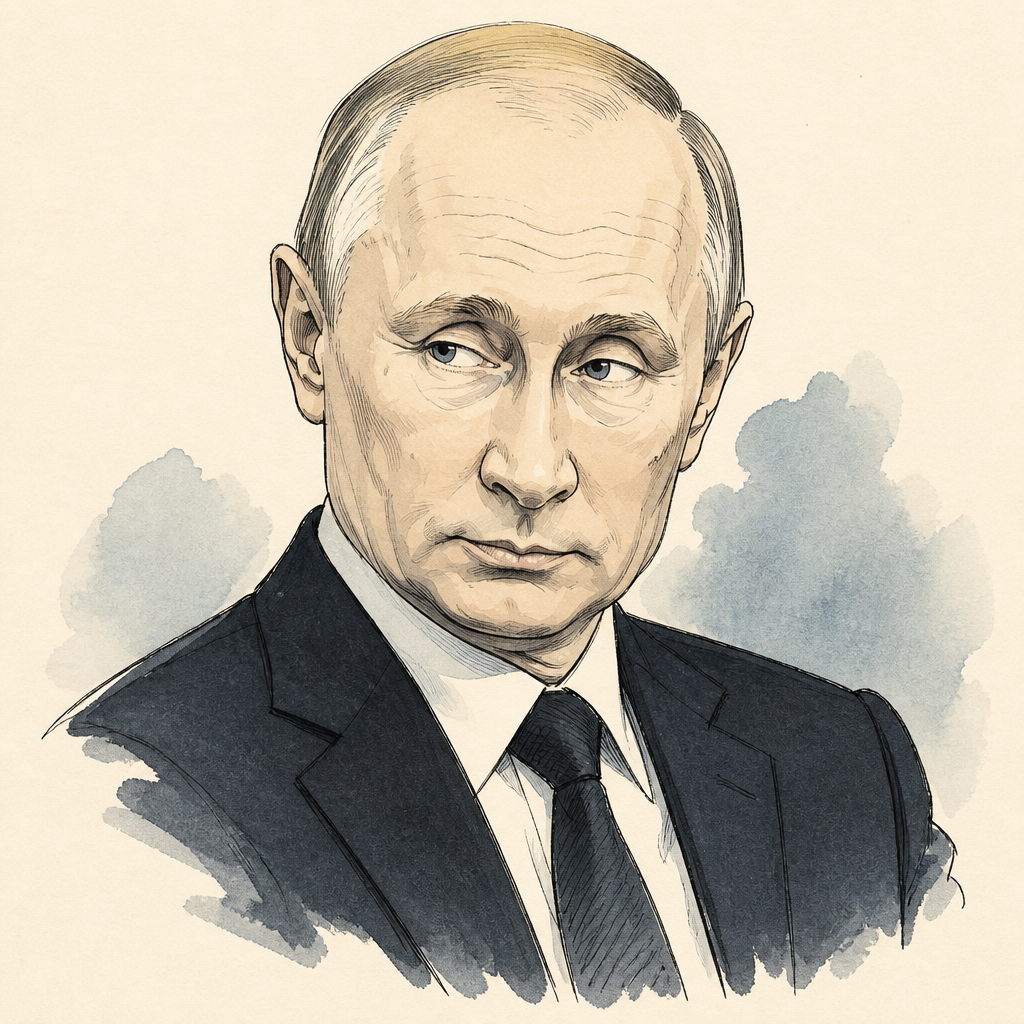
Now place that next to Moscow. There, the man in charge has not lost an election in a quarter of a century — not because voters adore him without exception, but because the machinery that would let them say otherwise has been dismantled, piece by piece, year by year. Opposition candidates are barred, jailed, exiled, or worse. The courts answer to him. The press that still functions answers to him too.
This is the real comparison worth making today: not South Africa versus Russia as rivals, but South Africa's messy, functioning accountability versus Russia's absence of it. One system can be embarrassed by its own citizens. The other cannot be embarrassed at all.
Why that absence is the thing to fear
It is tempting to measure dictators by their cruelty, and there is plenty of that to measure. But cruelty is not the rarest thing in the world; history is full of cruel men who were, in the end, limited — by generals who hesitated, by economies that collapsed, by elections they could not fully rig.
What should worry a careful reader more is capability without a ceiling. A leader who has already shown he will invade a neighbor, arm proxies across continents, interfere in elections he does not run in, and speak of nuclear weapons not as taboo but as leverage — such a leader is not defined by what he has done. He is defined by the fact that nothing internal stops him from doing more.
That is the uncomfortable, unglamorous truth hiding under today's scattered headlines. Not the Krakow shooting, not the smog over Delhi, not even the appalling sentence handed to a doomsday cult leader in Kenya — as grim as that story is, it describes a man now finally stopped. The harder case is the man who is not stopped, who faces no local election, no free court, no free press that can touch him, and who has already demonstrated what he will risk to test the world's patience.
What common sense suggests
None of this calls for panic, and certainly not for mirroring his methods. Democracies do not need to become ruthless to remain safe; they need to remain serious. That means continuing to support Ukraine's right to exist within its borders, not as a favor but as a demonstration that aggression still has a cost. It means keeping deterrence real rather than performative — a strong, accountable military is not a contradiction of peace, it is often the precondition for it. And it means noticing, soberly, that the absence of an internal check is itself the danger, wherever it appears.
South Africans just reminded the world, almost by accident, what an internal check looks like: a ruling party losing, and surviving the loss. Keep watching for the leaders who cannot lose at all. That is where the real capability — and the real fear — lives.