A Ruler, Not a Referee
Somewhere between threatening to bomb Oman "if it gets in the way" over Iran and quietly trimming military exercises with South Korea because Seoul behaved itself during the Iran war, a pattern emerges that has nothing to do with strategy and everything to do with mood.
Oman did not invade anyone. South Korea did not misbehave. One nation is warned with fire; the other is rewarded with fewer drills, as if allowances were being handed out at a dinner table, not decisions made by a superpower's military planners. Ask yourself: is this policy, or is this a man checking his own reflection and liking what he sees a little too much?
The Certainty Trick
Strongmen — and we use the word descriptively, not as an insult, because the description does the work insults cannot — share one skill above all others. They convert uncertainty into performance. Diplomacy is slow, boring, full of committees and treaties nobody photographs well. A threat, on the other hand, is instant theater. It requires no explanation, only volume.
Compare this to the actual grinding work happening the same week: Jared Kushner meeting Hamas negotiators, then Netanyahu, carrying a peace-plan road map through rooms where nothing photographs as dramatically as a threat but where lives may quietly be saved if the paperwork holds. Diplomacy is unglamorous. That is precisely its virtue. It does not need an audience to justify itself.
Meanwhile, in Moscow
If you want to see where unchecked certainty eventually lands, look at the news arriving daily from the Russia-Ukraine front: strikes traded, six dead in a single reported exchange, ordinary life inside Russia continuing under a war whose logic answers to one man's sense of destiny rather than to any electorate's consent. Nobody in Moscow gets to vote the war down. That is the finished product of the mirror-gazing this essay is asking readers to notice early, while it is still merely a gesture toward an ally's neighbor and not yet a border crossed.
This is not a claim that America in 2026 is Russia. It is a claim that the muscle memory — the habit of one man deciding who gets bombed and who gets a scheduling favor, based on temperament rather than treaty — is the same muscle in every country where it grows unchecked. Democracies are supposed to have more checks on that muscle than autocracies do. The health of a democracy can be measured by whether those checks are actually exercised, or merely assumed to still exist because elections still happen somewhere on the calendar.
Why This Matters More Than It Sounds
A reader might object: every leader postures, every government plays favorites, this is simply how power looks up close. Fair enough — but there is a difference between a government making a hard strategic call and a single man narrating his own moods as if they were state doctrine. Oman "getting in the way" is not a legal category. South Korean good behavior is not a treaty clause. When threats and rewards trace one person's temperament instead of one nation's stated interest, citizens have lost the ability to predict their own government — and prediction is what accountability requires.
The Wise Stance
So here is a position, not just a wink: institutions that let one man threaten allies' neighbors on a whim, and adjust military posture as personal favor, are institutions asking to be tested by someone less restrained than the current occupant. Congress, courts, allied governments, and — not least — voters have tools to insist that alliance policy answer to law and consultation rather than mood. Using those tools now, while the cost of using them is still just embarrassment rather than catastrophe, is the whole point of noticing early.
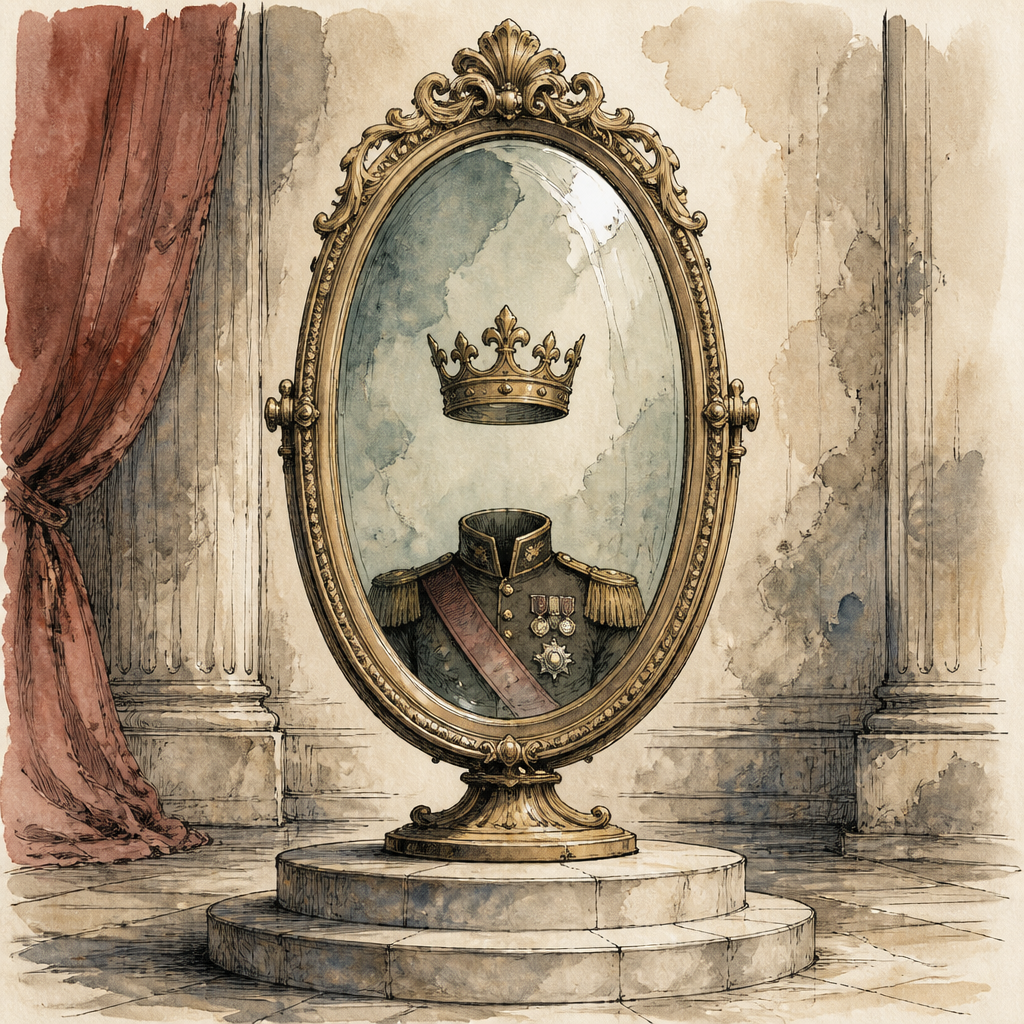
The strongman's mirror is flattering. It shows him decisive, feared, respected. It rarely shows him what an ally in Muscat or Seoul sees looking back: not a strategist, but a man deciding whether today is a day for warmth or for warning, and calling it foreign policy.
Citizens of democracies get to ask, out loud and often, which day it is — and whether they consented to a policy that depends on the answer.