A Word We Like to Say
Every culture has a proverb about work. Idle hands, devil's workshop, early bird, sweat of the brow. We recite them at graduations and job fairs, comfortably, from a safe distance.
Then a waste mound in Guinea's capital collapses and kills thirty people, and the proverbs go quiet for a moment. Because the people crushed there were, by any honest definition, working. Picking through refuse for scrap, for food, for whatever an economy with too few formal jobs leaves lying around. Nobody handed them a contract or a helmet. Nobody built a retaining wall.
So here is the uncomfortable question underneath the tidy slogan "those who can work should work": work for whom, under what protection, and who is accountable when the ground gives way?
Contribution Is Not the Same as Sacrifice
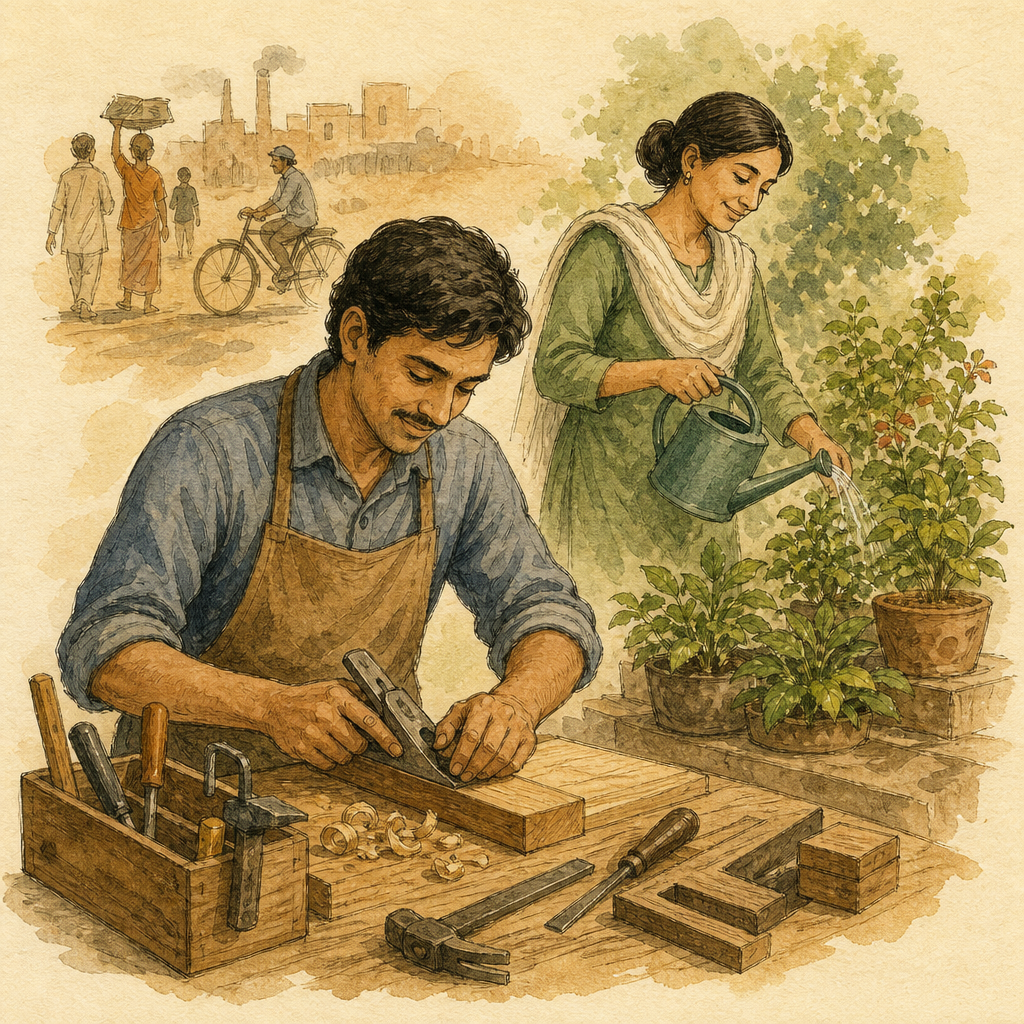
Dignity of work is a real principle, not a decoration. A society where people contribute — where effort is expected of those able to give it — is healthier than one that treats idleness as a lifestyle or charity as a permanent address. That much is common sense, and it holds across religions and constitutions alike: neighbourliness includes pulling your share.
But the principle has a silent partner, and we keep forgetting to introduce it. If a citizen is asked to contribute, the community is asked to make that contribution survivable. A job that kills you when the mound you're mining for scrap gives way is not dignity. It is neglect wearing the costume of self-reliance.
Thirty deaths at a waste site are not an indictment of the workers. They are an indictment of everyone who benefited from cheap informal labour while never asking where the safety inspector was.
The Other Side of the Ledger
Consider a quieter case from this same week's news: the American Navy families who evacuated Bahrain and, six months on, remain stuck — not unemployed, not idle, simply suspended in the gap between service rendered and system responding. They did their part. The bureaucracy has not yet done its part back.
This is the same principle, viewed from the tidier end of the world. Contribution is a two-way promise. You give your labour, your service, your years — the state or the employer owes you something in return: safety, timeliness, an answer. A society that demands work but shrugs at reciprocity is not teaching dignity. It is teaching people to expect nothing and call it maturity.
And there is a third case worth a sentence, because it cuts the other way: park rangers accused of abuses serious enough that a public figure resigned from the charity's board rather than stay associated. Work done in uniform, with authority, still needs a leash. Dignity of labour is not a blank cheque for whoever holds a badge or a title. Contribution without accountability curdles into something else entirely.
What the Mound Actually Teaches
So: pro work, yes — a person who can contribute and chooses not to is not living a fuller life, only a smaller one, and a society that stops expecting effort from the able eventually stops respecting effort at all.
But the compassion clause matters just as much. Some people cannot work — the child near the smoke of Indonesia's wildfires, the family displaced by a tornado, the sick, the very old. For them, cruelty dressed up as "personal responsibility" is not wisdom, it's an excuse.
And for those who can and do work, the deal has to run both directions. Build the retaining wall. Answer the Navy family's file. Watch the ranger with the badge as closely as you watch the scavenger with the sack.
Dignity of work was never a slogan for the comfortable to recite at the uncomfortable. It is a contract. Read the fine print before you sign someone else up for it.