
A rehearsal that never ends
Somewhere east of the Carpathians, a country is still proving a point nobody asked it to prove: that a democracy, attacked at its edges, can choose to fight for its institutions rather than hand them over quietly. Ukraine's war is not new news today. But its lesson is renewed every time another country quietly decides whether its own institutions are worth defending — and this week the world offered several such tests, none of them loud, all of them worth noticing.
In Guinea-Bissau, opponents say a new constitution will hollow out the checks that keep power accountable. In Venezuela, critics question whether oil deals signed by the government even meet the basic test of legality. In Washington, Democrats are asking the Department of Homeland Security to actually fund election security — a plea that should not need making in a mature democracy, and yet here we are, months before an election, arguing about whether the plumbing of self-government gets paid for.
None of these stories involves tanks crossing a border. That is exactly the point.
The quiet phase is the dangerous phase
Ukraine's defenders did not wait for tanks either, not really. The habit of defending democratic institutions started years earlier — in courts, in elections, in streets full of people who noticed something was wrong before it became unmistakable. Maidan Square is now shorthand for a revolution, but revolutions are just the loud finale of a much quieter argument: does the constitution mean what it says, or does it mean whatever the person currently in power decides it means?
Guinea-Bissau's opponents are having that argument right now, without cameras from every continent, without a war to make it legible. A constitution that concentrates power is rarely announced as a coup. It is announced as reform, modernization, stability. The people who write it insist they are strengthening the state. Ask them: strengthening it for whom, and for how long? A constitution that cannot be challenged in five years was never really a constitution — it was a lease.
Solidarity is not sentiment, it is arithmetic
Here is an uncomfortable question worth sitting with: why does the world find it easier to admire Ukraine's courage than to fund its own election security, or to ask hard questions about a Venezuelan oil deal, or to notice a constitution changing shape in West Africa? Admiration is free. Vigilance costs something — attention, money, the discomfort of scrutinizing your own government instead of someone else's war.
That is precisely why Ukraine's fight deserves to be read not as a distant heroism but as a mirror. The courage was not Ukrainian by nature; it was Ukrainian by circumstance, forced early by an invasion that left no room for the comfortable delay democracies usually allow themselves. Most countries do not get forced. They get to choose, slowly, whether to notice the erosion before it becomes irreversible.
What a wise democracy does early
A wise democracy funds its own election security before an emergency demands it, rather than after a scandal makes it a headline. It reads a new constitution the way a good lawyer reads fine print — assuming, until proven otherwise, that whoever wrote it had their own advantage in mind. It asks, of any deal involving state resources, who actually benefits and who was allowed to check.
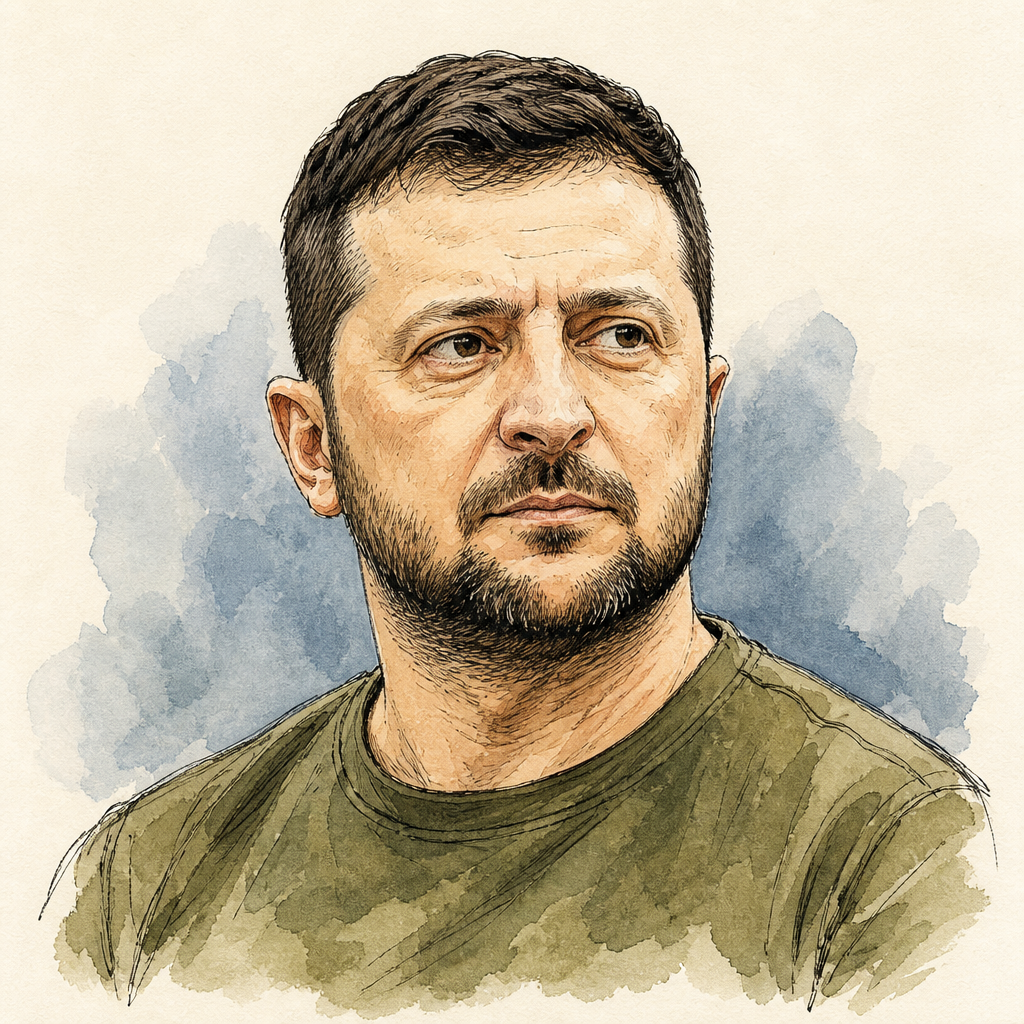
And it keeps supporting Ukraine — not as charity, not as spectacle, but as tuition. Every democracy watching Kyiv defend its parliament, its courts, its right to hold elections at all, is watching a live demonstration of what it costs to wait too long to notice, and what it costs to notice on time.
The cheapest form of solidarity is applause. The wiser form is imitation: noticing early, protesting while protest still works, and treating your own institutions as though someone, somewhere, is quietly deciding whether they are worth taking from you.