A Prize for Patience
The Nobel Peace Prize rarely makes for thrilling television. Navi Pillay, the former UN human rights chief and ICJ judge, has spent a career doing the least cinematic work imaginable: reading transcripts, weighing evidence, building the slow architecture of international law. No balcony speeches. No crowds chanting a name. Just the long arithmetic of accountability, case by case, decade by decade.
That is worth sitting with, because the same week offered its opposite number: the Pentagon's plan to livestream a firing-squad execution. One Fort Hood survivor supports the execution itself but questions the broadcast — a distinction worth taking seriously. Justice, even capital justice where a society still permits it, is a verdict. A livestream turns a verdict into a show. Ask yourself which of these two things — the quiet casework or the broadcast spectacle — actually protects you when power turns against you one day. The answer should not require much thought.
Indictments, Not Insurrections
Consider, too, the new US indictment charging Nicolás Maduro with torture. No tanks rolled. No crowd was asked to storm anything. A prosecutor's office did what prosecutor's offices are built to do: assemble a case, file it, let a court eventually decide. It is unglamorous. It may take years. It may never fully land. But it is the correct shape of pressure on a strongman — accountability through documents, not through the fantasy of a single dramatic ending.
Strongmen, almost by definition, prefer spectacle to paperwork. A parade is easier to survive than a subpoena. A livestream flatters the state that stages it. A tribunal does not care how it looks on camera. If you are choosing which tool is more dangerous to a dictatorship, choose the boring one.
Teachers, Not Trumpets
France's answer to student protests was not a crackdown and not a grand gesture either — it was a promise of 3,000 additional teachers. That is the quiet ballot in miniature: a government counting what citizens actually need and supplying more of it, rather than issuing a speech about order. It will satisfy no one completely, which is usually the sign that it is a real negotiation and not theater.
Compare that instinct with the louder option on offer elsewhere this week: hypersonic weapons test flights, warships returning to harbor with full fanfare, armies crossing borders in the Horn of Africa while warning the other side not to flinch. Spectacle answers spectacle. It rarely answers a shortage of teachers, or a shortage of trust.
The Habit Worth Keeping
Meanwhile, Egyptian journalists are planning a weekend protest over the detention of six colleagues. No prize will be handed to them this week. No headline will linger. But this, too, is the quiet ballot — ordinary professionals insisting, without weapons, that the law should apply evenly, and that someone should be counted as missing rather than quietly erased. It is the same instinct that sent Navi Pillay through decades of hearings: the stubborn belief that a fact, once established, outlasts a slogan.
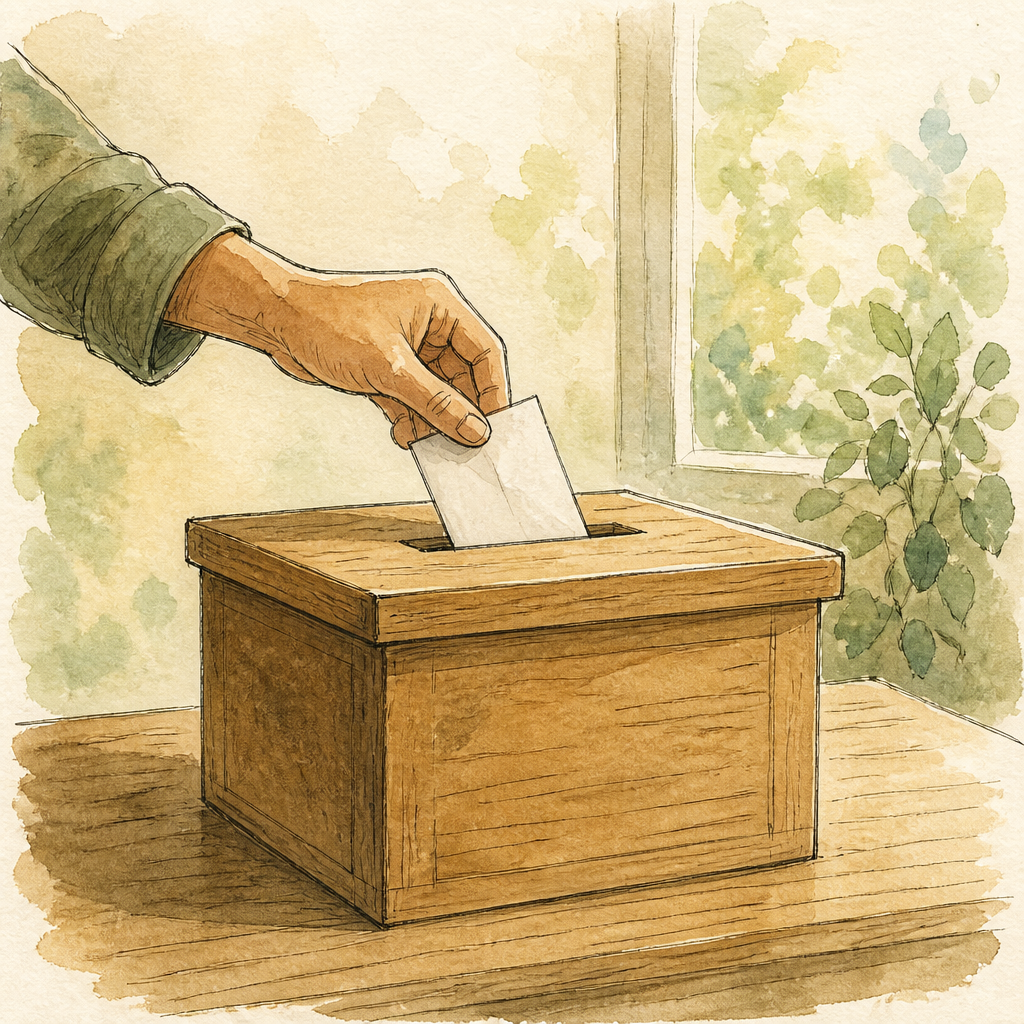
Democracy is not a coronation. It has no crown to put on, no single gesture that settles anything forever. It is a habit of counting — votes, teachers, case files, the missing, the tortured, the imprisoned — and repeating that count until it becomes boring enough to be trusted. The firing squad wants an audience. The ballot box only wants a tally. A free society should know which of those two appetites it is feeding, and feed the other one instead.
None of this means ignoring real threats at borders or real crimes that deserve real courts. It means noticing that the instruments which actually outlive strongmen are rarely the loud ones. The quiet ballot wins slowly. That is not its weakness. That is the whole point.