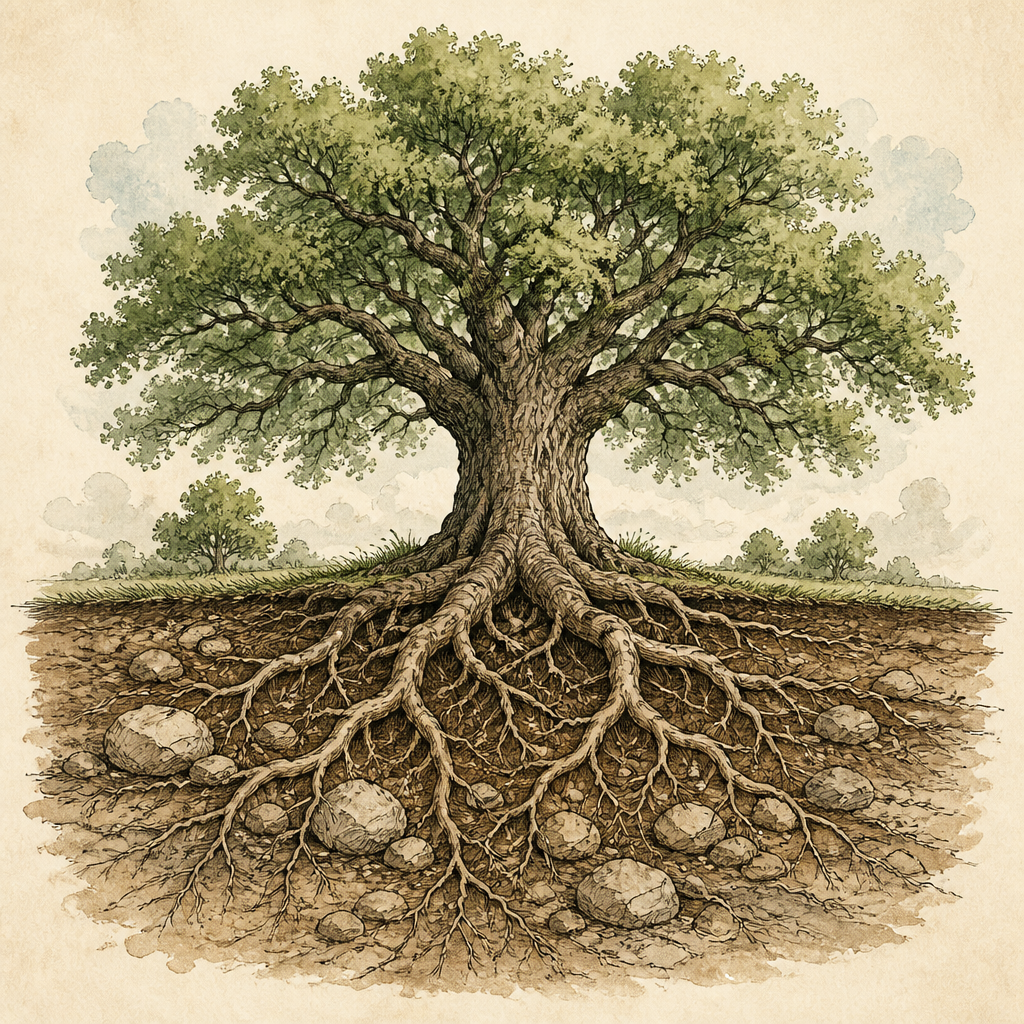
A Deal, Floated
This week brings word that Washington has floated an old and ugly trade: Ukraine cedes the Donbas, and in exchange gets a seat at Nato's table. Envoys meet Putin in Moscow, then fly to see Zelensky in Dublin, as if peace were a parcel that could be shuttled between capitals and signed by Friday.
It might be. Wars have ended on worse terms than this. But a newspaper that prefers clarity over noise should ask a plain question: when someone offers you a tree, do they mean an oak, or a stake hammered into the ground that will blow over in the first storm?
What an Alliance Actually Is
Nato membership is not a line in a communiqué. It is thirty-two parliaments, decades of joint exercises, a defence budget line in dozens of national ministries, and — crucially — the belief, tested over generations, that an attack on one really will be treated as an attack on all. That belief is the root system. The signature is just the acorn.
So the honest question about any Donbas-for-Nato trade is not "will someone sign it" but "will it still mean something in 2040, when the officials who signed it are retired and the cameras have moved on." A membership rushed through as a bargaining chip in a week of shuttle diplomacy is not the same animal as a membership built, ratified, and rehearsed over years. One is a sapling in good soil. The other is a sapling in a flowerpot, handed over for a photo.
None of this is an argument against peace, or against Ukraine someday joining Nato. It is an argument for noticing the difference between an institution and an announcement, and for insisting that the hard, slow, boring parts — ratification, verification, years of exercises — are not red tape to be skipped but the roots themselves.
Two Smaller Lessons in Patience
Consider, this same week, Indonesia's vice president resigning after his academic credentials were questioned. Slow, unglamorous, bureaucratic — someone actually checked the paperwork, years later, and the system held him to it. That is roots doing their quiet work: not stopping corruption instantly, but making it answerable eventually.
Or consider Chile, where a fuel crisis and street protests are pressing hard on a far-right president. A news editor might call this instability. An oak would call it wind. Democracies are built to bend under protest without snapping — that is rather the point of them. The test of Chilean institutions is not whether people are angry in the street this month; it is whether the anger is settled by an election, a court, a budget vote, rather than by a tank. Protest that stays inside the law is not the opposite of order. It is order's proof of life.
The Standpoint
Here, then, is the position worth holding past this news cycle: be deeply skeptical of any peace, any membership, any reform that arrives as a single dramatic signature between strongmen and envoys, however relieving the headline feels. Welcome instead the slower versions — ratified, exercised, tested by courts and elections and credential checks — even when they are less photogenic.
A Donbas settlement built only on what two rooms in Moscow and Dublin can agree to this month will need, eventually, the boring machinery of treaties, parliaments, and verification regimes to actually hold. If that machinery is skipped for the sake of a faster headline, we should not be surprised when the peace it produces turns out to have no roots at all — just a trunk, cut and planted upright, looking for all the world like a living tree, until the first real wind.
The oak does not mind being unglamorous. It has time on its side. So, if we are patient, do we.