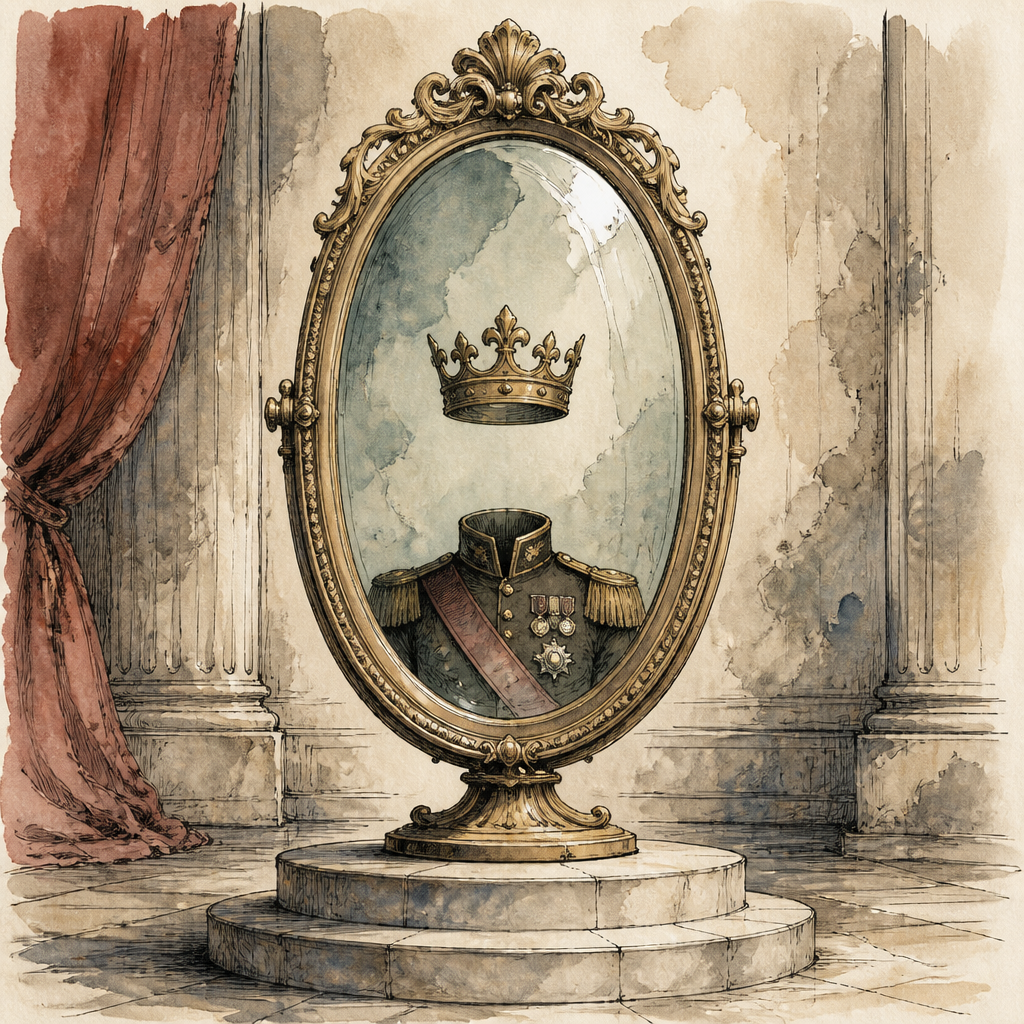
A Room That Will Not Change
This week the president of the United States signed an order instructing future presidents not to redecorate the Oval Office the way he has redecorated it.
Sit with that for a moment. Not a law about taxes, or borders, or war. A rule about furniture.
It would be easy to laugh and move on. But laughter is only useful if it leads somewhere. So let us ask the Socratic question instead: why would a man who holds enormous, temporary power spend any of it trying to make a room permanent?
One answer is vanity. A simpler answer is fear — the fear that history is reversible, that the next occupant might simply paint over him, literally, as decorators do. The order is small. But small gestures sometimes reveal large appetites: the wish not just to govern the present, but to own the future's wallpaper.
Furniture as Legacy
Democracies are built on a quiet, almost embarrassing premise: that no one gets to keep the room. The desk, the flag, the gilded frames — all borrowed, all temporary, all meant to pass to a stranger who will rearrange them according to taste nobody can veto in advance.
A strongman's instinct runs the other way. He prefers permanence to turnover, monuments to elections, his own face in the mirror staring back indefinitely. The tragedy is not that one man likes gold trim. The tragedy is believing that liking it enough, and saying so loudly enough, makes it law for people not yet born.
Meanwhile, elsewhere in the same news cycle, the White House found itself denying that two cabinet officials might leave their jobs after their party's defeat in the midterms. Not confirming competence. Not announcing achievement. Simply denying departure — as if the mirror had fogged, and someone rushed to wipe it clean before anyone noticed the blur.
Two Doors Down the Hall From Reality
Contrast this with Paraguay, where a president resigned amid a bank collapse — and was impeached minutes later anyway, just to be sure the record was precise. Not out of cruelty. Out of democratic housekeeping: resignation is not immunity, and a mirror that cracks does not get to reassemble itself by stepping quietly out the back door.
Contrast it again with Hong Kong, where the activist Joshua Wong was sentenced to ten more years in prison this week for the offense of continuing to say, calmly and in public, what he believed. His mirror was never permitted to exist at all; the state decided long ago what reflection the room was allowed to show.
Place these three scenes side by side and the pattern sharpens. The closer a system stays to honest accountability, the faster and plainer its mirrors crack when they should. The further a system drifts toward personality — toward one man's taste standing in for the nation's memory — the more energy gets spent polishing the glass instead of looking into it.
What the Mirror Actually Shows
Here is the modest, almost boring truth that strongmen never enjoy hearing: certainty is not evidence of correctness. It is often just the absence of anyone brave enough, yet, to say otherwise.
A healthy democracy does not need a leader certain of his own permanence. It needs citizens, courts, legislatures, and yes, even interior decorators, who remain free to disagree with him on Tuesday and prove it on Wednesday.
So the order about the Oval Office furniture is not really about furniture. It is a small, almost comic test of a larger question every democracy eventually faces: does the room belong to the office, or to the man currently warming its chair?
The wise answer, the only answer compatible with self-government, is the first one. Rooms, like power, are held in trust. Mirrors are for checking your reflection, not for deciding who gets to walk past them next.