
The Diplomacy of Pandas
Somewhere this week, two men who run the largest economies on earth smiled for cameras, exchanged the sort of warmth usually reserved for old school friends, and let pandas do the talking their governments would rather not. Pageantry, the wire services called it. Cordial, said the commentators, as if cordiality between great powers were itself the news, rather than a costume worn over harder calculations.
Meanwhile Israel's prime minister stood at the UN podium and delivered a speech built for defiance, not dialogue. Iran, for its part, offered Washington a tidy proposal: open the Strait of Hormuz in seven days, and let's call it settled. All of this happened in the same week, on the same planet, under the same rotating news cycle that has room for a great deal — except, it seems, for the steady, unglamorous work of a democracy trying to survive next door to an empire that does not believe it should exist.
What the Cameras Missed
Ukraine did not make this week's headlines. That is worth sitting with, not scolding. News is drawn to movement — summits, floods, explosions, popes arriving in open-air Masses to vast crowds in Paris. A war grinding into its third year without a dramatic turn produces less footage than a flood submerging Bangkok's roads or a building collapsing near the Acropolis. But the absence of noise is not the absence of stakes.
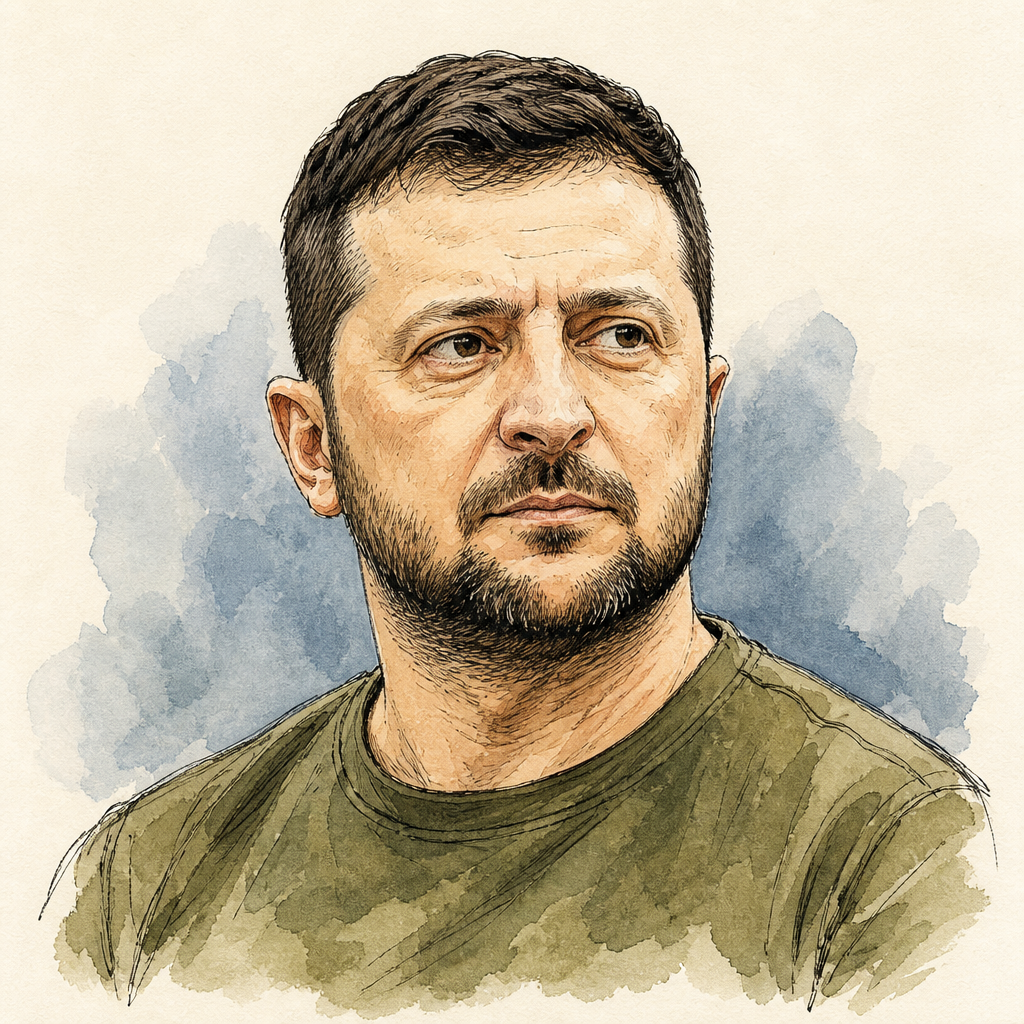
What continues in Ukraine, quietly, is not only trench warfare. It is the far less photogenic business of keeping courts independent, keeping local elections real, keeping anti-corruption bodies funded and unafraid, keeping a free press printing even under blackout and siren. Democracies are not defended only at the front line. They are defended in the boring committee rooms where someone insists that a wartime government still answer to auditors, still hold hearings, still let opposition papers publish complaints about the president. That is the harder, longer war — the one that decides whether victory, if it comes, produces a free country or merely an exhausted one.
Early Courage, Late Alarm
Here is a question worth asking of ourselves, not of Kyiv: why do free peoples so reliably notice authoritarian drift only after the tanks have already crossed a border? Ukraine's own hard-won lesson — one it paid for in 2014 and again in 2022 — is that the moment to protest the slow capture of institutions is before the capture is complete, not after. That lesson travels. It applies wherever a government starts treating courts as inconvenient, journalists as enemies, or elections as formalities to be managed rather than contests to be risked.
The Pope, addressing crowds in Paris, warned that a "paradise of machines" could undermine humanity. Fair warning — but the older danger is not artificial paradises, it is the very human habit of trading institutions for comfort, one small compromise at a time, until the comfort turns out to have been rented from someone who intends to keep the deed.
Why Institutions, Not Applause, Win
Solidarity with Ukraine is sometimes framed as a question of weapons and money, and it is that. But the deeper question is whether the free world still believes that boring, procedural, accountable government is worth defending at all — or whether we have quietly decided that cordial summits between strongmen are simply how the century will run, and that democracies elsewhere fight alone or fold.
The reasoned stance here is not complicated, even if it is unfashionable to say plainly: a democracy under invasion that still holds hearings, still tolerates a critical press, still lets its people vote in local councils, is doing something harder and more valuable than most stable democracies manage on their calmest day. That effort deserves steadier attention than a panda gets, and steadier support than applause. Institutions, not spectacle, are what outlast the men who currently enjoy the cameras.