A vacancy notice
The United States is shutting five consulates. Officially it is about budgets and priorities. Critics quoted in today's coverage worry about something less tidy: that China will simply move into the empty rooms.
No one accuses Beijing of scheming to make this happen. It didn't have to. Someone else's retreat is a gift that requires no plotting at all — only patience, and the willingness to still be standing in the doorway when the other side leaves.
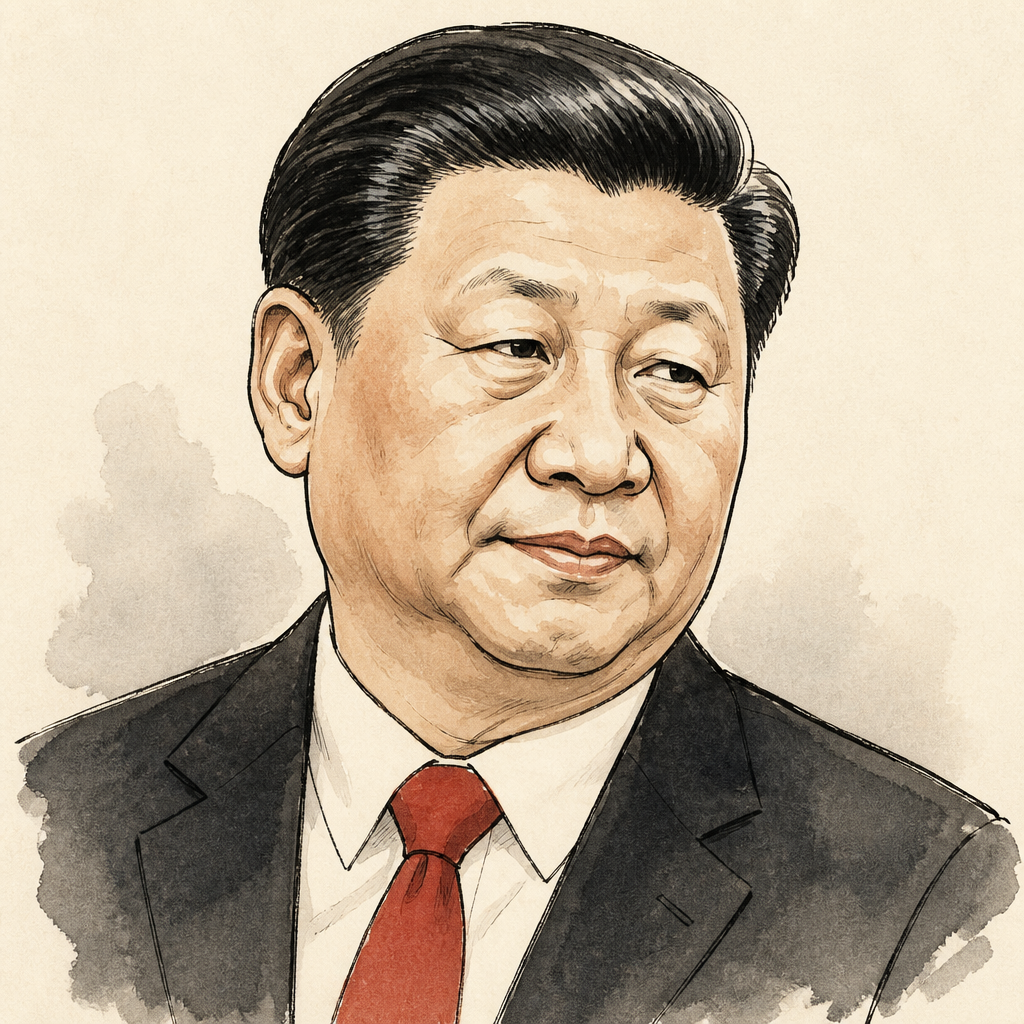
That is the smaller worry. The larger one, the one worth sitting with on an ordinary Monday, is this: is Xi Jinping playing a long, courteous game with the rest of us — trade deals, summits, careful diplomatic language — only until the balance of power tips far enough that he no longer needs to play at all?
How would we even know?
Here is the honest difficulty. A rising power that wants normal influence and a rising power that is waiting out the clock can look, for years, exactly the same. Both sign agreements. Both send ambassadors. Both attend the summit and shake the hands.
The test is not in what a leader says while he still needs your cooperation. The test is in what he tolerates when he doesn't.
And this is where an ordinary contrast, sitting elsewhere in today's news, becomes unexpectedly useful. Israel's government has just told Washington no — publicly, loudly, on television, over a peace plan the American president proposed. Whatever one thinks of the substance, notice the mechanism: an ally said no to the most powerful patron on earth, and the world simply watched it happen. That friction is visible because Israel's politics are visible. Disagreement surfaces because the system allows it to surface.
Now ask what the equivalent friction looks like inside a system built so that disagreement does not surface. It doesn't look like anything. That is not evidence Xi has no critics inside his own apparatus. It is evidence we would not be told if he did — and the not-knowing is precisely what breeds the fear this essay is named for.
The reciprocity test
Common sense, not paranoia, suggests a fair standard: apply the golden rule to statecraft. Does an arrangement offer back what it asks for?
If American consulates close and Chinese ones expand into the same cities, fine — provided the traffic runs both ways. Are American diplomats, journalists, and NGOs granted the same open access inside China that Chinese diplomats and state media enjoy inside the United States? Are Chinese markets as open to foreign firms as Chinese firms are welcomed abroad? Where the answer is no, the asymmetry is not proof of a master plan. It is simply information, freely available, that any citizen can weigh for themselves.
A power confident that its rise is welcome does not need to fear being asked these questions. A power that flinches from reciprocity has told you something, without needing to say a word.
The wise position
So: is Xi merely humoring the world until he can ignore it? The honest answer is that we cannot know his intentions, and building policy on guessed intentions is how democracies talk themselves into either needless panic or needless trust.
What we can build policy on is behavior, checked against reciprocity, and coordination among allies so that no single retreat — five consulates here, a budget line there — becomes a solitary gift to whoever is patient enough to wait by the door. The EU and the democracies of the Indo-Pacific do not need to match China's opacity to compete with it. They need to stop leaving rooms unattended and calling it savings.
Patience, on its own, is not a crime. But a world that stops noticing who benefits from its own distraction deserves whatever quietly moves in while it looks away.